It’s Friday evening, friends are arriving in two hours and you have a nice cod fillet in the fridge. No desire to spend the afternoon in the kitchen. This lemon butter sauce is the solution — 20 minutes, five ingredients, and your guests will think you slaved away.
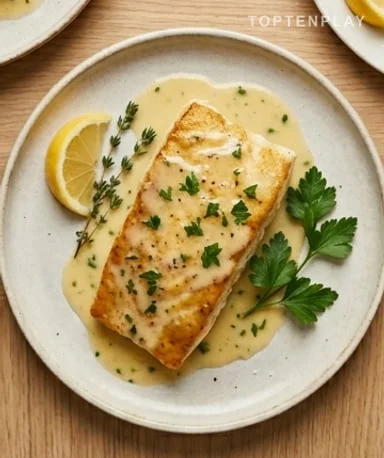
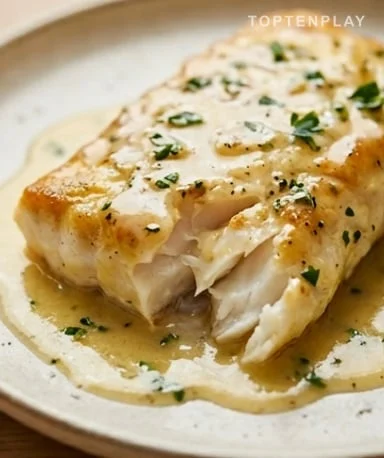
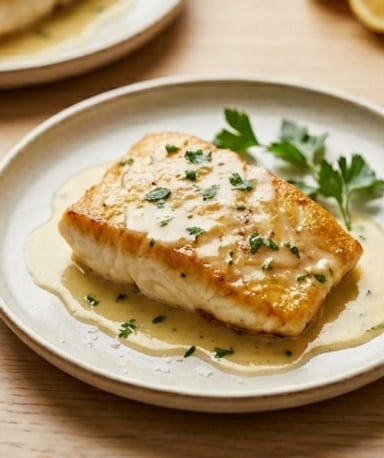
The sauce arrives at the table in near-perfect condition: glossy, slightly pearlescent, with those little green specks of chives or parsley floating in it. It coats the back of a spoon cleanly — a sign that it has the right consistency. The smell rising is that of melted butter mingled with fresh lemon, a simple but immediately appetizing combination. The first forkful into the fish, and the sauce flows around, light despite its richness.
Why you’ll love this recipe
Ingredient Notes
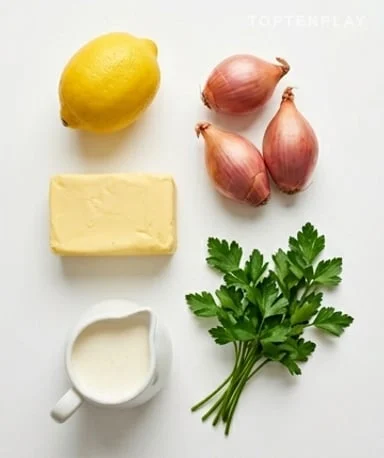
All the ingredients gathered for a light and fragrant lemon butter sauce.
- Butter : The base of everything. Use good-quality unsalted butter — not necessarily the most expensive, but not the cheapest either. A churned butter or AOP Charentes-Poitou gives a rounder flavor. It will be added cold, in pieces, off the heat: that’s what creates the silky texture.
- Lemon : A real yellow lemon, squeezed by hand, not bottled juice. The difference is immediate — bottled juice often has a bitter undertone that ruins everything. A medium lemon yields about three tablespoons, which is the right amount.
- Shallots : Two small ones, finely minced. They will melt and almost disappear visually, but their sweet-mild taste remains. If you don’t have any, a small spring onion can work — but shallot gives something distinctly more delicate.
- Heavy cream : At least 30% fat. It stabilizes the sauce and prevents the butter from separating when heated. Light cream doesn’t hold as well — the sauce risks breaking and becoming greasy and disappointing.
- Fish broth : Instead of traditional white wine, we use fish broth — a cube dissolved in hot water works very well. It provides the marine aromatic base without alcohol. A light vegetable broth also works if that’s what you have on hand.
Start with the shallots
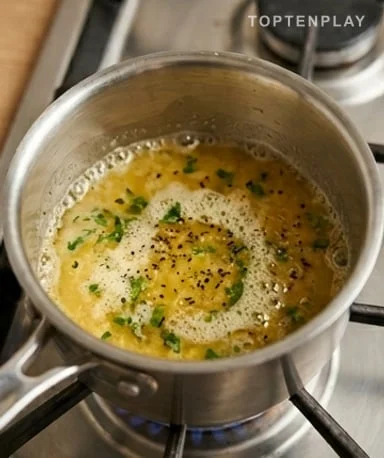
Melt a knob of butter in a small saucepan over medium heat. Add the finely minced shallots. They will first sizzle slightly — a gentle hiss — then soften in three to four minutes. You’re looking for translucent and tender, not colored. If they take on a light caramel hue, lower the heat immediately. That’s when you pour in the fish broth and let it reduce by half, uncovered.
Cream enters the picture
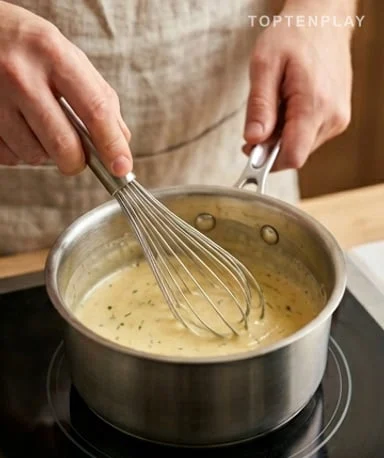
Pour the heavy cream over the shallot reduction. The mixture thickens gently over five minutes at medium-low heat. Stir occasionally. The consistency you’re after: the sauce should lightly coat the back of a wooden spoon. Not thick like a béchamel, just a bit denser than water. That’s what will allow it to cling to the fish without sliding off the plate.
The critical moment: butter
Remove the saucepan from the heat. The butter is incorporated off the heat, in cold pieces, one or two at a time, whisking quickly between each addition. If the pan cools too much, a second on very low heat — but never let the sauce boil after adding butter. It would separate and become greasy and oily. The result should be glossy, slightly pearlescent, with a silky texture that flows slowly from the spoon.
The finishing touch
Squeeze the lemon. Start with half, taste. The acidity should be present but not aggressive — it balances the fat of the butter without overpowering. Season with salt, add a pinch of white pepper, less visible than black in a light sauce. Snip the chives or parsley and add at the last moment. Serve immediately.
Tips & Tricks
- Never boil the sauce after adding butter — too much heat breaks the emulsion and you end up with a pool of fat. Off the heat or very low heat is the absolute rule.
- If your sauce breaks despite everything (it becomes shiny and greasy, the butter separates), add a tablespoon of cold cream and whisk vigorously off the heat — it often saves the situation.
- Prepare the sauce last, just before serving. It doesn’t keep well. If you must hold it, a bain-marie at 60°C maximum, no higher.
Can I prepare this sauce in advance?
Not ideally. The lemon butter sauce is at its best right after preparation — it loses its silky texture as it cools and often separates when reheated. What works well: prepare the cream-shallot base in advance, then incorporate the cold butter at the last moment just before serving.
My sauce became greasy and separated. How can I fix it?
It’s the classic mistake: the sauce got too hot after adding the butter. To fix, remove from heat, add a tablespoon of cold heavy cream and whisk vigorously. It often works if you act quickly. Next time, incorporate the butter strictly off the heat.
Which fish does this sauce work best with?
It pairs with nearly all white fish — cod, sole, sea bass, sea bream. Salmon and scallops also work very well. Avoid fatty and heavily smoked fish like mackerel or herring, whose strong flavors will overwhelm the delicacy of the sauce.
Can I replace heavy cream with something lighter?
You can try with light coconut cream for a dairy-free version — the taste changes but remains pleasant with lemon. Reduced-fat cream at 15% doesn’t hold up well to heat and gives a less stable sauce. Heavy cream at 30% is truly the best option for a texture that holds.
How do I know the sauce has the right consistency?
Dip a wooden spoon into the sauce and run your finger across the back — if the line stays clear and the sauce doesn’t flow back to fill it, it’s ready. It should be fluid but coating, not watery like water nor thick like a béchamel.
How long do leftovers keep?
24 hours in the refrigerator in a sealed container. To reheat, do so very gently in a bain-marie while whisking, never in the microwave or directly over high heat. Honestly, it’s better to make only what you need — it’s so quick that storing it isn’t really worth it.
Homemade Lemon Butter Sauce for Fish
French
Sauce
A classic French sauce, glossy and velvety, ready in 20 minutes. It effortlessly elevates any fish fillet.
Ingredients
- 100g unsalted butter, cut into cold pieces
- 2 shallots, finely minced
- 150ml heavy cream (30% min)
- 45ml fresh lemon juice (about 1 lemon)
- 100ml fish broth (or vegetable broth)
- 1 tsp lemon zest (optional, for more intensity)
- 1 tbsp fresh chives or parsley, snipped
- to taste fine salt and white pepper
Instructions
- 1Melt a knob of butter in a small saucepan over medium heat. Add the minced shallots and sauté for 3-4 minutes until translucent, without browning.
- 2Pour in the fish broth and let it reduce by half over medium-high heat (about 2-3 minutes).
- 3Add the heavy cream and stir. Let it thicken over medium-low heat, stirring regularly, for 5 minutes, until the sauce lightly coats a spoon.
- 4Remove the saucepan from the heat. Incorporate the cold butter pieces, 2-3 at a time, whisking quickly between each addition without returning to the heat.
- 5Add the lemon juice gradually, tasting. Adjust seasoning with salt and white pepper.
- 6Strain if desired to remove shallots. Add the snipped herbs and serve immediately.
Notes
• Partial make-ahead: prepare the shallot-broth-cream reduction in advance, then incorporate the butter at the last moment before serving. Never reheat a lemon butter sauce over high heat.
• Citrus variation: replace half the lemon juice with orange juice for a milder, slightly sweet version, perfect with salmon.
• Storage: 24 hours maximum in the refrigerator. Reheat only in a very gentle bain-marie while whisking.
Nutrition Facts (per serving, estimated)
| 305 kcalCalories | 2gProtein | 4gCarbs | 32gFat |