📌 Homemade Hazelnut Christmas Cookies: 20-Minute Recipe Perfect for Kids and Gift-Giving
Posted 7 December 2025 by: Admin
The Perfect Holiday Cookie Recipe
These hazelnut shortbread biscuits represent the essence of accessible elegance—a recipe that transforms just six humble ingredients into 24 golden, crumbly treats worthy of any festive table. What makes this creation particularly compelling is its deliberate simplicity: butter, flour, icing sugar, hazelnut powder, and a single egg combine to produce cookies that taste far more sophisticated than their ingredient list suggests.
The recipe’s brilliance lies not in complexity but in precision. Using Gastronomic Président butter as the foundational element elevates the entire result, delivering that characteristic sandy texture that defines an authentic French sablé. The icing sugar—a choice of particular importance—contributes subtle sweetness without overwhelming the delicate hazelnut notes, while the hazelnut powder becomes the flavor’s anchor, providing depth and refinement.
What truly sets this recipe apart is its family-friendly accessibility. With just twenty minutes of preparation time, forty-five minutes of refrigeration, and fifteen minutes of baking, these cookies slot seamlessly into even the busiest holiday schedules. The difficulty level remains firmly in “easy” territory, making this an ideal project for baking alongside children—transforming the kitchen into a collaborative space where young hands can participate meaningfully in creating something genuinely delicious.
The yield of twenty-four biscuits means sufficient quantity for both immediate enjoyment and thoughtful presentation, whether displayed on the Christmas table or arranged in elegant packaging as homemade gifts.
The Art Of Preparation And Technique
The path from ingredients to finished cookie hinges on understanding why each step matters—a lesson that separates merely pleasant biscuits from truly exceptional ones. The journey begins with room temperature butter, a non-negotiable requirement that allows the fat to distribute evenly throughout the dry mixture, creating the signature sandy crumb structure that defines a proper sablé.
The mixing sequence itself holds surprising importance. Rather than combining everything at once, the method progresses deliberately: flour, icing sugar, and hazelnut powder unite first, establishing a dry foundation. Only then do the egg and softened butter integrate, introduced gradually through hand-mixing until the texture transforms into something resembling coarse breadcrumbs—a tactile indicator that the technique has succeeded. This particular approach prevents overworking the dough, which would develop gluten and compromise the delicate, crumbly character essential to the final product.
Refrigeration for forty-five minutes serves a critical function beyond mere convenience. Resting the dough allows the flour to fully hydrate while the butter firms sufficiently to roll without resistance, preventing sticking and ensuring clean cuts through whatever festive shapes emerge. When rolling reaches the precise three-millimeter thickness, the dough responds with cooperative elasticity, neither too brittle nor too soft.
The oven temperature—180°C for twelve to fifteen minutes—requires attentive monitoring rather than rigid adherence to timing. Every oven possesses its own personality; the true signal arrives when the biscuits achieve a pale golden hue at the edges while the centers remain slightly underbaked. This paradox produces cookies that firm as they cool, resulting in that characteristic bite where crispness gives way to tender, almost melting centers that distinguish authentic sablés from ordinary shortbread.
Creative Customization Possibilities
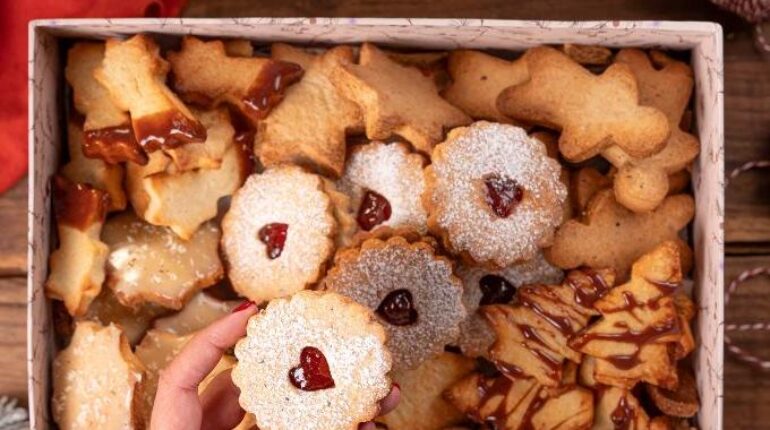
The neutral hazelnut base transforms these sablés into a blank canvas awaiting personal expression. Unlike rigid confections, this dough accommodates endless decoration techniques—glazing, filling, coating with chocolate, or adorning with edible gold leaf—while maintaining the structural integrity that defines a quality cookie. The versatility lies not in complexity but in the recipe’s elegant simplicity, which invites rather than constrains creativity.
Rolling the dough to precisely three millimeters before cutting into various festive shapes ensures consistent baking across whichever forms emerge from the cutter. Stars, hearts, gingerbread figures, or delicate snowflakes all benefit equally from this standardized thickness, guaranteeing that every cookie achieves that coveted pale golden edge while centers remain tenderly yielding. The baking temperature of 180°C for twelve to fifteen minutes proves forgiving enough to accommodate both minimalist designs and elaborately decorated versions without sacrificing texture.
The true magic emerges when these plain sablés encounter embellishment. A simple royal icing transforms them into gallery-worthy creations; a dusting of cinnamon or crushed pistachios adds sophistication; a thin coat of dark chocolate elevates them toward luxury confectionery. This adaptability makes them equally suited for casual family enjoyment and refined holiday gatherings, bridging the gap between homemade warmth and professional presentation.
From Kitchen To Christmas Table
These hazelnut sablés transcend their humble origins as simple baked goods, becoming multi-functional holiday assets that serve simultaneously as activity, dessert, and gift. The journey from mixing bowl to Christmas celebration reveals why this recipe has earned its place in festive traditions across generations.
Baking alongside children transforms preparation into cherished memory-making. The straightforward six-ingredient formula requires no specialized equipment or advanced techniques, inviting small hands to participate fully in each stage—from mixing the sandy dough to pressing cookie cutters into flattened sheets. This accessibility democratizes holiday baking, proving that elegance need not demand complexity.
The finished cookies present an unexpected gift opportunity that distinguishes them from conventional desserts. Nestled in cellophane bags tied with ribbon or arranged in decorative boxes, these homemade sablés carry the unmistakable warmth of personal effort—a quality that store-bought alternatives cannot replicate. Placed at each guest’s seat on Christmas Eve, they serve as edible favors that acknowledge the occasion’s significance while delivering genuine culinary pleasure.
The hazelnut flavor itself deserves recognition for its sophistication. Rather than competing with traditional spice-dominated holiday flavors, it offers a refined counterpoint that appeals to discerning palates while remaining universally accessible. This balance between elegance and approachability encapsulates everything these cookies represent: the possibility of creating something genuinely special from readily available ingredients and straightforward technique.