📌 Homemade Goulash
Posted 19 April 2026 by: Admin
Goulash, for many, is that thing you eat at grandma’s or find in an old Central European cookbook. In reality, it’s just ground beef and macaroni in a simmering tomato sauce — quick to make, filling, and honestly much better than it looks.
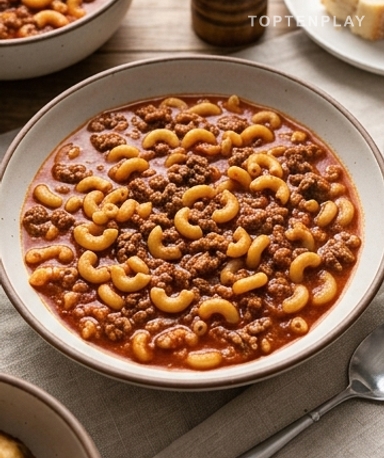
The sauce has this deep brick-red hue, almost orange at the edges of the dish. The macaroni has plumped up in the tomato broth — tender but not mushy, still providing a little resistance under the fork. The smell wafting through the kitchen mixes roasted garlic with beef and dried herbs that have had time to bloom. It’s the kind of dish that warms you up even before the first bite.
Why you’ll love this recipe
Ingredient Notes
Everything you need for a flavorful goulash: ground beef, everyday vegetables, and macaroni.
- Ground beef (500 g) : Choose at least 15% fat. Beef that is too lean dries out during cooking and loses all its flavor. If you see red juice accumulating in the pan instead of lightly greasing it, you’ve chosen too lean.
- Elbow macaroni (230 g) : Shape really matters here. The elbows catch the sauce inside their curve. Fusilli also works, but elbows remain the classic and logical choice for this recipe.
- Canned crushed tomatoes : Two 400 g cans. Whole peeled tomatoes that you crush yourself give a better result if you have five extra minutes. Avoid overly smooth tomato purée — the dish needs texture.
- Sweet paprika : This is the signature spice of goulash. One level tablespoon, no more. Smoked paprika can replace half of the sweet version if you want a bolder aroma, but don’t exceed that proportion.
- Beef broth : A high-quality carton or homemade. Cubes work but are very salty — taste before seasoning if you use them.
Beef first, really
Heat your largest skillet over high heat. High, not medium — it changes everything. The ground beef should sear, not steam in its juices. When it hits the hot surface, it should crackle: a sharp, steady, almost aggressive sound. Leave it alone for two minutes before stirring. You want that slightly brown, light caramel-colored crust on the pieces before mixing everything. Meanwhile, dice your onion and slice your bell pepper into small strips. Add the vegetables directly onto the browned meat — they will deglaze naturally as they release their juices. The minced garlic comes last. Thirty seconds, no more.
The sauce, kept simple
Pour the crushed tomatoes and broth over the meat. Add the paprika, a pinch of thyme, and pepper. Mix well to scrape up the browned bits stuck to the bottom — that’s where half the flavor hides. The sauce immediately takes on a deep reddish-orange hue as the paprika dissolves into the hot liquid. Bring to a gentle simmer. At this stage, the smell in the kitchen is already very convincing: warm tomato, braised beef, herbs.
Pasta enters the sauce
Pour the dry macaroni directly into the simmering sauce. No separate cooking — that’s the whole point of the recipe. Stir immediately to submerge them. They will absorb the broth as they cook and release their starch into the dish. This is exactly what makes the final sauce thick and rich, almost creamy without any cream. Lower the heat slightly to maintain a steady simmer rather than a rolling boil.
The critical moment: monitoring without stress
The pasta cooks for 12 to 15 minutes in the sauce. Stir every two or three minutes — they stick easily to the bottom if forgotten. If the sauce thickens too quickly, add a small glass of water or broth. Taste a pasta at 12 minutes: tender with still a slight resistance in the center. When it’s ready, turn off the heat. The sauce continues to thicken on residual heat for two or three minutes, and that’s precisely when it reaches the consistency that perfectly coats every macaroni.
Tips & Tricks
- Only salt at the end — the broth is already salty, and so are the tomatoes. Wait until everything is cooked before adjusting the seasoning, otherwise you risk over-salting without realizing it.
- Let it rest for five minutes off the heat before serving. The sauce finishes coming together and the pasta absorbs the last bits of juice. It’s short, but it matters.
- This dish is even better reheated the next day — the pasta continues to absorb the sauce overnight. Just add a splash of broth when reheating to get back to the right consistency.
Can I use another pasta shape?
Yes, fusilli, penne, or farfalle work well. Avoid long pasta like spaghetti or tagliatelle — they get tangled and cook unevenly in the sauce. The key is to slightly adjust the cooking time based on the chosen shape.
How to store and reheat goulash?
It keeps for 3 to 4 days in the refrigerator in an airtight container. The pasta continues to absorb the sauce, so add a small glass of water or broth when reheating in a saucepan over low heat while stirring. In the microwave, cover the container to prevent the surface from drying out.
My pasta turned out too soft. What happened?
They cooked for too long or on too high a heat. The simmer should remain gentle and steady, not a violent boil that breaks the pasta before it’s cooked through. Start tasting at 12 minutes and remove from heat as soon as the center is still slightly al dente — the residual heat will finish the job.
Can I prepare this dish in advance?
Yes, and it’s even recommended. Prepared the day before, goulash is significantly more flavorful — the pasta has absorbed all the aromas of the sauce. Reheat over low heat, adding a little liquid, and adjust the seasoning before serving.
Can I replace the ground beef with something else?
Ground veal or ground turkey work very well and give a lighter result. For a vegetarian version, cooked green lentils (300 g) or rehydrated textured soy protein hold up well in the sauce and provide a similar texture.
Can I add extra vegetables?
Absolutely. Canned corn, diced zucchini, mushrooms, or grated carrots fit in naturally. Add firm vegetables (carrots, zucchini) at the same time as the bell pepper. Vegetables that release a lot of water, like zucchini, may slightly dilute the sauce — compensate by reducing the broth a little.
Homemade Goulash
American
Main course
A dish of ground beef and macaroni cooked in a tomato sauce flavored with paprika. Everything cooks in one pot, ready in 45 minutes.
Ingredients
- 500 g ground beef (15% fat minimum)
- 230 g dry elbow macaroni
- 2 cans (400 g each) canned crushed tomatoes
- 500 ml beef broth
- 1 large yellow onion, diced
- 1 red bell pepper, finely diced
- 3 garlic cloves, finely minced
- 1 tbsp sweet paprika
- 1 tsp dried thyme
- 2 tbsp neutral oil
- Salt and pepper to taste
Instructions
- 1Heat the oil in a large pot over high heat. Add the ground beef and let it sear for 2 minutes without stirring to brown it.
- 2Stir in the onion and bell pepper, sauté for 3 to 4 minutes while stirring until the vegetables soften. Add the garlic and cook for 30 seconds.
- 3Pour in the crushed tomatoes and broth. Add the paprika and thyme, mixing well while scraping the bottom of the pot.
- 4Bring to a gentle boil, then pour the dry macaroni directly into the sauce. Stir immediately to submerge them.
- 5Lower to medium-low heat and simmer for 12 to 15 minutes, stirring every 2-3 minutes. If the sauce thickens too much, add a little water.
- 6Taste the pasta at 12 minutes: it should be tender with a slight resistance. Remove from heat, adjust seasoning, and let rest for 3 to 5 minutes before serving.
Notes
• Storage: keeps for 3 to 4 days in the refrigerator. Add a splash of broth when reheating to restore the right consistency — the pasta absorbs residual liquid while resting.
• Spicier version: replace half of the sweet paprika with smoked paprika and add a pinch of cayenne pepper for more character.
• The dish is even better the next day — preparing ahead is a great option if you’re hosting guests or want to save time during the week.
Nutrition Facts (per serving, estimated)
| 645 kcalCalories | 36 gProtein | 56 gCarbs | 30 gFat |