📌 Homemade Focaccia with Neufchâtel AOP
Posted 31 March 2026 by: Admin
Have you ever given up on making homemade bread because it seemed too technical? Focaccia is exactly what you need to reconcile with baking. No complicated shaping, no mysterious hand techniques — just a generous dough that you spread out, let rise, and bake at high heat. Topped with Neufchâtel AOP and colorful vegetables, it becomes a sandwich with real character.
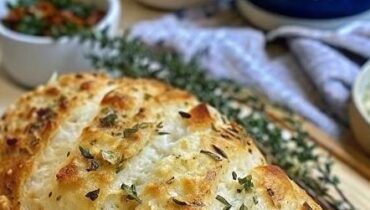
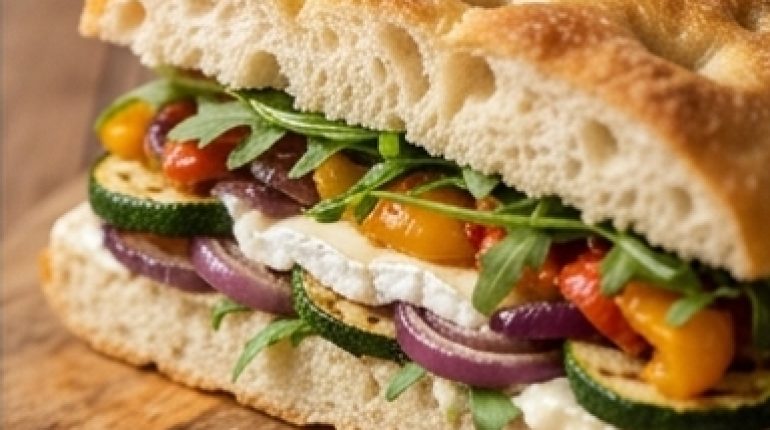
Place your hand flat on a slice that is still warm. The surface is slightly crunchy, golden like light caramel. Underneath, the crumb gives way softly, airy, full of small holes that drink up the olive oil during baking. When you open it in two, the Neufchâtel has slightly melted over the deep red preserved peppers, the green zucchini slices, and the softened red onion. A smell of warm bread mixed with ripened cheese and warm oil — hard to resist.
Why you’ll love this recipe
Ingredient Notes
All ingredients together: a simple dough with 6 elements and a filling that makes the difference.
- Neufchâtel AOP : The heart-shaped (or cylindrical depending on the producer) Norman cheese. Its texture resembles a young but firmer camembert, its taste is slightly tangy with a milky finish. Choose it not too ripe so it remains easy to slice — a cheese that is too runny is impossible to place on the focaccia without it escaping everywhere.
- Baker’s yeast : Fresh or in a sachet, both work. If you use fresh, dilute it in lukewarm water — lukewarm, not hot. Above 40°C you kill it and the dough won’t rise. With dry, simply follow the proportions on the sachet.
- Olive oil : It’s everywhere in this recipe: in the dough, on the tray for baking. Use a fruity oil, not a low-end neutral oil — it’s what gives the focaccia its characteristic taste. No need for an overpriced bottle either, a decent olive oil is more than enough.
- Preserved peppers : Peppers in a jar are perfect here, don’t waste your time making them yourself. However, drain them thoroughly before placing them — excess preservation oil will soak the bread in a few minutes.
- Arugula : Place it raw, at the very end, just before closing. It brings a slight bitterness and a freshness that balances the cheese. If you don’t like bitterness, baby spinach also works.
The dough: the less you stress, the better it holds
Everything starts with the yeast. Dilute it in a bit of lukewarm water and let it activate for two minutes — you’ll see small bubbles forming on the surface, a sign that it’s alive and ready. In the mixer bowl, pour the water, salt, sugar, flour, and olive oil, then add the yeast. Ten minutes of kneading at low speed. The dough will gradually pull away from the sides, become smooth and slightly elastic under the hook. It still sticks a bit to your fingers when you touch it — that’s normal, don’t add flour. Cover with a damp cloth and let rest for thirty minutes in a draft-free place.
Why I never skip the second rise
After the first rise, the dough has doubled in size. We degas it by pressing on it — you feel the air escape under your palm, like a cushion being emptied. We then spread it into a rectangle on an oiled tray, about one centimeter thick. And there, we cover and wait again. Thirty more minutes. This second rise is what gives the crumb that airy texture, full of light pockets. Skip it and you get a decent but dense focaccia. It’s worth the wait.
220°C and don’t touch anything
The oven must be really hot — preheat it well in advance, not just five minutes. The focaccia bakes between thirty and forty-five minutes depending on your oven. It’s ready when the surface is golden like light caramel and when you tap the bottom with your fingers, it sounds hollow. Halfway through cooking, a smell of warm olive oil and toasted bread starts to fill the kitchen. Take it out and let it cool completely on a rack before touching anything — warm, it crushes under the knife and the filling slides everywhere.
Assembly: the part where we finally let go
Cut the focaccia into rectangles, then each rectangle in half lengthwise. On the bottom slice, arrange the cooked zucchini, the well-drained preserved peppers, and a few slices of red onion. Then the Neufchâtel cut into thick slices — not too thin or it will crush at the first cut. The arugula on top. Close it. If you want to serve it warm, a few minutes in the oven at 180°C before closing: the cheese starts to melt slightly at the edges, the edges of the arugula soften just a bit. Two ways to eat it, two different experiences.
Tips & Tricks
- If the dough sticks during hand kneading, lightly oil your palms rather than adding flour — extra flour makes the crumb denser and less airy.
- Leftovers can be kept for two days wrapped in plastic wrap in the refrigerator. A quick pass in a dry pan revives them much better than the microwave, which softens everything.
- You can prepare the dough the day before and let it do its first rise overnight in the fridge. It develops more flavor and you save time on the big day.
Can this focaccia be made without a stand mixer?
Yes, no problem. Knead the dough by hand on a lightly oiled surface for about 12 to 15 minutes, until it’s smooth and elastic. It will remain a bit sticky — that’s normal. Oil your hands rather than adding flour.
How do I know if the focaccia is properly baked?
Tap the bottom with your fingers: it should sound hollow, like an empty box. The surface should be golden, not pale. If it browns too quickly on top before being cooked underneath, lower the oven to 200°C and continue baking.
Can I replace Neufchâtel AOP with another cheese?
Yes. A camembert that isn’t too ripe, a brie, or a goat tomme work well in this role. Avoid cheeses that are too runny which will soak the bread. The important thing is to have a sliceable soft cheese.
How to store the focaccia and how to reheat it?
Unfilled, it keeps for 2 days at room temperature under a cloth. Filled, wrap it in plastic wrap and keep it in the refrigerator (max 2 days). To reheat, put it for 5 minutes in a dry pan or in the oven at 180°C — avoid the microwave which softens the crust.
Can I prepare the dough in advance?
Yes, it’s even recommended. After kneading, cover the bowl and place it in the refrigerator for a slow overnight rise. The next day, take the dough out 30 minutes at room temperature, then proceed to the shaping step. The dough develops more flavor with this rest.
Can the filling be varied?
Absolutely. The olive oil + soft cheese base works with many roasted vegetables: sun-dried tomatoes, marinated artichokes, sautéed mushrooms. Arugula can be replaced by baby spinach or fresh basil.
Homemade Focaccia with Neufchâtel AOP
Mediterranean
Main course
A soft and golden focaccia filled with melting Neufchâtel AOP, zucchini, preserved peppers, and arugula. A sandwich with character that is easy to prepare and can be eaten hot or cold.
Ingredients
- 480g T65 flour
- 250ml lukewarm water
- 3 tbsp olive oil (45ml)
- 1 sachet (7g) dry baker’s yeast (or 20g fresh)
- 1 tsp sugar
- 1 tsp salt
- 1 (about 200g) Neufchâtel AOP
- 1 (about 200g) zucchini in slices, previously cooked
- 1 red onion, finely sliced
- 150g preserved peppers in oil, drained
- 30g arugula (1 large handful)
Instructions
- 1Dilute the yeast in 2 tbsp of lukewarm water and let activate for 2 minutes.
- 2Pour into the mixer bowl: water, salt, sugar, flour, olive oil, and activated yeast.
- 3Knead at low speed for 10 minutes until you get a smooth and slightly elastic dough.
- 4Cover with a damp cloth and let rise for 30 minutes at room temperature.
- 5Degas the dough by pressing on it, then spread it into a rectangle about 1 cm thick on an oiled tray.
- 6Cover again and let rise for another 30 minutes.
- 7Preheat the oven to 220°C. Place the focaccia in the oven and bake for 30 to 45 minutes, until the surface is golden brown and the bottom sounds hollow.
- 8Let cool completely on a wire rack before cutting.
- 9Cut the focaccia into rectangles, then each rectangle in half lengthwise.
- 10Fill the bottom slice with zucchini, preserved peppers, red onion, and Neufchâtel slices. Add arugula and close.
- 11Serve as is or reheat the whole thing for 5 minutes in the oven at 180°C before closing.
Notes
• Unfilled focaccia keeps for 2 days at room temperature under a cloth. Filled, wrap it in plastic wrap and store in the refrigerator for a maximum of 2 days.
• To prepare in advance: do the first rise in the refrigerator overnight after kneading. Take out 30 minutes at room temperature the next day before shaping.
• Filling variations: sun-dried tomatoes, marinated artichokes, garlic sautéed mushrooms. Any roasted or preserved vegetable works with this format.
Nutrition Facts (per serving, estimated)
| 670 kcalCalories | 26gProtein | 92gCarbs | 22gFat |