📌 Homemade fig chutney: the 25-minute recipe that enhances your goat cheese toasts
Posted 31 December 2025 by: Admin
Preparing Homemade Fig Chutney
The secret of an exceptional toast lies in its condiment. This homemade fig chutney reveals an accessible artisanal technique that transforms simple ingredients into a gourmet accompaniment. Preparation requires precision and patience, but the result far surpasses industrial versions.
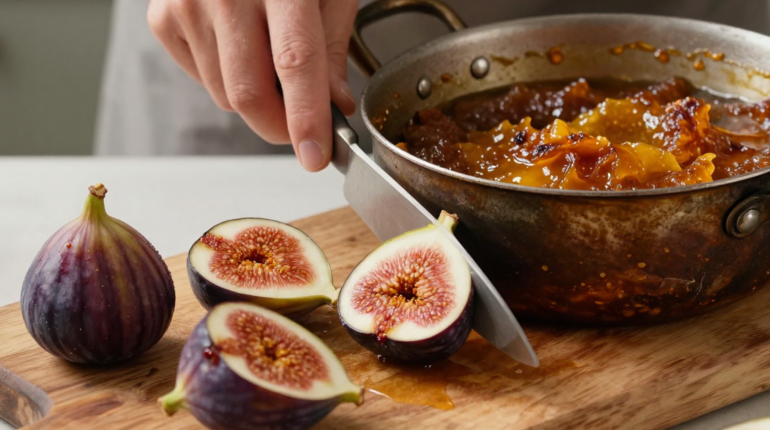
The red onion, finely minced, constitutes the aromatic base. After 5 minutes in olive oil, it welcomes the roughly chopped figs, vinegar, a spoonful of honey, and a pinch of salt. This vinegar-honey association creates the perfect balance between acidity and sweetness, the signature of a successful chutney.
Cooking follows a precise timing: brought to a boil, the preparation then simmers for 25 minutes over low heat. This time allows the figs to gradually break down, releasing their natural sugar, while the onion lightly caramelizes. Stirring regularly prevents sticking and ensures a homogeneous texture.
Once cooking is complete, the chutney must cool completely in a bowl. This often-neglected step is crucial: the condiment thickens as it cools and fully develops its aromas. Patience rewards those who master this preparation, as the temperature contrast between this cold confit and the hot cheese that follows will define the final tasting experience.
Double Oven Baking For Perfect Texture
Mastering temperature transforms ordinary bread into an exceptional base. This recipe relies on a precise method: preheat the oven to 210°C, a single temperature that will govern the two successive bakings. This high heat guarantees the Maillard reaction necessary for the desired golden coloration.
Before baking, one tip makes all the difference: lightly moisten the breads. This brief exposure to water, far from softening them, allows the crust to develop its crispness while preserving a tender crumb. The breads then go into the oven at mid-height for 8 to 10 minutes, until they obtain this characteristic golden texture.
This same temperature will welcome the goat cheese slices in a second stage. On parchment paper, they are adorned with honey, pepper, fresh thyme, and crushed hazelnuts before undergoing an identical baking. The honey-thyme-hazelnut association transforms simple cheese into a gourmet creation, while the heat develops the aromas and lightly caramelizes the surface.
Synchronization is essential: the cheese must join the bread while still hot. This encounter between the roasted goat cheese and the cooled chutney creates the desired thermal contrast, while the hazelnuts provide the final crunch. Two slices per toast ensure the generosity necessary for the balance of flavors.
Roasted Goat Cheese With Hazelnuts And Thyme
This synchronization of cooking reaches its peak in the preparation of the cheese. The goat cheese slices, cut evenly, are placed on parchment paper to receive their aromatic dressing. Honey, pepper, fresh thyme, and crushed hazelnuts compose an alliance where the sweetness of the honey dialogues with the spice of the pepper, while the fresh herbs bring their Mediterranean dimension.
The oven at 210°C welcomes these medallions for 8 to 10 minutes of metamorphosis. The heat lightly caramelizes the honey, develops the essential oils of the thyme, and reveals the toasted notes of the hazelnuts. The surface of the cheese takes on a characteristic golden coloration, a visual signal of culinary success.
Urgency then dictates the pace: the cheese must join the bread immediately. This residual heat delicately melts the edges, creating a creamy texture that contrasts with the crunchiness of the hazelnuts. The honey-thyme-hazelnut association elevates the goat cheese to the rank of a gourmet ingredient, transforming a simple preparation into a refined creation.
Two slices per toast: this proportion guarantees the necessary generosity without overwhelming the other components. The still-warm cheese now awaits its encounter with the cold chutney, a promise of a mastered thermal and gustatory balance.
Final Assembly And The Touch Of Freshness
This encounter between hot cheese and cold chutney is orchestrated according to a precise sequence. The golden buns are split through their thickness, revealing their still-warm crumb. On each half, a generous layer of cooled fig chutney is spread, creating a smooth bed where the sweet-tangy nature of the condiment contrasts with the crispness of the base.
The two goat cheese slices, still warm from the oven, are placed delicately on this fruity base. Their heat awakens the aromas of the chutney, while the caramelized honey on their surface begins to mingle with the vinous notes of the figs. This calculated proportion guarantees balance: neither too much cheese that would dominate, nor too little that would disappoint.
Arugula then makes its entrance, a decisive element often underestimated. Its fresh leaves bring a vegetal spice and a crunchy texture that contrast with the surrounding sweetness. This herbaceous touch awakens the palate, preventing the richness of the cheese and chutney from saturating the taste buds. The thermal contrast between the hot bread, the warm cheese, and the fresh greenery creates a rare sensory dynamic.
The bread closes over these harmonious layers. Each bite reveals the complexity of this construction: the crunchy exterior gives way under the tooth, simultaneously releasing the fruity sweetness, the milky creaminess, and the chlorophyll-rich liveliness.