📌 Homemade Duck Foie Gras Terrine
Posted 28 March 2026 by: Admin
Homemade foie gras is the kind of dish that looks intimidating on paper. Yet, in reality, it’s one of the simplest recipes there is—provided you don’t overthink it. Three ingredients, a night of rest, and one hour in the oven are more than enough.
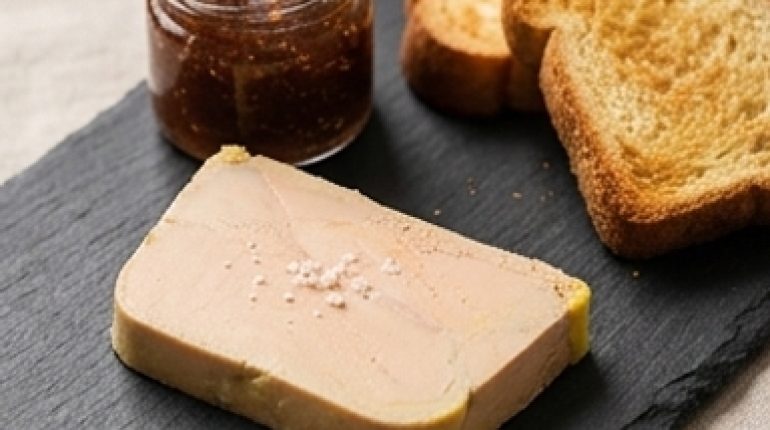
On the serving board, a slice of very pale rosy beige, almost pearlescent. It glides under the knife with almost zero resistance—creamy, dense, without a single grain. The scent is mild, slightly gamey, with that peppery undertone that the Espelette pepper provides as a discreet background. Placed on a still-warm brioche toast, it’s the kind of bite that brings silence to the table.
Why you’ll love this recipe
Ingredient Notes
Raw duck foie gras, salt, pepper, Espelette pepper, and apple juice: everything you need for an exceptional terrine.
- Raw deveined duck foie gras : This is the central ingredient, and it’s worth getting a decent one. Look for a liver between 450 and 600 g, firm to the touch, without greenish spots. “Deveined” on the packaging saves you a good half-hour of work—no need to make life complicated. Label Rouge or IGP Périgord duck livers are reliable and easily found in supermarkets around the holidays.
- Fine salt : Precision matters here. We dose by the gram: 12 g per kilo of liver. Too little and the result is bland. Too much and it’s irredeemable. A kitchen scale is truly indispensable for this recipe. No flaky sea salt or fleur de sel for the seasoning—fine salt penetrates the meat better.
- Espelette pepper : Two pinches, no more. Its role isn’t to bring heat but a gentle, floral warmth that complements the black pepper. If you don’t have it on hand, a tiny amount of smoked paprika can work in a pinch, but Espelette remains irreplaceable in this context.
- Apple juice : The natural substitute for Cognac from the original recipe. Use pure apple juice, not a sugary nectar. One tablespoon is enough—its role is to bring a slight fruity acidity that balances the richness of the liver, not to flavor the terrine.
Taking the liver out and letting it breathe
Thirty minutes before starting, take the liver out of the fridge. This is the first reflex to have, and it changes everything. A cold liver is rigid, hard to work with, and it tears instead of opening cleanly. At room temperature, it becomes supple, almost malleable under your fingers. Gently separate the two lobes—they should come apart naturally without forcing. If your liver is deveined, there’s not much else to do at this stage: a quick visual check to remove any small filaments that might have been missed, and you’re good to go.
Seasoning, then forget everything until tomorrow
Mix the salt, pepper, Espelette pepper, and a pinch of sugar in a small bowl. The sugar is almost nothing—just a pinch—but it rounds everything out and prevents that slightly bitter aftertaste that liver can sometimes develop during cooking. Season both lobes on all sides, as if you were massaging the meat. Then place them in the terrine, add the apple juice, cover with plastic wrap and put it in the fridge overnight—12 hours minimum. The next morning, the meat will have taken on a slightly darker tint, the spices will have penetrated, and a slight moisture will have formed at the bottom of the dish. This is exactly what we’re looking for.
The cooking process that scares people for no reason
Preheat the oven to 100°C—fan-assisted if you have it, otherwise static heat works too. Place your terrine in a larger baking dish and pour boiling water around it until it reaches halfway up the terrine. This is the bain-marie (water bath): it protects the liver from aggressive direct heat, which would melt the fat and dry out the meat. Thirty minutes at this temperature, and the surface should be barely firm to the touch—still very slightly trembling in the center, like a custard. Use a meat probe if you have one: 45°C at the core for a melting semi-cooked (mi-cuit) result, 50°C if you prefer a slightly firmer texture. Remove the terrine from the water bath and let it cool for one hour at room temperature.
Now, patience
Cover the terrine with plastic wrap and put it in the fridge for at least 24 hours before serving. Ideally 48 to 72 hours. The terrine needs this time to solidify and for the flavors to homogenize. The next day, when you remove the film, the surface will be a golden beige like light caramel, almost glazed where the fat has risen. Under the slice, the texture is compact and creamy at the same time—it melts on the tongue without disappearing immediately. Take the terrine out of the fridge 15 minutes before serving so it regains some suppleness.
Tips & Tricks
- Never cook above 110°C: beyond that, the foie gras loses its fat into the dish and becomes grainy. Gentle cooking is truly the only secret to this recipe.
- To cut clean slices, dip the knife in hot water between each cut and wipe it dry. The blade will glide through the cold terrine without tearing, and each slice will stay clean.
- If you see a layer of yellow fat that has formed on top as it cooled, do not remove it before serving—it protects the terrine and keeps it moist. Just remove it right before slicing.
How long can this foie gras terrine be kept?
Stored in the refrigerator and well-wrapped, the terrine keeps for 5 to 7 days. The longer it rests, the better it gets—the flavors continue to develop until the 3rd or 4th day. Once opened, consume within 3 days.
Can homemade foie gras be frozen?
Yes, but with reservations. Freezing slightly alters the texture—it can become a bit grainier upon thawing. If you want to freeze it, wrap the entire terrine airtight and thaw it in the refrigerator for 24 hours before serving.
How do I know if the foie gras is cooked without a probe?
Gently press the center of the terrine with your finger: it should be slightly firm but still supple, like a set custard. If it is still completely soft and liquid, cook for another 5 minutes. If it is hard, it is overcooked.
Is a ceramic terrine absolutely necessary?
No. A standard metal or Pyrex loaf pan works very well. The important thing is that the container is suitable for a water bath and that you can wrap it airtight for marinating and resting in the fridge.
What should I serve this terrine with?
Lightly toasted brioche slices are the classic choice that always works. You can accompany it with fig or onion jam and some salad greens for balance. Serve well chilled, taken out of the fridge 15 minutes prior.
Why did my foie gras release so much fat during cooking?
The temperature was too high. Above 110°C, the foie gras releases a large part of its fat and becomes grainy. Check that your oven is well-calibrated—many ovens heat 10 to 20°C higher than the display shows.
Homemade Duck Foie Gras Terrine
French
Appetizer
A semi-cooked (mi-cuit) duck foie gras terrine, meltingly soft and flavored with Espelette pepper. The simplified classic recipe, with no complicated techniques.
Ingredients
- 500g raw deveined duck foie gras (between 450 and 600g)
- 6g fine salt (12g per kilo of liver)
- 1,5g freshly ground black pepper (3g per kilo)
- 2 pinches Espelette pepper
- 1 pinch granulated sugar
- 1 tbsp pure apple juice
Instructions
- 1Remove the foie gras from the refrigerator 30 minutes before starting so that it softens slightly.
- 2Gently separate the two lobes by hand. Remove any remaining filaments.
- 3Mix the salt, pepper, Espelette pepper, and sugar in a small bowl.
- 4Season the lobes on all sides by massaging them well. Place in the terrine, add the apple juice.
- 5Cover with plastic wrap and refrigerate for at least 12 hours to marinate.
- 6Preheat the oven to 100°C. Place the terrine in a baking dish and pour boiling water around it halfway up the sides (bain-marie).
- 7Bake for 30 minutes. The center should be slightly trembling, at 45°C core temperature for a melting semi-cooked result.
- 8Remove from the water bath, let cool for 1 hour at room temperature, then wrap and refrigerate for at least 24 hours before serving.
Notes
• Storage: Wrapped airtight, the terrine keeps for 5 to 7 days in the refrigerator. Consume within 3 days after opening.
• Make-ahead: This terrine is ideal prepared 2 to 3 days in advance—the flavors develop and the texture becomes firmer and easier to slice.
• Service: Take the terrine out 15 minutes before serving. Dip the knife in hot water between each slice for a clean cut.
Nutrition Facts (per serving, estimated)
| 420 kcalCalories | 8gProtein | 2gCarbs | 42gFat |