Clove tea is the drink you make when you want your body to know you’re taking care of it. No complexity, no special equipment — just water, a few cloves, and ten minutes of patience. It’s the infusion for those who know that the best things cost almost nothing.

In the cup, the liquid is amber, almost copper, with warm highlights reminiscent of a well-steeped black tea. The aroma rises immediately and warns you before the first sip: something spicy, slightly sweet, with that characteristic woody base of cloves. On the palate, it’s warm in both literal and figurative senses — a warmth that starts on the tongue and slowly descends. The kind of mug you hold with both hands.
Why you’ll love this recipe
Ingredient Notes
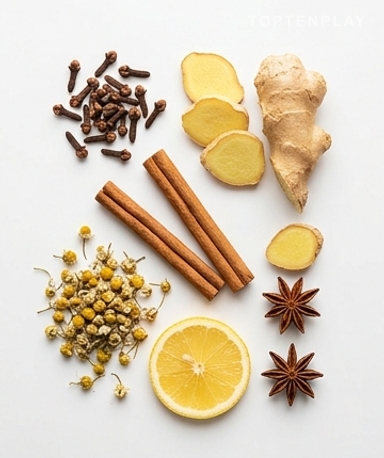
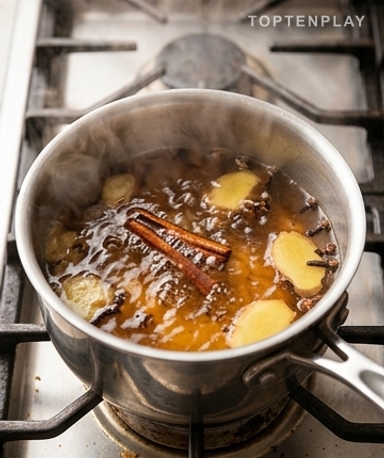
The simple ingredients that make up these infusions: whole cloves, fresh ginger, cinnamon, chamomile, and honey.
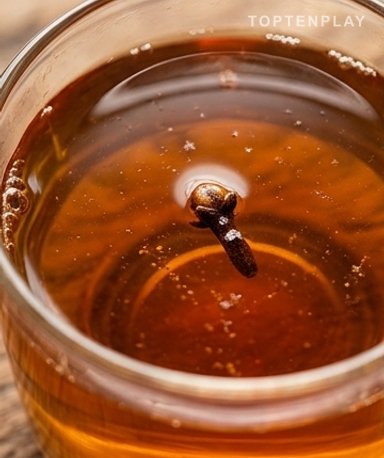
- Whole cloves : Get them whole, not ground. Powder infuses too quickly and gives a bitter taste that takes over. Three to five cloves per cup is enough. Check that they are dark brown and slightly shiny — dull, dry cloves have lost much of their essential oil and therefore their value. The brand doesn’t matter, but a glass jar preserves them better than open plastic bags.
- Fresh ginger (for the winter version) : A small piece about two centimeters is all you need. You can peel it or not — personally, I just peel the cut face and call it a day. Powdered ginger works but offers less freshness. If you don’t have fresh ginger, replace it with half a teaspoon of powder directly in the cold water.
- Cinnamon stick : A whole stick, not powder that floats and never fully filters out. Ceylon cinnamon is finer and less aggressive than Cassia cinnamon, which can dominate all other aromas. If you only have Cassia, reduce it to half a stick.
- Chamomile (for the relaxing version) : A store-bought tea bag works perfectly. If you have loose chamomile, a well-packed tablespoon. The smell of dry chamomile is almost hay-like, slightly dusty — but as soon as it infuses, it releases a floral sweetness that softens the intensity of the cloves.
- Honey : Optional but recommended for the chamomile and winter versions. Add it after straining, never during cooking — heat destroys some of its properties. One teaspoon is enough. Thyme or acacia honey pairs well with warm spices.
Always start with cold tap water — or better
Water makes all the difference in such a simple infusion. If your tap water has a strong lime taste, use filtered or bottled water — with only three or four ingredients, every element counts. Bring the water to a simmer in a small saucepan: not a rolling boil, just that moment when the first bubbles rise and the surface starts to tremble slightly. That’s when you add the cloves. The sound changes immediately — a slight crackle. And within thirty seconds, the smell of eugenol begins to spread through the kitchen.
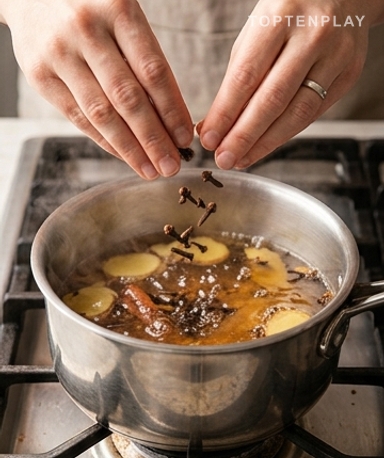
Let it simmer, don’t let it boil vigorously
Five minutes on low heat after adding the cloves. No higher, no rolling boil — aggressive heat sends the volatile aromas off into the steam instead of concentrating them in the water. For the ginger-cinnamon version, add both at the same time as the cloves from the start. The water takes on a pinkish-ochre hue fairly quickly, turning toward a golden brown like light caramel after two to three minutes. The smell at this stage is sharp, almost pungent, with that warming side of fresh ginger that slightly tickles the back of the nose.
Cover and don’t touch anything for ten minutes
Remove the pan from the heat, put a lid on, and let it steep. These ten minutes are non-negotiable — it’s during this time that the active compounds from the cloves continue to release at a decreasing temperature. For the chamomile version, this is the time to add the bag or dried flowers: always add them off the heat, never while boiling, otherwise the chamomile becomes bitter and loses its floral character. Resist the temptation to lift the lid every two minutes.
Strain, sweeten if you like, drink hot
Pour the liquid through a fine-mesh strainer directly over your cup. Add the honey now, at this temperature, and stir slowly — honey melts better in liquid at 60-70°C than at room temperature. The lemon, if you use it, goes in at the end too: just a squeeze, not half a whole lemon. The drink is perfect between 55 and 65°C. Below that, the spicy aromas flatten out. Above that, you won’t taste anything.
Tips & Tricks
- Store your cloves in an airtight glass jar, away from light — they keep their aromatic potency for two to three years under these conditions, compared to a few months in an open plastic bag.
- For the chamomile version, try preparing it fifteen to twenty minutes before going to bed, not right at bedtime — letting the cup cool slightly next to you is in itself a ritual that helps you disconnect from the day.
- If you find the taste of cloves too intense the first time, start with two cloves instead of five and increase gradually according to your palate. Intensity varies significantly between batches.
How many times a day can you drink clove tea?
One to two cups a day is a reasonable frequency for most adults. Cloves are powerful — high doses of eugenol can irritate the stomach lining. If you have a sensitive stomach, start with one cup and monitor your reaction.
Can you use ground cloves instead of whole ones?
Technically yes, but the result is inferior. The powder infuses too quickly, resulting in a bitter taste that is hard to control, and it never filters out completely. Whole cloves release their aromas more gradually and allow you to adjust the intensity based on steeping time.
Can you prepare the tea in advance and store it?
Yes, for up to 24 hours in the refrigerator in a closed jar. Reheat it gently in a saucepan without boiling. Avoid the microwave, which heats unevenly and causes volatile aromas to escape.
Is this tea discouraged for certain people?
Pregnant and breastfeeding women should consult a doctor before consuming it regularly — high doses of eugenol should be avoided during pregnancy. People on blood thinners should also be cautious, as cloves have a slight blood-thinning effect.
Why is my tea too bitter or too strong?
Two possible causes: too many cloves (more than 5 per cup), or steeping for too long at too high a temperature. Reduce to 3 cloves and respect the ten-minute off-heat steeping time with a lid. Boiling water for the entire duration is the most common mistake.
Can I add milk to soften the taste?
A little plant milk (oat, almond) works well and softens the spicy intensity without masking the aromas. Cow’s milk also works. Add it after straining, in the cup, to your taste.
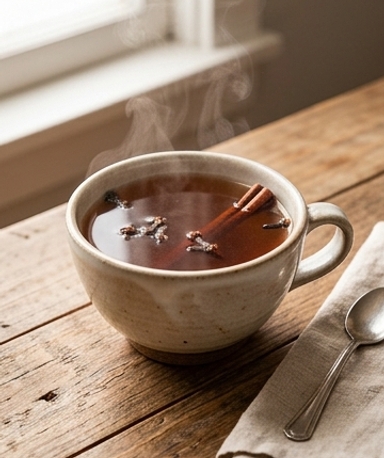
Homemade Clove Tea
International
Hot drink
A spicy, comforting, and naturally anti-inflammatory infusion. Three variations for three different moods.
Ingredients
- 250 ml cold water
- 3 to 5 whole cloves
- 1 tsp honey (optional)
- 1/2 lemon, juice (optional)
- — Winter Variation —
- 2 cm fresh ginger, peeled and sliced
- 1 cinnamon stick
- — Relaxing Variation —
- 1 chamomile tea bag (or 1 tbsp dried chamomile)
Instructions
- 1Bring water to a simmer in a small saucepan over medium heat — not a rolling boil.
- 2Add the cloves (and ginger + cinnamon for the winter version). Let simmer for 5 minutes on low heat.
- 3Remove from heat, cover, and let steep for 10 minutes. For the chamomile version, add the bag at this stage off the heat.
- 4Strain into a cup through a fine-mesh strainer.
- 5Add honey and/or lemon to the cup. Stir and serve immediately.
Notes
• Storage: keeps for 24h in the refrigerator in a closed jar. Reheat gently in a saucepan.
• Intensity: for a milder taste, start with only 3 cloves. The intensity increases with steeping time and the number of cloves.
• Cold variation: let cool completely, pour over ice cubes with a lemon slice for a summer version.
Nutrition Facts (per serving, estimated)
| 15 kcalCalories | 0gProtein | 4gCarbs | 0gFat |