📌 Homemade Chocolate Fondant
Posted 31 March 2026 by: Admin
Everyone thinks that a chocolate fondant is a pastry chef’s business. That it requires equipment, technique, and hours in the kitchen. The reality: six ingredients, one bowl, forty minutes.
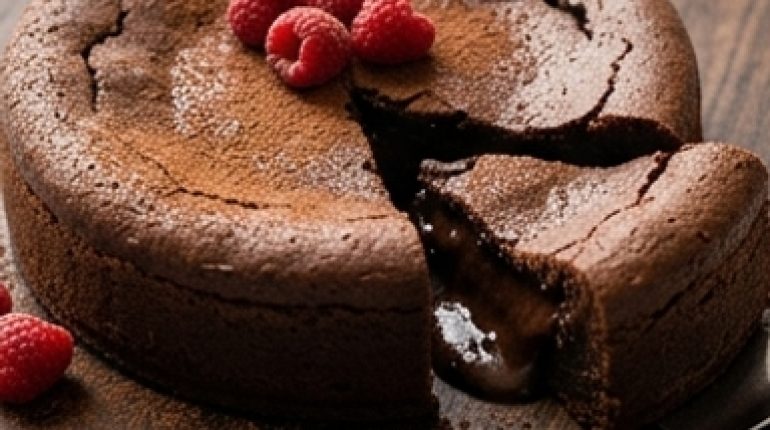
The surface is slightly cracked, a dark, almost matte brown. Lean in and it smells of warm, slightly roasted cocoa, with that buttery undertone that makes your mouth water even before you cut into it. The fork meets thin resistance on the surface, then the center gives way — dense, shiny, almost liquid. It’s exactly what you’re looking for.
Why you’ll love this recipe
Ingredient Notes
Only six simple ingredients — but every detail counts to achieve this perfect fondant.
- Dark Chocolate : This makes all the difference. Take at least 70% — Lindt Excellence, Valrhona, or any baking bar from 64% up. Below 60%, the taste flattens and you get something sweet but without depth. Break it into even pieces for uniform melting.
- Butter : Real butter is non-negotiable here. Salted butter works very well — in that case, omit the pinch of salt. It must melt with the chocolate, not be incorporated cold.
- Eggs : Take them out of the fridge at least 30 minutes before. Cold eggs added to a warm chocolate-butter mixture create a thermal shock that can seize the chocolate. A small precaution for a big effect.
- Flour : Only 80g. It’s intentionally small. This low ratio is precisely what creates the melting texture rather than a classic structured cake. Sift it before incorporating — it integrates better and avoids dry lumps.
Melting: avoid the microwave, it’s a trap
The double boiler is the step where many are tempted to take a shortcut. Microwave result: grainy chocolate, a sandy texture impossible to fix. In a double boiler, the chocolate and butter melt slowly at a controlled temperature. The mixture starts thick, almost pasty, then gradually liquefies into a dark and shiny ribbon. You stir gently, in steady circles. When the surface is perfectly smooth and no visible pieces remain, remove from heat. Let it cool for five good minutes before incorporating into the eggs — it’s important, otherwise the eggs will cook.
The batter: the less you work it, the better
Whisk the eggs and sugar until the mixture pales slightly and becomes frothy — two minutes by hand is enough. Pour in the cooled chocolate and mix with a spatula, not an electric mixer. The sifted flour comes last, folded in with slow, enveloping movements. The batter should be homogeneous, a deep and shiny brown. Stop as soon as it is. Working it further develops the gluten and turns the fondant into something closer to an ordinary cake — okay but not what we want.
The part everyone gets wrong: deciding when to take it out
Twenty minutes at 180°C in a buttered mold. The top should be matte, slightly cracked, a dark brown color close to pure cocoa. When you shake the mold slightly, the center still quivers — like a loose panna cotta. That’s intentional. If the cake is perfectly set when coming out of the oven, the melting heart has disappeared and you end up with a good ordinary chocolate cake. Ten minutes of rest out of the oven before unmolding: it firms up just enough without losing its soul.
Tips & Tricks
- To test the cooking without guessing, lightly tap the edge of the mold: the center should quiver like a set custard, not stay still. It’s much more reliable than a knife or toothpick for this type of cake.
- A pinch of fleur de sel on each portion when serving, not in the batter. Salt amplifies the taste of chocolate in a way that’s hard to explain but immediately noticeable — and it changes everything.
- If you prepare the batter in advance and take it directly from the fridge, add 3 to 5 minutes to the baking time. Cold batter takes more time to reach the core temperature.
How do I know if the fondant is cooked to perfection?
Gently shake the mold: the center should quiver like a panna cotta, not stay rigid. The top should be matte and slightly cracked. If the surface is still shiny and liquid, leave it for 2-3 extra minutes.
Can I prepare the batter in advance?
Yes, it’s even recommended for meals with guests. Pour the batter into the buttered mold, cover with plastic wrap (touching the surface) and keep in the fridge for up to 24h. Bake directly out of the fridge, adding 4-5 minutes of cooking time.
Can I freeze chocolate fondant?
Yes, in individual portions once the cake has cooled. Wrap each portion in plastic wrap and place in an airtight container. To reheat, go directly into the oven at 160°C for 8-10 minutes or a few seconds in the microwave.
Why is my fondant too dry in the center?
Overcooking, in almost every case. Every oven is different — start testing at 18 minutes rather than 20. A silicone mold also conducts heat less efficiently than a metal one, which can throw off the timing.
Which chocolate should I choose for an optimal result?
A cooking chocolate with at least 70% cocoa. Lindt Excellence 70%, Valrhona Caraïbe, or any couverture chocolate works very well. Avoid low-end supermarket bars — the final taste depends directly on it.
Is there a gluten-free version?
Replace the flour with 80g of cornstarch or almond meal. Cornstarch gives an even more melting and smooth texture, while almond meal brings a pleasant subtle hazelnut flavor.
Homemade Chocolate Fondant
French
Dessert
Six ingredients, forty minutes. A cake with a slightly cracked crust and a gooey heart, as simple to make as it is impressive to serve.
Ingredients
- 200g dark cooking chocolate (70% minimum)
- 150g butter, cubed
- 120g sugar
- 4 eggs, room temperature
- 80g flour, sifted
- 1 pinch salt (or fleur de sel for serving)
Instructions
- 1Preheat the oven to 180°C. Butter a round (20cm) or square mold.
- 2Break the chocolate into pieces and melt with the butter in a double boiler, stirring until you get a smooth and shiny mixture. Let it cool for 5 minutes off the heat.
- 3In a large bowl, whisk the eggs and sugar for 2 minutes until the mixture pales slightly.
- 4Incorporate the cooled chocolate into the egg-sugar mixture and mix with a spatula until homogeneous.
- 5Add the sifted flour and salt with folding movements. Stop as soon as the batter is smooth and homogeneous.
- 6Pour the batter into the mold. Bake for 20 minutes for a very gooey heart, 23-25 minutes for a more structured fondant.
- 7Let rest for 10 minutes in the mold before unmolding. Serve warm.
Notes
• Storage: up to 3 days in the refrigerator covered in plastic wrap. A few seconds in the microwave is enough to restore the gooey heart.
• Make-ahead: the batter keeps for 24h in the fridge in the filmed mold. Add 4-5 minutes of cooking if the batter comes directly from the refrigerator.
• Variations: add 50g of hazelnut powder for a more intense taste, or the zest of an orange for a fruity touch.
Nutrition Facts (per serving, estimated)
| 395 kcalCalories | 6gProtein | 30gCarbs | 25gFat |