📌 Homemade Choco-Hazelnut Rochers: The Express No-Bake Recipe Ready in 25 Minutes
Posted 16 January 2026 by: Admin
Gourmet Bites Inspired by a Great Classic
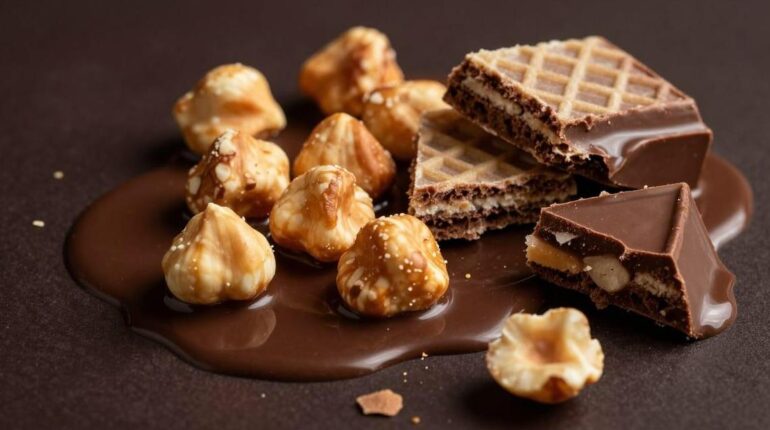
Behind every chocolate-hazelnut rocher lies a subtle balance between three complementary textures: the velvety melt of the spread, the delicate crunch of crumbled wafers, and the crispy intensity of roasted hazelnuts. This homemade version transcends industrial chocolates through its deliberate generosity and total personalization, while maintaining that immediately recognizable taste signature.
The major asset of this recipe lies in its total lack of baking. In just 25 minutes of active preparation, it delivers 18 to 20 perfectly calibrated bites, transforming any occasion into a gourmet moment: an express dessert after an improvised meal, a refined accompaniment to coffee, the centerpiece of a holiday platter, or a handcrafted gift in a pretty transparent bag.
This technical accessibility sacrifices nothing to taste requirements. Each rocher faithfully reproduces the aromatic complexity of emblematic commercial versions, with that artisanal touch that makes all the difference: truly roasted hazelnuts, a generously dosed paste, and an intense chocolate coating. The recipe thus repositions chocolate pleasure in a more authentic dimension, where each bite reveals careful manual work rather than industrial standardization.
A Precise Composition for a Perfect Balance of Flavors
This culinary alchemy relies on a meticulously calibrated dosage: 200g of milk or dark chocolate form the outer shell, while 150g of hazelnut spread forms the melting heart. The incorporation of 100g of finely crumbled wafers creates that signature texture, both compact and airy, that characterizes authentic rochers.
The distribution of the 80g of crushed roasted hazelnuts follows a precise logic: 50g are integrated directly into the praline base to structure the heart, while the remaining 30g join the melted chocolate for the final coating. This distribution guarantees a constant aromatic presence in every bite, without neutral zones or occasional overload.
Adding a tablespoon of neutral oil to the melted chocolate radically transforms the coating texture. This simple manipulation thins the mass, facilitates uniform coverage of the balls, and confers that characteristic shine of professional chocolates. The result: a smooth film that sets quickly, trapping the crunchy structure without weighing it down.
This ratio between spread, wafers, and hazelnuts produces a base that is “homogeneous, slightly sticky but easy to work with” – a technical formulation that reflects the perfect balance between cohesion and maneuverability. Too much paste would make the whole thing too soft; not enough wafers would eliminate the texture contrast. This precision of proportions fundamentally distinguishes an amateur success from a result worthy of seasoned chocolatiers.
The Double-Cold Technique for an Impeccable Coating
This precision of proportions is not enough without mastering the thermal process. Shaping begins by taking calibrated portions – about a tablespoon – that the palms roll into regular spheres. This uniformity determines the final aesthetic and ensures a homogeneous result when dipping into the warm chocolate.
The mandatory 30-minute stay in the freezer is the decisive step. This intense cooling transforms the initial sticky texture into a stable structure, allowing the ball to maintain its shape when in contact with the chocolate melted at 40-45°C. Without this crucial phase, the heat would immediately soften the praline heart, causing deformations and unsightly drips.
Coating is done using a fork or a pick, tools that ensure precise handling without direct contact. The cold ball plunges into the fluid chocolate, is covered uniformly, then drips by light tapping before resting on parchment paper. If the chocolate thickens during the operation – a frequent phenomenon with low ambient temperatures – gentle reheating instantly restores its fluidity.
This method of thermal shock between the frozen element and the warm coating produces a thin film that sets quickly on contact, creating that characteristic crunchy shell without moisture migration to the interior. The contrast between the icy surface and liquid chocolate also generates that professional shine, the visual signature of artisanal chocolates that transcends simple indulgence to reach an aesthetic dimension.
Optimal Preservation and Flavor Personalization
This professional shine acquired through thermal shock only lasts if storage conditions respect the requirements of tempered chocolate. The rochers keep for 5 to 7 days in an airtight box, in a cool and dry place, away from humidity which would cause surface whitening and an alteration of the crunch. The ideal temperature ranges between 16 and 18°C – not too hot to avoid softening the praline heart, nor too cold to preserve the melting texture.
Before the chocolate hardens completely, a pinch of fleur de sel placed on each rocher sublimates the chocolate-hazelnut flavors by amplifying the sweet-salty contrast. This chef’s gesture transforms a successful treat into a refined creation, revealing the aromatic nuances of the praline while mitigating the sugary saturation. This final touch, invisible at first glance, marks the difference between domestic production and artisanal realization.
The recipe also tolerates variations according to taste preferences. Hazelnuts give way to almonds for a more subtle sweetness, or to pecans which bring a characteristic woody note. Each substitution modifies the aromatic balance without compromising the fundamental structure – the ratio between melting and crunchy elements remains the non-negotiable parameter.
This versatility positions these rochers as a universal solution: a quick dessert after an improvised meal, a gourmet gift in a transparent bag tied with a ribbon, or the centerpiece of a festive platter. Their individual format facilitates service, their artisanal appearance enhances the gesture, and their taste justifies their reputation.