Wednesday night, when the fridge starts looking empty and you don’t feel like complicated cooking, that’s when chow mein takes the stage. Twenty minutes of prep, a very hot wok, and you have something that truly tastes like what you order at a restaurant.
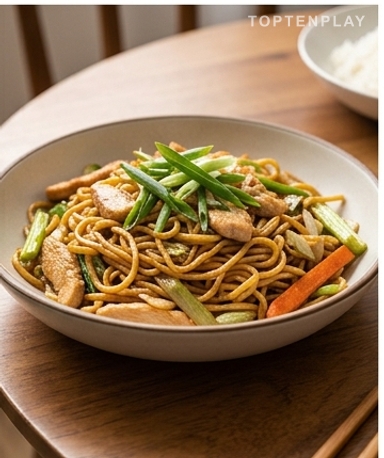
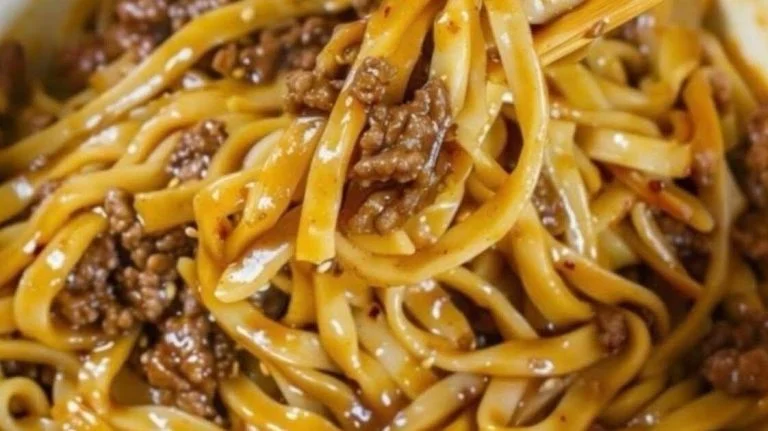
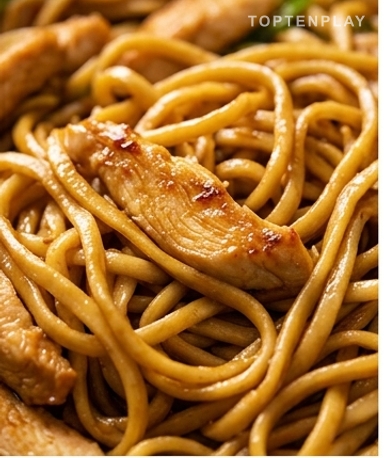
The noodles have that golden hue, like light caramel in places where they touched the bottom of the scorching wok. The chicken is tender, lightly glazed by the sauce. The bean sprouts keep their crunch, and the carrot strips add a touch of orange amidst the brown of the sauce. The smell rising from the wok — soy sauce, toasted sesame, hot vegetables — is exactly what you smell when pushing open the door of a good Cantonese restaurant.
Why you’ll love this recipe
Ingredient Notes
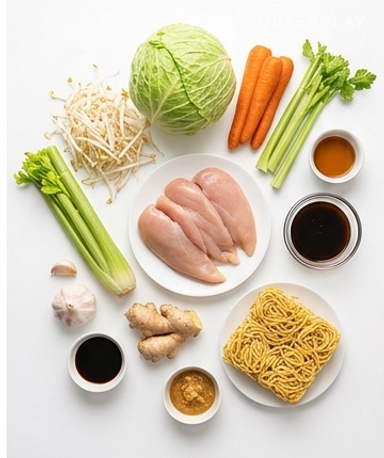
Everything you need for a successful chow mein: chicken, fresh vegetables, and good egg noodles.
- Fresh chow mein noodles : The yellow egg noodles found in the refrigerated section of Asian grocery stores. They are thinner than lo mein and stand up better to the heat of the wok. If you can’t find them, thin dry egg noodles work fine after a quick boil — just al dente, no more.
- Oyster sauce : This is what gives the roundness and slight sweetness found in Cantonese dishes. Lee Kum Kee brand, the green one with the lady drawing. Don’t skimp on the quantity; it’s the backbone of the sauce.
- Dark soy sauce : Just a tablespoon, but it changes everything. Without it, the dish stays pale and the taste is flat. It brings a caramelized depth that light soy sauce alone cannot provide.
- Chicken broth : This replaces Shaoxing wine here, a Cantonese classic that we can’t use. The broth provides the necessary liquid for the sauce and a savory base without altering the overall flavor. A cube diluted in a bit of hot water works very well.
- Cornstarch : A double role in this recipe. In the marinade, it coats the chicken and protects it from the high heat. In the sauce, it binds it and gives that consistency that coats the noodles without drowning them. Essential.
Marinade first, everything else after
Before touching the wok, take care of the chicken. Cut the breasts into thin strips against the grain — perpendicular to the muscle fibers. You’ll feel the difference in your mouth when tasting. In a bowl, mix light soy sauce, a spoonful of oil, cornstarch, a pinch of sugar, and white pepper. Coat each piece well, then let it rest for 15 minutes. Meanwhile, prepare all your vegetables: finely shredded cabbage, julienned carrots, celery sliced on the bias, green onions in five-centimeter segments. Once the wok heats up, there are no more pauses possible.
Noodles, an express step
Boil a large pot of salted water. Drop in the fresh noodles, two minutes maximum — they should still be slightly firm to the bite. Drain them immediately and rinse with cold water to stop the cooking. You can feel the hot-cold contrast in your hands as you handle them. They go from soft to firm in seconds. Set them aside with a drizzle of oil to prevent them from sticking together. Overcooked noodles at this stage will disintegrate in the wok.
Wok on high, maximum heat
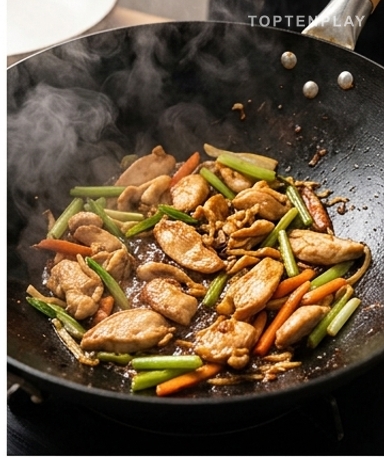
Heat your wok until it starts to smoke slightly. Pour in the oil, wait until it’s quite hot, then add the chicken in a single layer. Don’t touch for 30 seconds. You want to hear that sharp crackle, that frank ‘tsss’ when the meat hits the metal. Flip the pieces, let the other side color, then remove the chicken. It will finish cooking at the end with the rest. In the same oil, add the garlic and ginger — ten seconds, no more. Add the cabbage, carrot, and celery. Thirty seconds over very high heat, stirring constantly.
The moment the noodles get personality
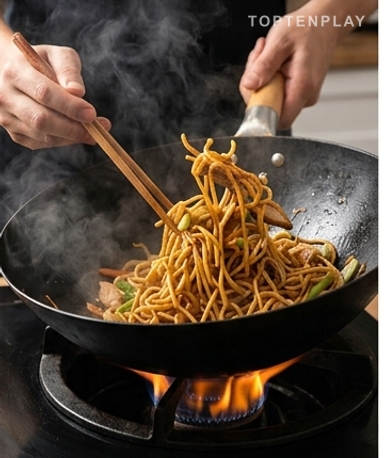
Add the noodles directly to the wok with a little oil. Spread them in a thin layer and leave them untouched for 30 seconds. This is where the magic happens. They catch slightly on the bottom, take on an ochre color in places, and a roasted nutty smell fills the kitchen. Only then, mix. Pour in the pre-prepared sauce. Stir vigorously so each noodle is coated. The bean sprouts go in last, 20 seconds, then turn off the heat.
The final touch
Put the chicken back in the wok, mix with the noodles and vegetables. A drizzle of sesame oil over the turned-off heat — it loses all its fragrance if heated for too long. Taste and adjust salt if needed. Serve immediately in warm bowls, with green onions scattered on top. Chow mein doesn’t wait.
Tips & Tricks
- Prepare the sauce in a bowl before starting — light soy, oyster sauce, dark soy, broth, cornstarch, all together. Once the wok is hot, you no longer have time to look for ingredients.
- Don’t overcrowd the wok. If you double the quantities, cook in two separate batches. A wok that’s too full generates steam instead of stir-frying, and you end up with soggy noodles and grey chicken.
- The bean sprouts go in last, 20 seconds maximum. Their crunch is what balances the overall texture of the dish — if you add them too early, they melt into the sauce and nothing remains.
What is the difference between chow mein and lo mein?
The main difference is in how the noodles are cooked. In chow mein, the noodles are stir-fried in the wok after blanching — they get color and crunch. In lo mein, the cooked noodles are simply tossed with the sauce without the frying step. Result: lo mein is softer and saucier, chow mein is firmer and more savory.
Can I use dry noodles instead of fresh?
Yes, thin dry egg noodles work very well. Cook them according to the package instructions but stop 1 to 2 minutes early — they will finish cooking in the wok. Rinse well with cold water and add a drizzle of oil to prevent sticking.
Why do my noodles stick and form a block in the wok?
Two possible reasons: either the noodles overcooked during blanching, or the wok wasn’t hot enough when you added them. Ensure the wok is slightly smoking before adding the noodles, and add a drizzle of oil with them. The high heat is what keeps them from sticking.
Can a large skillet replace a wok?
A large steel or cast-iron skillet works, but you have to compensate for the lack of high walls. Cook ingredients in smaller quantities to avoid the steam effect, and always keep the heat at maximum. An ordinary non-stick pan won’t give the same result — the heat is too gentle.
How to store and reheat chow mein?
Chow mein keeps for 2 days in the refrigerator in an airtight container. To reheat, toss it for 2 minutes in a very hot wok or skillet with a splash of water or broth to loosen the sauce. The microwave works, but the noodles lose their texture.
Can part of the dish be prepared in advance?
Yes, and it’s even recommended. The chicken marinade can be prepared the day before — it only makes it better. The sauce can also be mixed in advance and kept in the fridge in a jar. Vegetables can be chopped a few hours before. All that’s left is to cook at serving time.
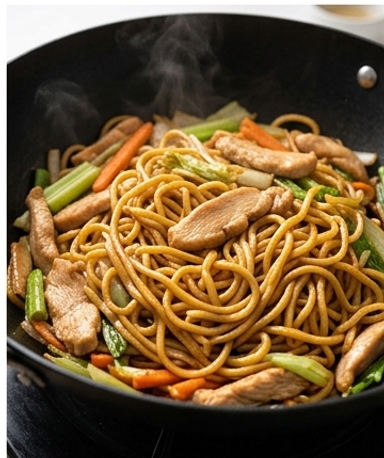
Homemade Chicken Chow Mein
Asian
Main course
Egg noodles stir-fried in a wok with marinated chicken, crunchy vegetables, and a soy-oyster sauce. Ready in 35 minutes.
Ingredients
- 500g chicken breasts, cut into thin strips against the grain
- 300g fresh chow mein noodles (Asian grocery refrigerated section)
- 150g green cabbage, finely shredded
- 1 medium carrot (about 100g), julienned
- 2 celery stalks, sliced on the bias
- 150g bean sprouts
- 4 green onions, cut into 5 cm segments (whites and greens separated)
- 3 garlic cloves, minced
- 1 tsp fresh ginger, grated
- 3 tbsp vegetable oil
- 1 tsp sesame oil (finishing)
- 1 tbsp light soy sauce (marinade)
- 1 tbsp chicken broth (marinade)
- 1 tbsp cornstarch (marinade)
- 1 tsp sesame oil (marinade)
- 1/2 tsp sugar (marinade)
- 1 pinch white pepper (marinade)
- 3 tbsp light soy sauce (sauce)
- 2 tbsp oyster sauce
- 1 tbsp dark soy sauce
- 60ml chicken broth (sauce)
- 1 tsp sugar (sauce)
- 1 tsp cornstarch (sauce)
- 1 tsp sesame oil (sauce)
- 1 pinch white pepper (sauce)
Instructions
- 1Mix all marinade ingredients in a bowl. Add the chicken strips, coat well, and let rest for 15 minutes.
- 2Mix all sauce ingredients in a separate bowl. Set aside.
- 3Bring a large pot of salted water to a boil. Blanch the noodles for 2 minutes, drain, rinse with cold water, and mix with a drizzle of oil.
- 4Heat the wok over high heat until slightly smoking. Add 1 tbsp of oil and cook the chicken in one layer without stirring for 30 seconds, then flip. Cook for another minute. Remove and set aside.
- 5In the same wok, add 1 tbsp of oil. Sauté garlic, ginger, and green onion whites for 10 seconds.
- 6Add cabbage, carrot, and celery. Cook for 1 minute over very high heat, stirring constantly.
- 7Add the noodles with 1 tbsp of oil. Spread in a thin layer and let fry without stirring for 30 seconds until they color slightly.
- 8Pour the sauce over the noodles, mix quickly. Return the chicken to the wok.
- 9Add the bean sprouts and green onion greens. Mix for 20 seconds and remove from heat.
- 10Drizzle with sesame oil and serve immediately.
Notes
• Storage: 2 days in the refrigerator. Reheat in a pan over high heat with a splash of broth.
• Veggie variation: zucchini, bell peppers, shiitake mushrooms, thinly sliced broccoli — everything works. Add firmer vegetables first.
• Make ahead: the marinade can be prepared the day before, as can the sauce. Vegetables can be cut a few hours in advance.
Nutrition Facts (per serving, estimated)
| 490 kcalCalories | 36gProtein | 52gCarbs | 14gFat |