We all think that making your own preserves is a grandmother thing involving a giant pot, dozens of jars, and—necessarily—vinegar to make it last. False. Two ingredients, forty-five minutes, and you have summer tomatoes in stock for the next two years.
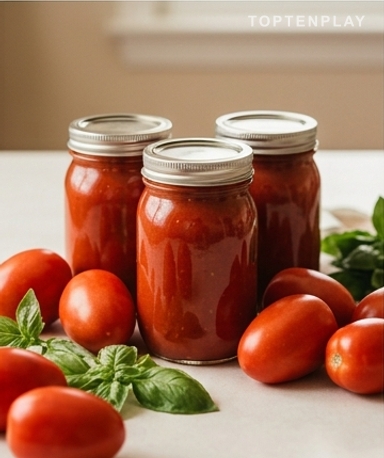
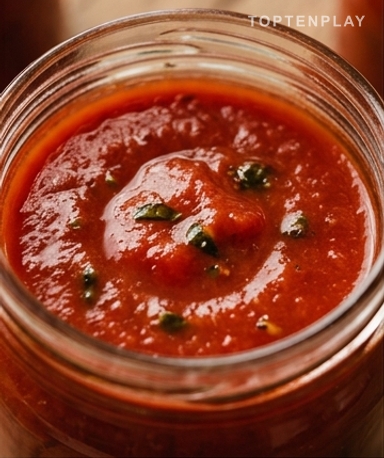
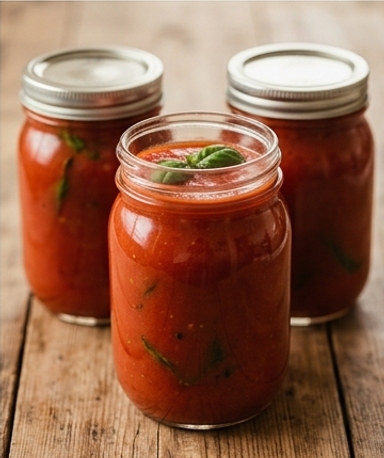
A well-filled jar of homemade tomato purée is first and foremost a color—that deep red, almost garnet, that you never see in supermarket cans. You lift the lid upon opening and the smell hits you all at once: warm basil, slightly aniseed, with that sweet background of long-cooked tomatoes. The texture is dense. Not watery, not runny—it clings to the spoon like a real sauce, not a juice. That’s what a tomato that hasn’t been mistreated looks like.
Why you’ll love this recipe
Ingredient Notes
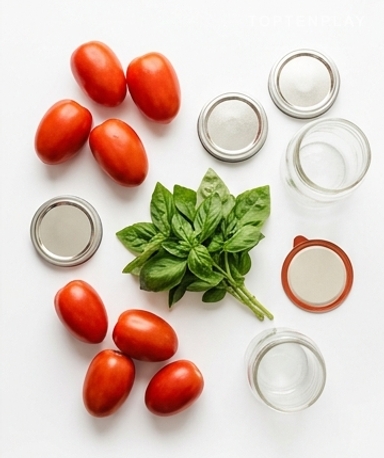
Very ripe Roma tomatoes and fresh basil: two ingredients are enough for preserves that last two years.
- Roma or San Marzano Tomatoes (7 kg) : These are really what you need. Fleshy, not very juicy, their flesh holds up during cooking without releasing water everywhere. If you use vine tomatoes or classic round ones, your purée will be too liquid and you’ll have to cook it twice as long to reduce it. In mid-summer at the market, Roma tomatoes are often cheaper—it’s the right time to buy them in bulk.
- Fresh basil : No dried basil here, it adds nothing. A few whole leaves in each jar, slipped in just before closing. The infusion happens slowly during storage—upon opening months later, the fragrance is there, discreet but very present.
- Jars with seals (Le Parfait or Mason jar type) : Check the condition of the rubber seal before each use—if it’s cracked or slightly deformed, it won’t create the vacuum correctly and your preserve won’t keep. A new seal costs a few cents and prevents losing all your hard work.
Choose tomatoes that actually smell like something
At the market, before buying, bring your nose close. A good canning tomato should smell like a tomato—that slightly vegetal scent with a hint of warm earth under the skin. If it smells like nothing in your hand, it will smell like nothing in the jar. Roma and San Marzano are the two varieties that perform best: little water, lots of flesh. If you buy them and they are still a bit firm, leave them for two or three days at room temperature. Is the skin starting to wrinkle very slightly? That’s the perfect time to start.
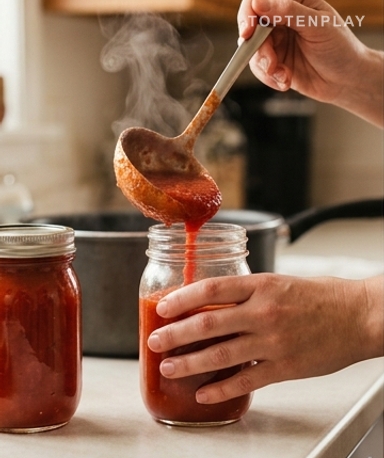
Blend without worrying about texture
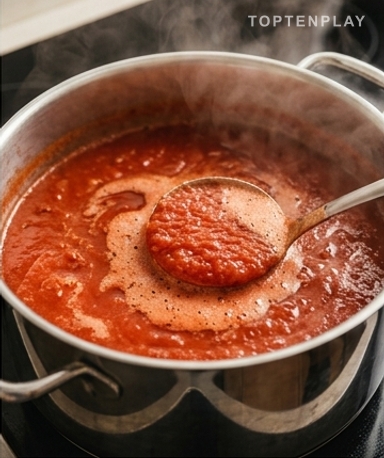
No need to peel the tomatoes or remove the seeds—the blender takes care of everything. Cut them into rough quarters and process them in batches. The resulting purée is pale pink at first, almost light orange, with a slight foam on the surface. That’s normal. Pour everything into a large pot and bring to a boil over high heat. As soon as it starts bubbling, a whitish foam rises—it’s the tomato albumin coagulating. Skim it off regularly with a spoon; it takes two minutes and results in a cleaner, less bitter purée.
Let it reduce without a lid—it’s intentional
Twenty to thirty minutes of cooking over medium heat, without a lid. This is where the magic happens. The purée loses its excess water, the red becomes more intense—a deep brick red, far from the initial pink. The smell changes too: sweeter, more concentrated, with that slightly caramelized base that you only get by cooking for a long time. Stir occasionally with a wooden spoon to prevent it from sticking to the bottom. The purée is ready when it visibly thickens and a track made on the surface stays open for a few seconds before closing.
Fill the jars while still hot, not lukewarm
Sterilize your jars by plunging them into boiling water for ten minutes, then let them air dry upside down on a clean towel. Fill them while the purée is still very hot—almost scalding. Slip two or three basil leaves into each jar before closing. Tighten the lids fully, turn the jars upside down for five minutes to help the vacuum form, then submerge them in a large pot of simmering water for thirty minutes of final sterilization. The water must completely cover the jars.
Wait 24 hours before storing
Remove the jars from the water and place them on a towel, without stacking or moving them. As they cool, you might hear a small, discreet click—that’s the lid slightly deforming under the effect of the vacuum forming inside. Good sign. Wait until the next day to check: press the center of the lid. If it doesn’t move and makes no noise, the vacuum is perfect. Then store in a dark, cool, dry place. They will keep for two years without any problem.
Tips & Tricks
- Never plunge cold jars directly into boiling water—the thermal shock can crack them. Start with lukewarm water and gradually increase the temperature.
- If the lid clicks when you press it after complete cooling, the vacuum did not form. Put that jar in the fridge and use it within a week.
- Once opened, a jar keeps for five to seven days in the refrigerator—pour a drizzle of olive oil on the surface before closing to limit oxidation.
Why doesn’t this recipe require vinegar?
Vinegar is often used to lower the pH and prevent bacteria growth. Here, the double sterilization—of the jars before filling, and then the filled jars in boiling water—is enough to create a sterile environment. The result: a purée with a pure taste, without any added acidity.
How do I know if the vacuum formed correctly in my jar?
After 24 hours of cooling, press the center of the lid. If it doesn’t move and makes no noise, the vacuum is perfect. If you hear a click or if the lid gives under your finger, the seal didn’t hold—put that jar in the refrigerator and consume it within a week.
Can I use other varieties of tomatoes?
Technically yes, but results vary a lot. Classic round tomatoes contain too much water—your purée will be liquid and you’ll have to reduce it much longer. Roma and San Marzano remain the best for canning because their flesh-to-water ratio is ideal.
Can I add garlic or other herbs to the jars?
Yes, one whole garlic clove per jar works very well and subtly scents the purée. However, avoid large quantities of thyme or rosemary—their essential oils can dominate and limit your later uses. Basil remains the most versatile.
What is the shelf life once the jar is opened?
An opened jar keeps for 5 to 7 days in the refrigerator. Pour a drizzle of olive oil on the surface before closing to limit oxidation. If you don’t use it all quickly, you can also freeze the rest in portions.
Do I need special equipment to succeed with this recipe?
A blender (immersion or countertop), a large pot, and a stockpot deep enough to fully cover the jars are enough. Rubber-seal jars like Le Parfait are the most reliable, but screw-top Mason jars also work—the essential thing is that the seal is in good condition.
Homemade Canned Tomatoes Without Vinegar
French
Preserves & Condiments
The simple method to capture the taste of summer in a jar and keep your tomatoes for up to two years, without additives, vinegar, or complications.
Ingredients
- 7 kg very ripe Roma or San Marzano tomatoes
- 1 bunch fresh basil (approx. 20 leaves)
- 3 2 L glass jars with new rubber seals
Instructions
- 1Wash the tomatoes carefully, cut them into quarters, and blend them in batches until a smooth purée is obtained.
- 2Pour all the purée into a large pot and bring to a boil over high heat.
- 3As soon as it starts boiling, regularly skim off the whitish foam that rises to the surface.
- 4Lower to medium heat and let reduce without a lid for 20 to 30 minutes, stirring regularly, until the purée thickens and a track made on the surface stays open for a few seconds.
- 5While cooking, plunge the jars and their lids into boiling water for 10 minutes to sterilize them, then let them dry upside down on a clean towel.
- 6Fill the jars with the still very hot purée, leaving a 1 cm margin at the top. Slip 3 to 4 basil leaves into each jar before closing.
- 7Screw the lids on tightly, turn the jars upside down for 5 minutes, then turn them back upright.
- 8Plunge the jars into a large pot filled with boiling water (the water must cover them completely). Maintain a simmer for 30 minutes.
- 9Remove the jars carefully and place them on a towel without moving or stacking them. Allow to cool for a full 24 hours before checking the vacuum and storing.
Notes
• Storage: up to 2 years in a cool, dark, and dry place. Once opened, keep in the refrigerator and consume within 5 to 7 days.
• Vacuum check: after complete cooling, the center of the lid should be firm and not move under finger pressure. A clicking lid indicates a vacuum failure—refrigerate this jar immediately.
• Aromatic variation: add one whole garlic clove per jar for a more fragrant purée, ideal as a base for pasta sauce or soup.
Nutrition Facts (per serving, estimated)
| 45 kcalCalories | 2 gProtein | 9 gCarbs | 0.5 gFat |