📌 Homemade bread: why water temperature between 40 and 46°C changes everything in your recipe
Posted 23 February 2026 by: Admin
The Fundamentals Of A Successful Traditional Bread
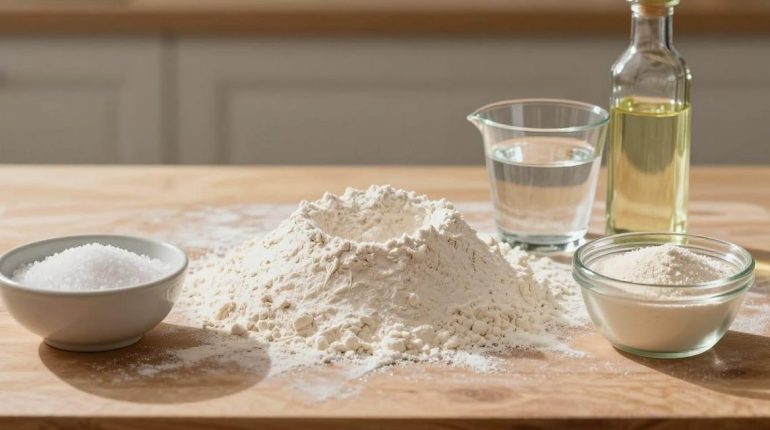
This ancestral recipe is based on a simple truth: six ingredients are enough to create exceptional bread. The proven formula combines 500g of bread flour, 7g of instant yeast, salt, sugar, warm water, and neutral oil. All-purpose flour is a perfectly acceptable alternative, producing a slightly less elastic but equally tasty crumb.
The secret lies in the precision of the temperatures. The water must reach 40 to 46°C, this narrow range allowing the yeast to activate without being destroyed. Too cold, and fermentation stagnates; too hot, and the microorganisms die. A simple tactile test is enough: the water should feel pleasantly warm to the touch, never scalding.
The choice of yeast influences the protocol. Instant yeast is incorporated directly into the dry ingredients, while active dry yeast requires prior activation in sugar water. This technical difference in no way affects the final result.
In 25 minutes of active preparation and 2 to 3 hours of patience, these basic ingredients transform into a loaf with a golden, crispy crust, enveloping a soft and fragrant crumb. Identical to the bread our grandmothers kneaded, this artisanal result requires no special skills, just respect for the fundamentals. The magic happens in the simplicity of the gestures and the quality of the proportions.
Minimal Equipment For A Professional Result
The beauty of this recipe also lies in its material frugality. Three elements are enough to start: a large mixing bowl, a standard 23×13 cm (9×5 inch) loaf pan, and a clean towel to cover the dough during the rise. This economy of tools proves that no expensive investment separates the novice from the accomplished baker.
A stand mixer equipped with a dough hook remains optional. It certainly facilitates kneading, saving a few minutes of physical effort, but hands accomplish the same work with increased satisfaction. Direct contact with the dough allows you to feel its evolution and intuitively adjust its texture. This tactile connection disappears behind the wall of the mechanical bowl.
A little extra butter or oil greases the rising bowl and the pan, preventing the dough from sticking. This technical detail, often neglected, transforms unmolding into a fluid gesture rather than a frustrating struggle.
The pan with precise dimensions guarantees a perfectly proportioned loaf, with that ideal ratio between crust and crumb. Too small, the bread overflows; too large, it flattens out. This standard size, present in most kitchens, offers the optimal geometry for even baking and regular slicing.
The Step-By-Step Manufacturing Process
Beyond these elementary tools, it is the method that shapes the bread. The recipe is structured around clearly defined phases, each responding to a precise biological logic. The detailed instructions, announced on the next page of the original document, break down ancestral know-how into accessible gestures.
Time is the invisible but essential ingredient: two to three hours of rising split into two distinct periods. The first transformation sees the dough double in volume in its greased bowl, under the damp towel that preserves its moisture. This initial fermentation develops the aromas and structures the gluten. The second rise, in the pan, refines the texture before baking.
Thirty to thirty-five minutes in the oven are then enough to transform this pale mass into a golden loaf. This chronometric precision is non-negotiable: a few minutes less leaves a moist core, a few minutes more dries out the crumb. Control of the baking time separates successful bread from failed bread.
This technique passed down from generation to generation requires no hazardous improvisation. Each step follows logically, transforming flour, water, and yeast into artisanal bread consistent in its quality. The process itself is soothing, rhythms the day, and offers that rare satisfaction of creating something tangible with your hands. The basic ingredients then become much more than a simple loaf: they embody a rewarding ritual that reconnects us to the essentials.
Versatility And Uses Of Homemade Bread
This classic white bread transcends its initial simplicity to adapt to all moments of the day. Its balanced texture between soft crumb and golden crispy crust makes it an ideal base for daily sandwiches, where it holds generous fillings without crumbling or getting soggy.
At breakfast, sliced and toasted, it reveals slightly caramelized cereal aromas that industrial breads cannot match. The heat intensifies that crust that cracks under the teeth while the interior retains its characteristic softness. Spread with butter that melts instantly into its still-warm holes, it delivers that primary satisfaction that only homemade provides.
This culinary versatility is based on a regular alveolar structure and a crumb dense enough to hold without being compact. Unlike commercial alternatives full of additives and preservatives, this traditional white bread ages naturally, even improving slightly the next day as it develops more character.
The no-frills recipe thus produces a bread with multiple uses whose quality far surpasses industrial versions. More than just a food, this loaf represents a rediscovered autonomy from standardized products, a mastery of the ingredients consumed, and above all that incomparable pride of serving at your table a bread shaped by your own hands according to methods proven for generations.