📌 Homemade Bone Broth
Posted 29 March 2026 by: Admin
It starts with a scent. Deep, warm, slightly animal — that mixture of bones releasing their essence into simmering water with bay leaves. Bone broth is a weekend recipe. Not because it’s complicated, but because it takes time, and time is what we have on Saturdays.
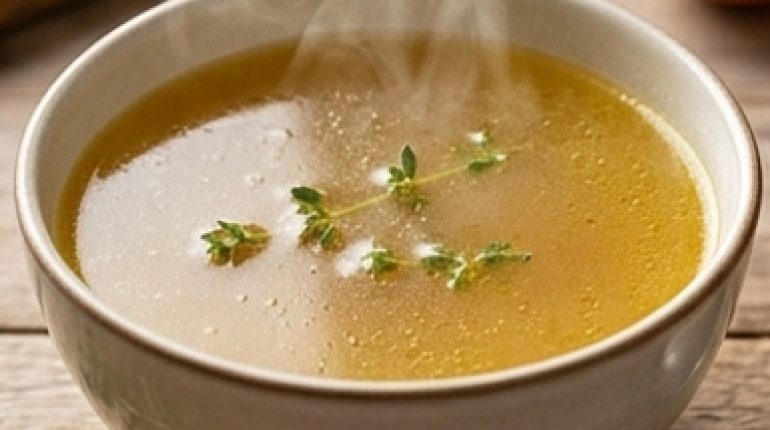
In the bowl, the broth takes on an amber hue, somewhere between acacia honey and light caramel. On the surface, a few circles of fat float gently — a sign that the bones have released their goodness. It steams slightly, a fine vapor that smells like a pot on grandma’s stove. The mouthfeel is slightly velvety, with that satiny quality you never find in a bouillon cube.
Why you’ll love this recipe
Ingredient Notes
All the broth ingredients: bones, fresh vegetables, and aromatic herbs — nothing superfluous.
- The bones : Beef or chicken, both work differently. Beef bones with marrow give a dense broth, almost gelatinous once cooled — that’s the sign it’s truly rich. Chicken carcasses give something lighter and more versatile. Ask your butcher for soup bones; they often sell them for next to nothing.
- Apple cider vinegar : An unexpected ingredient. One tablespoon in the cold water, even before heating. You won’t taste it at all in the final broth. Its role is discreet but useful: it helps extract minerals from the bones during slow cooking. No cider vinegar? Lemon juice does the trick.
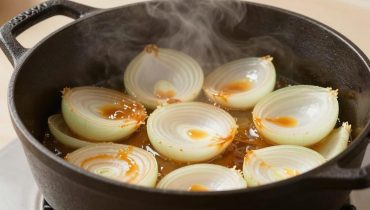
- Onion, carrot, celery : The classic trio. No need to peel them carefully — the onion cut in half with its skin even gives the broth a beautiful amber color. As for carrots, chop them roughly. Truly roughly. Everything will be strained anyway.
- Ginger and turmeric : Optional, but recommended if you like a slightly spiced depth. A slice of fresh ginger and half a teaspoon of turmeric powder add a gentle, earthy heat. Turmeric also colors the broth a very appetizing deep golden yellow.
Roast the bones in the oven — you won’t regret it
Start by rinsing the bones in cold water. Simple. If you have 30 minutes, roast them in the oven at 200°C — they will brown, and this coloration will completely transform the depth of the broth. The smell that emerges during roasting is already something: a light caramelization, almost like roast meat filling the kitchen. Not mandatory. But once you’ve done it, you won’t want to skip it.
Let the vinegar work for 30 minutes before turning on the heat
Place the bones in the pot with cold water and the apple cider vinegar. Now, wait. Thirty minutes at room temperature, without heating. The water takes on a slight pungent, fresh scent — it will disappear completely during cooking. This is the step everyone skips, and it’s a shame. The vinegar starts its work quietly in the cold water before the heat even arrives. Afterward, add the vegetables and herbs, and bring gently to a boil.
Skim once, then don’t touch a thing
As soon as the broth reaches a simmer, a grayish foam rises to the surface. This is normal. Remove it with a skimmer — just once, during the first 15 to 20 minutes. Then, lower the heat to a very gentle simmer: barely any bubbles rising, a light movement on the surface, like a calm breath. A broth that boils too hard becomes cloudy and loses its finesse. Let it simmer calmly for at least 8 hours.
Stop lifting the lid every ten minutes
This is the hardest part. Let it be. The broth doesn’t need you. Go read, run an errand, watch a movie. Check the water level occasionally — if it has reduced too much, add a glass of hot water. After 8 hours, the kitchen has smelled like home for a long time, and the broth has taken on that characteristic amber tint. Taste it — it should be round, deep, and slightly naturally salty.
Strain without pressing, cool, and degrease
Place a fine-mesh sieve over a large bowl and pour the broth. Do not press the vegetables — it clouds the liquid. Let it cool to room temperature, then refrigerate for a few hours or overnight. The fat rises and solidifies on the surface, forming a white or pale yellow layer that is easy to remove with a spoon. What remains underneath is a clean, clear broth that may have turned into jelly — the sign of a truly well-made broth.
Tips & Tricks
- Do not salt during cooking: the broth will reduce and concentrate flavors over the hours. Salt only when serving or using, depending on what you are preparing.
- Freeze in small portions as soon as the broth is cold — 250 ml bags. Take them out as needed; they defrost in 10 minutes in a saucepan over low heat.
- If your broth has turned into a compact jelly in the refrigerator, that’s excellent news. It’s a sign that it is rich in natural collagen. It turns back into a liquid in a few minutes of gentle heat.
How long can bone broth be stored?
In the refrigerator in an airtight container, it keeps for 5 days without any problem. In the freezer in 250 ml portions, it easily lasts 3 months. Remember to leave a little space in the container before freezing — liquid expands as it freezes.
My broth didn’t jellify in the fridge — did I fail?
No, not necessarily. Jellification depends on the type of bones used and the cooking time. Bones rich in collagen (chicken feet, marrow bones) yield a broth that sets into jelly. If yours stays liquid, it’s simply less concentrated — it’s just as good, just lighter.
Can I make this broth in a pressure cooker or slow cooker?
Yes, both work. In a pressure cooker (Instant Pot), count 2 to 3 hours under pressure for a result similar to 8 hours of simmering. In a slow cooker, set to ‘low’ and let it run for 10 to 12 hours — ideal for preparing overnight.
Why add apple cider vinegar to the cold water?
The vinegar creates a slightly acidic environment that helps extract minerals and collagen from the bones during cooking. You absolutely won’t taste it in the final broth. One tablespoon is enough — no need for more.
Can you reuse the same bones for a second broth?
You can, but the result will be much lighter. The bones have already given up most of their essence during the first cooking. For a second pass, extend the time slightly and use it as a light base for grains or legumes rather than as a main broth.
How much water should I use compared to the bones?
The general rule: cover the bones by about 5 cm of water. Too much water makes a bland broth. If you want a concentrated broth, start with just enough water to cover, and only compensate for evaporation losses with small amounts of hot water.
Homemade Bone Broth
International
Broth & Culinary Base
A slowly simmered broth made from beef or chicken bones, vegetables, and aromatic herbs. A versatile culinary base, to be sipped from a mug or used in all your recipes.
Ingredients
- 800g beef bones or chicken carcasses (with a little meat)
- 1 medium onion, halved (with skin)
- 2 carrots, cut into large chunks (about 200g)
- 2 celery stalks, roughly chopped (about 120g)
- 3 garlic cloves, smashed
- 1 tbsp (15ml) apple cider vinegar
- 1 bouquet garni (parsley, thyme, 2 bay leaves)
- 1 slice (10g) fresh ginger (optional)
- ½ tsp turmeric powder (optional)
- 2 litres cold water (adjust to cover bones)
- to taste salt and black pepper
Instructions
- 1Rinse the bones in cold water. For a deeper broth, place them on a baking sheet and roast at 200°C for 25 to 30 minutes until golden brown.
- 2Place the bones in a large pot. Cover with cold water, add the apple cider vinegar, and let sit for 30 minutes without heating.
- 3Add the onion, carrots, celery, garlic, bouquet garni, and the ginger and turmeric if using.
- 4Bring to a boil over medium heat. At the first sign of simmering, skim the grayish foam from the surface using a skimmer for 15 to 20 minutes.
- 5Reduce heat to minimum for a very gentle simmer — barely a few bubbles on the surface. Partially cover and simmer for 8 hours. Top up with a little hot water if the level drops too much.
- 6Pour the broth through a fine sieve placed over a large bowl. Do not press the vegetables.
- 7Leave to cool to room temperature, then refrigerate. Remove the solidified fat layer from the surface. Salt and pepper before serving or using.
Notes
• Storage: 5 days in the refrigerator in an airtight container, 3 months in the freezer in 250 ml portions.
• A broth that jells in the fridge is an excellent sign — it’s rich in natural collagen. It becomes liquid again in a few minutes of gentle heat.
• For a lighter broth: use chicken carcasses. For a richer, more gelatinous broth: favor beef bones with marrow, or add chicken feet.
Nutrition Facts (per serving, estimated)
| 55 kcalCalories | 7gProtein | 3gCarbs | 2gFat |