Healthy juices have a bad reputation, and it’s often deserved. They either taste like lawn clippings or they are so sweetened you could call them organic sodas. This beet-carrot juice is an honest exception — simple to make, genuinely good if you balance it right, and with nutrients that aren’t just there to decorate the label.
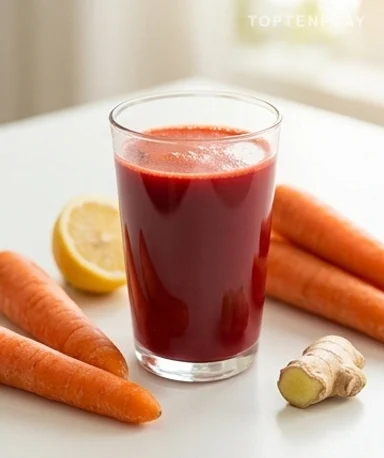
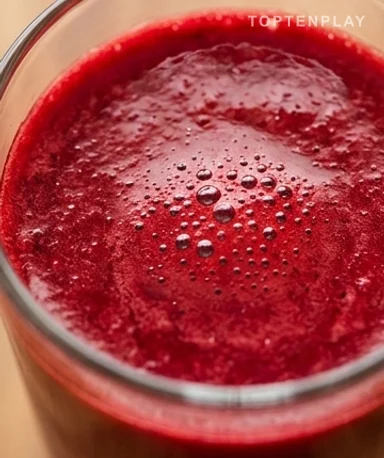
In the glass, the color is bold: a deep red leaning towards burgundy, almost opaque, with a fine foam that disappears in seconds. Moving your nose closer, you first smell the fresh earthiness of the beet — that slightly rustic mineral side — before the natural sugar of the carrot takes over. The first sip is thick, velvety, with a frank sweetness followed by a slight lingering bitterness. If you add ginger, a little kick of heat settles in the back of the throat and really wakes everything up.
Why you’ll love this recipe
Ingredient Notes
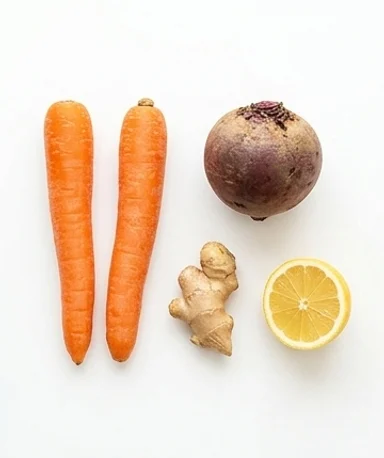
Beet, carrots, ginger, and lemon — four simple ingredients for a juice full of life.
- Raw beetroot : Raw, not cooked in a jar. This is where many people go wrong at the supermarket. Pre-cooked beetroot in vinegar completely changes the taste, and not in a good way. A medium beet is about 200-250 g — the right size for a glass. If it’s your first time, start with a small one: it’s an acquired taste.
- Carrots : Two medium carrots, no more, no less. No need to look for overpriced organic carrots — classic ones from the market work just fine. The only thing: avoid the old limp carrots lingering in the bottom of the drawer. Less juicy, less sweet.
- Fresh ginger : Optional on paper, essential in practice. A 1 cm slice is enough. It’s what keeps the juice from staying flat and too sweet. To peel it easily: a small spoon scrapes much better than a peeler on irregular shapes.
- Lemon : Half a squeezed lemon, added after blending. It does two things: enhances the flavor and slows oxidation. Without it, the juice starts to brown quite quickly. With it, you gain a good thirty minutes if you want to drink it a bit later.
Why I never start a day without it anymore
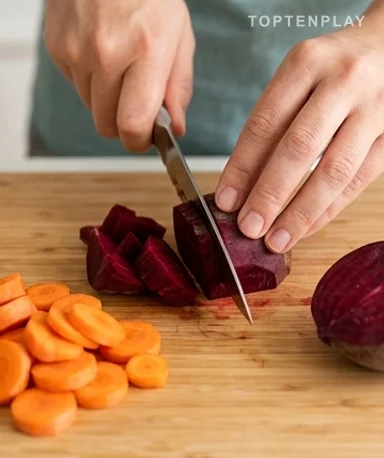
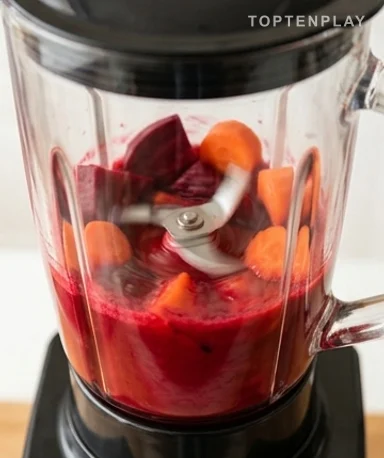
The problem with good habits is that they require too much effort. Not this one. Preparation takes five real minutes — not the optimistic five minutes found in cookbooks. You roughly chop the beet and carrots into 3-4 cm pieces, throw everything in the blender with two or three tablespoons of water, and run it at maximum power for forty-five seconds. The noise is quite aggressive in the morning. But it passes quickly. What remains in the blender is a thick puree of almost black red that you then filter through a clean cloth or a fine sieve.
The part everyone messes up: don’t squeeze too hard
If you use a cloth for filtering, twist it gently. People tend to squeeze hard to get maximum juice, and that pushes the finest fibers into the glass — you end up with something grainy rather than velvety; the difference is clear on the tongue. Let gravity do its work first, then a light twist. If you have a centrifuge juicer, this isn’t an issue. Pieces should still be 3 cm maximum so as not to strain the motor.
Beet or carrot: who’s in charge of this juice?
Beetroot has a powerful, mineral, slightly earthy taste — like the smell of earth after rain. Carrots are soft and slightly sweet. The classic ratio, one beet to two carrots, gives a balanced juice where both are felt without one overpowering the other. If you don’t like the earthy side much, add one more carrot. If on the contrary you find it too sweet, reduce the carrots to just one. This is the only real variable in this recipe. Ginger and lemon are fine-tuning — the base is this ratio.
Drink it cold, drink it fast
This juice does not improve with time. After twenty minutes in the air, it oxidizes and the color turns from bright burgundy to a dull brown. The taste also changes — less fresh, flatter. Ideally, prepare it and drink it straight away. If you really have to make it in advance, put it in a small airtight jar with the lemon juice, in the fridge, and consume within two hours. Beyond that, it’s a shame.
Tips & Tricks
- Start with half a beet if you’ve never drunk it raw — not because it’s bad, but because beets have a surprising effect on the color of urine. Completely harmless, but better to be warned.
- Peel or not? If your vegetables are organic, you can leave the beet skin on. Otherwise, a quick peeling avoids soil residues that give a slightly bitter aftertaste to the finished juice.
- If the blender struggles, the pieces are too big. 3 cm cubes at most, that’s really the upper limit — no need to go further.
Do I absolutely need a juice extractor, or is a blender enough?
A classic blender is more than enough. You mix the cubed vegetables with two or three tablespoons of water, then filter through a clean cloth or a fine sieve. The result is slightly less clear than with an extractor, but the taste is identical. Only difference: the extractor preserves enzymes sensitive to the heat generated by the blender slightly better.
How long can this juice be kept in the fridge?
Ideally, it should be drunk within 20 to 30 minutes of preparation. If you must make it in advance, store it in an airtight jar in the fridge with lemon juice and consume within 2 hours. Beyond that, it oxidizes, changes color, and loses freshness.
My urine turned pink after drinking this juice, is that normal?
Yes, it is completely normal and harmless. Beetroot contains betalain, a red pigment that some people metabolize less easily than others. This phenomenon, called beeturia, is harmless and disappears within 24 hours.
Can I replace the beet with another vegetable?
You can, but the interest of the recipe lies precisely in this combination. If the taste of raw beet is really too strong, start by reducing the amount to half a beet and increase the carrots. Replacing it completely with celery or cucumber gives a different juice that has little to do with this one.
Can I freeze this juice to make ready-to-use portions?
Yes, and it’s a good tip for busy weeks. Freeze the filtered juice (without lemon) in small airtight containers or ice cube trays. Thaw a portion the day before in the fridge, and add fresh lemon juice at the time of serving. The texture remains good, even if the color may change slightly.
Is this juice suitable for children?
Yes, from 3-4 years old in small quantities, without the ginger. Beetroot and carrots are two classic vegetables in children’s diets. Start with half a glass and reduce the beet if the taste is too strong for them.
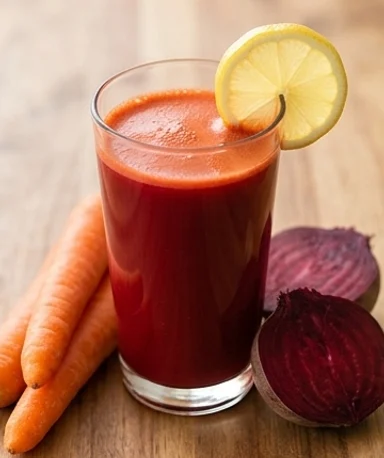
Homemade Beet-Carrot Juice
International
Beverage
A fresh and naturally sweet juice ready in 10 minutes, with raw beet, carrot, and a touch of ginger. The easiest morning drink to stick with in the long run.
Ingredients
- 150g (2 moyennes) carrots, peeled
- 150g (1 petite) raw beetroot, peeled
- 5g (1 cm) fresh ginger, peeled
- 20ml (½ citron) fresh lemon juice
- 3 cuillères à soupe cold water
Instructions
- 1Cut the peeled carrots and beet into cubes of about 3 cm.
- 2Place the vegetables, ginger, and water in the blender. Blend at full power for 45 seconds.
- 3Pour the puree into a clean cloth placed over a bowl and twist gently to extract the juice — without forcing.
- 4Add fresh lemon juice, mix, and serve immediately in a glass.
Notes
• Drink within 20 minutes of preparation for a juice with a vivid color and fresh taste. Lemon slows down oxidation but doesn’t stop it.
• For storage: up to 2 hours in the fridge in an airtight jar. To freeze: without the lemon, in individual portions — add fresh lemon when consuming.
• Sweet variant: replace one carrot with an apple to further soften the beet flavor. Tonic variant: double the amount of ginger and add a pinch of turmeric powder.
Nutrition Facts (per serving, estimated)
| 125 kcalCalories | 4gProtein | 27gCarbs | 0.5gFat |