📌 Hibiscus Flower Jelly with Cinnamon and Cloves
Posted 23 April 2026 by: Admin
The scent arrives before everything else. As soon as the hibiscus flowers hit the hot water, something changes in the kitchen — a floral, slightly tannic acidity that calls to mind both blackcurrant and pomegranate. A jelly that smells like this before it’s even finished is bound to make for a good day.
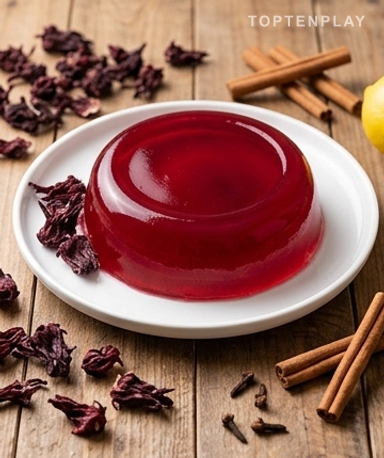
In the glass or on the plate, this jelly boasts a color that few natural desserts can claim: a deep garnet red, almost translucent, catching the light like stained glass. It trembles slightly when the plate is set on the table. In the mouth, it’s fresh at first, then the acidity of the hibiscus takes over, tempered by the sugar, and the spices arrive in the background — discreet, warm, almost comforting. No animal gelatin sticking to your palate. Just a sharp, clean texture that melts without clinging.
Why you’ll love this recipe
Ingredient Notes
Dried hibiscus flowers, cinnamon, cloves, gelatin, and sugar — few ingredients for a visually stunning result.
- Dried hibiscus flowers : Hibiscus sabdariffa flowers — not just any hibiscus variety. You can easily find them in African, Caribbean, or health food stores. They should be an intense burgundy red, not brown: if they lean towards brown, they’ve lost their acidity. Plan for about 20 to 30 grams per liter of water, depending on the intensity you want.
- Cinnamon sticks : Whole sticks, not ground cinnamon. Powder clouds the infusion and gives a bitter taste that’s hard to control. Two medium-sized sticks are more than enough — cinnamon tends to dominate if left for too long.
- Cloves : Four or five, no more. Cloves are generous: too many, and they crush everything else. Ideally, you should sense them at the back of the palate without being able to put your finger on it immediately.
- Gelatin : In sheets if possible — they provide a smoother texture and are easier to measure than powder. For a jelly that holds well but remains wobbly, use 6 sheets (about 10 g) per liter of liquid. If you prefer a firmer texture, add one more sheet.
- Sugar : Hibiscus is naturally very acidic. You need sugar to balance it, but the adjustment is very personal. Start with 120 g per liter, taste the infusion while still hot before adding the gelatin, and adjust. A hint of remaining acidity is intentional.
Infusion: the only step where you can mess it all up
Hibiscus can’t handle boiling water for too long. Bring the water to a simmer — small bubbles rising steadily, not a rolling boil — and add the flowers, cinnamon, and cloves. Let it infuse over very low heat for fifteen minutes. The water will turn deep burgundy, almost black on the surface. If you boil it too hard or too long, the acidity becomes aggressive and the spice aromas evaporate before they’ve had time to settle. Then strain through a fine sieve, pressing the flowers lightly to extract maximum color. This garnet liquid in your bowl is the foundation of everything.
Gelatin: why everyone fails the first time
Gelatin sheets should never be added to a boiling liquid. Never. Soak them in cold water for five minutes — they will soften and become limp like wet silk. Then, squeeze them between your fingers and stir them into the hibiscus infusion when it is still hot but not boiling, around 60-70°C. Whisk gently until completely dissolved. If you still see small undissolved gelatin filaments, give it an extra whisk — they won’t go away in the fridge. Add the sugar at this stage, taste, and correct.
Chilling: learn to do nothing
Pour the liquid into a large loaf tin, individual glasses, or ramekins. Let it cool at room temperature for twenty minutes before putting it in the fridge — pouring a very hot liquid directly into a cold mold can crack the glass and, more importantly, create condensation that leaves marks on the jelly’s surface. In the fridge, it needs at least three hours, ideally a full night. Don’t touch a thing. The jelly sets quietly, without help.
Unmolding: the moment of truth
To unmold without a disaster, briefly run the bottom of the mold under warm water — five seconds is enough, no more. Place an upside-down plate on the mold, flip with a sharp movement, and lift gently. The jelly should slide out with a satisfying little thud. If it resists, put the mold back in the warm water for a few more seconds. For glasses, no need to unmold: serve directly with a small spoon and a cinnamon stick placed on top.
Tips & Tricks
- Taste the infusion before adding the gelatin — this is the only time you can truly adjust the sugar and acidity. Once the jelly has set, you can’t change anything.
- For an even more fragrant version, add the zest of an organic orange to the infusion with the spices. It brings a citrus aroma that is heard but not seen.
- If you want a lighter texture, replace part of the water with unsweetened apple juice — it mellows the hibiscus acidity and adds a subtle fruity background.
- The jelly keeps for three days in the fridge covered with plastic wrap. It tastes better the next day than the day of — the spice aromas have had time to meld.
Can I replace gelatin with agar-agar for a vegan version?
Yes, and it’s actually very simple. Use 4 g of agar-agar powder for 1 liter of liquid — unlike gelatin, agar-agar dissolves directly in the hot liquid and sets at room temperature. Note: the texture will be a bit firmer and slightly less translucent, but the result is quite successful.
How long does hibiscus jelly keep?
Three days in the refrigerator, covered with plastic wrap touching the surface to prevent it from drying out. It is better the day after preparation — the cinnamon and clove aromas develop over time. Do not freeze: the texture of gelatin does not survive thawing.
Where can I buy dried hibiscus flowers?
African and Caribbean grocery stores often sell them in bulk at reasonable prices under the name ‘bissap’ or ‘hibiscus sabdariffa.’ They can also be found in organic shops and online. Avoid supermarket tea bags: the flowers are ground too finely and result in a cloudy infusion.
My jelly didn’t set, what happened?
Two possible reasons. Either the gelatin didn’t melt properly — if the liquid was too hot when adding it, it can lose its gelling power. Or the dosage was insufficient. To fix it, melt 2 extra gelatin sheets in a little hot liquid, stir them into the still-liquid jelly, and put it back in the fridge.
Can I reduce the amount of sugar?
Yes, it’s even recommended if you like sharper flavors. Hibiscus is naturally very tangy: 80 g of sugar per liter gives a sharp, lively jelly, 150 g a sweeter dessert version. Always taste the infusion before adding the gelatin — that’s the only time to adjust.
Can I flavor the jelly differently?
Absolutely. Organic orange zest brings a citrus note that pairs very well with hibiscus. You can also add a slightly crushed cardamom pod for a more floral version. However, avoid fresh ginger: it contains enzymes that prevent gelatin from setting.
Hibiscus Flower Jelly with Cinnamon and Cloves
Caribbean
Dessert
A deep garnet red jelly, tangy and scented with warm spices. As beautiful as it is delicious, and it’s prepared entirely the day before.
Ingredients
- 25 g dried hibiscus flowers (bissap or hibiscus sabdariffa)
- 1 liter water
- 120 g sugar (adjust to taste)
- 2 cinnamon sticks
- 5 whole cloves
- 10 g (6 sheets) gelatin sheets
- 1 tablespoon lemon juice (optional)
Instructions
- 1Soak the gelatin sheets in a bowl of cold water for 5 minutes.
- 2Bring 1 liter of water to a simmer in a saucepan — steady small bubbles, not a strong boil.
- 3Add the hibiscus flowers, cinnamon sticks, and cloves. Infuse over very low heat for 15 minutes.
- 4Strain the infusion through a fine sieve, pressing the flowers lightly to extract all the juice.
- 5Add the sugar to the still-hot infusion and stir until completely dissolved. Taste and adjust.
- 6Squeeze the gelatin sheets between your fingers and stir them into the infusion (off the heat, around 65°C). Whisk until completely dissolved.
- 7Let cool for 20 minutes at room temperature, then pour into a loaf tin or individual glasses.
- 8Refrigerate for at least 3 hours, ideally overnight.
- 9To unmold, run the bottom of the mold under warm water for 5 seconds, place a plate on top, and flip with a quick motion. Serve chilled.
Notes
• Storage: 3 days in the refrigerator, covered with plastic wrap touching the surface.
• Vegan version: replace gelatin with 4 g of agar-agar powder to be dissolved directly in the hot infusion before straining.
• The jelly is better the next day — the spices have had time to properly infuse throughout.
Nutrition Facts (per serving, estimated)
| 85 kcalCalories | 2 gProtein | 20 gCarbs | 0 gFat |