Crème fraîche in mustard chicken is overrated. Yogurt does exactly the same job — the sauce remains creamy, it clings well to the meat — and the dish feels half as heavy. It’s not a compromise, it’s an improvement.
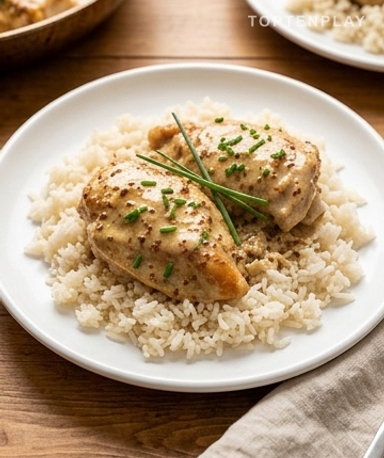
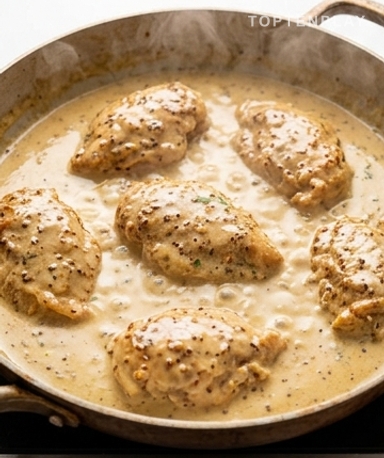
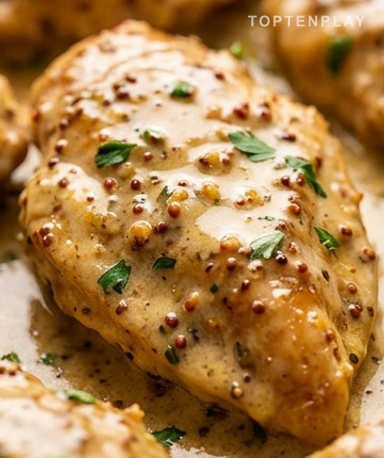
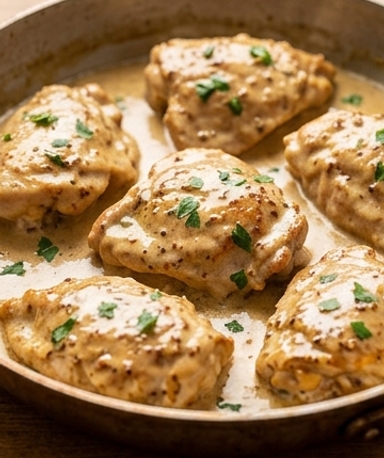
What you see on the plate is a pale, almost ivory sauce that coats the chicken pieces in a smooth, shiny veil. The aroma rising from the dish is that of slightly mellowed mustard, tempered by the yogurt — it doesn’t sting; it perfumes. The chicken pieces yield under the fork without resistance. And the sauce stays stuck to every bite rather than running to the bottom of the plate.
Why you’ll love this recipe
Ingredient Notes
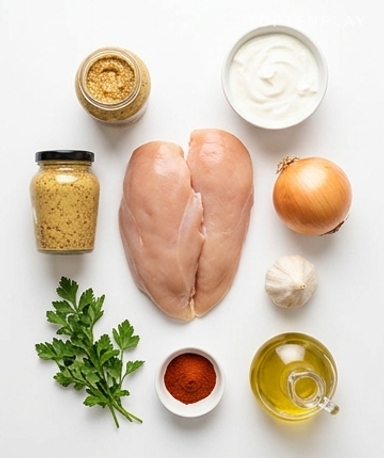
All the ingredients for this light creamy sauce — from pantry to plate in 40 minutes.
- Chicken Breasts : Choose thick ones, not those thin cutlets that dry out in three minutes. Count on 150 g per person. If you have boneless thighs on hand, they work even better — the meat is more tender and handles simmering in the sauce without drying out.
- Plain Yogurt : Full-fat yogurt is preferred — 0% tends to release water when heated. Greek yogurt also works great; it gives an even thicker and more velvety sauce. Avoid flavored yogurts, for obvious reasons.
- Mustard : Classic Dijon mustard for a sharp, clean sauce. If you like texture, whole-grain mustard gives a more rustic and visually interesting result. Two generous tablespoons — don’t be shy.
- Onion : One medium yellow onion, finely sliced. The goal is to let it melt completely in the pan — translucent, soft, almost sweet — before adding anything else. It provides the aromatic base; don’t rush it.
Why I never make the crème fraîche version anymore
For years, I made mustard chicken with cream. And honestly, the result was good — rich, comforting, the kind of dish you finish to the last drop with a piece of bread. But the yogurt version has nothing to envy. The sauce has the same hold and the same way of coating the meat. What changes is the lightness — you don’t have that heavy, greasy feeling after the meal. Plus, the yogurt brings a slight acidity that cuts through the natural fat of the chicken, which cream doesn’t do. It’s cleaner and brighter.
The part everyone misses: browning the chicken
Most people put chicken into a lukewarm pan and wonder why it doesn’t color. The pan must be hot before the meat enters — you should hear a sharp, brief hiss as soon as the piece touches the surface. This reaction gives the chicken a light caramel-gold color, and it’s this browning that brings flavor to the whole dish. Two to three minutes per side over medium-high heat. Then, the chicken comes out of the pan. It will finish cooking in the sauce later.
The onion melts, and the rest follows
Once the chicken is set aside, lower the heat. The sliced onion goes into the same pan, along with all the cooking juices left behind. This is where it starts to smell like something: a sweet, slightly sugary scent mixing with the meat aromas. Five minutes over low heat, stirring occasionally. The onion should become translucent and soft. Add garlic if using, give it another minute, then pour in the yogurt-mustard mixture you prepared in a separate bowl. Put the chicken back in. Lower the heat even further.
How to keep the sauce from curdling
This is the only real point of vigilance. Yogurt is a protein — if you boil it over high heat, it separates, and you end up with a grainy sauce with white lumps floating in a watery liquid. Not a catastrophe, but not the desired effect. Low heat, always. The sauce should barely simmer, with small bubbles rising slowly to the surface. It then takes on an off-white, uniform, shiny color. Eight to ten minutes is enough. Taste, adjust salt, and it’s ready.
Tips & Tricks
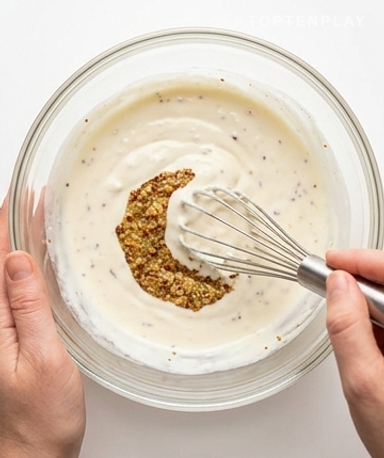
- Mix the yogurt and mustard in a bowl before adding them to the pan. If you add them separately, the mustard won’t incorporate uniformly — you’ll have spots that are too spicy and others that are bland.
- If the sauce is too thin at the end of cooking, uncover the pan and let it reduce for two minutes over low heat. It thickens naturally without starch.
- Leftovers reheat very well the next day over very low heat with a splash of water or broth. Yogurt solidifies in the fridge — don’t put the pot directly on high heat, or you’ll lose the sauce’s texture.
How do I prevent the sauce from separating and becoming grainy?
Yogurt curdles if the temperature rises too fast or too high. You must work over low heat once the yogurt is added — a gentle simmer is enough, never a rolling boil. If the sauce starts to grain, remove the pan from the heat immediately and whisk gently.
Can I replace the yogurt with fromage blanc or cream?
20% fat fromage blanc works very well and gives an even thicker sauce. Greek yogurt is also an excellent option. Heavy cream works well but removes the lightened-up benefit of the dish. Avoid 0% yogurt — it releases too much water when heated and the sauce loses its body.
Can I use boneless chicken thighs instead of breasts?
Yes, and it’s actually recommended if you can find them. Thighs are naturally fattier, making them more forgiving — they stay tender even if you slightly exceed the cooking time. The flavor is more pronounced than the breast.
How long does this dish keep in the refrigerator?
Three days in an airtight container. The yogurt solidifies slightly when cold; this is normal. To reheat, place over very low heat with two tablespoons of water or broth and stir gently — the sauce will regain its creamy consistency.
Can I prepare this dish in advance?
Yes, it’s great for make-ahead meals. Prepare it the day before, keep it chilled, and reheat gently the next day. The flavors actually intensify over time as the mustard diffuses better into the sauce overnight.
What should I serve with this chicken for a complete meal?
Basmati or brown rice is the classic accompaniment — it absorbs the sauce well. Quinoa also works great. To keep it light, steamed vegetables (broccoli, green beans, zucchini) or a crisp green salad complete the dish without weighing it down.
Healthy Yogurt and Mustard Chicken
French
Main Course
Tender chicken pieces coated in a creamy mustard-yogurt sauce, low in fat but big on flavor. Ready in 40 minutes.
Ingredients
- 600g chicken breasts
- 250g full-fat plain yogurt
- 2 tbsp (30g) Dijon mustard
- 1 medium (120g) yellow onion, finely sliced
- 1 clove garlic, minced (optional)
- 1 tsp (5ml) olive oil
- 1 tsp sweet paprika (optional)
- to taste salt and ground black pepper
- a few sprigs fresh parsley or chives
Instructions
- 1Cut the chicken breasts into even pieces or thick cutlets. Season with salt, pepper, and paprika.
- 2In a bowl, whisk the yogurt and mustard together until smooth. Set aside.
- 3Heat olive oil in a large pan over medium-high heat. Brown the chicken pieces for 2 to 3 minutes per side until light caramel in color. Remove and set aside.
- 4In the same pan over low heat, sauté the sliced onion for 5 minutes until translucent and soft. Add the garlic and cook for 1 more minute.
- 5Return the chicken to the pan. Pour in the yogurt-mustard mixture and stir gently to coat the meat.
- 6Cook over low heat for 8 to 10 minutes, maintaining a gentle simmer — do not boil.
- 7Adjust seasoning, sprinkle with fresh herbs, and serve immediately.
Notes
• Storage: 3 days in the refrigerator in an airtight container. Reheat over very low heat with 2 tbsp of water or chicken broth.
• Rustic version: replace Dijon mustard with whole-grain mustard for a sauce with more texture and visual character.
• For an even tastier dish, use boneless thighs instead of breasts — the meat is more tender and handles longer cooking times better.
Nutrition Facts (per serving, estimated)
| 235 kcalCalories | 36gProtein | 6gCarbs | 7gFat |