📌 Hasselback butternut squash: how to transform an autumn vegetable into a spectacular layered dish
Posted 23 March 2026 by: Admin
Squash Preparation: Essential Technical Steps
The success of a hasselback butternut depends on rigorous preparation from the very first minutes. Start by peeling the squash completely with a peeler, using steady strokes to obtain a smooth and uniform surface. This step, although tedious, guarantees even cooking and impeccable presentation.
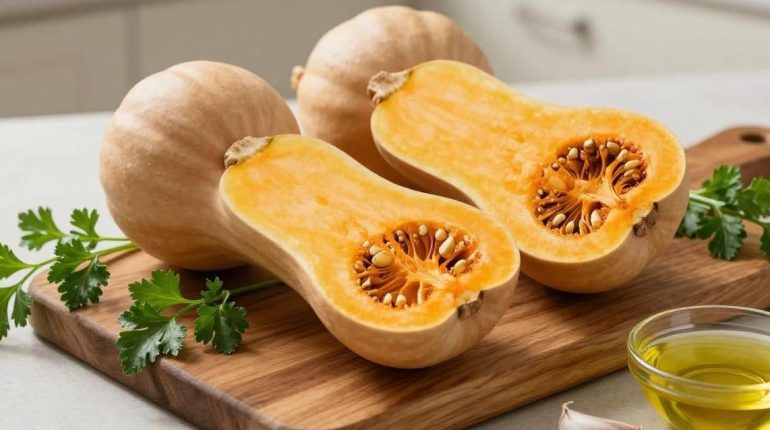
Then slice the butternut lengthwise to obtain two perfectly symmetrical halves. With a spoon, meticulously remove all the seeds and filaments from the central cavity. This operation frees up the space necessary for the flavors to soak in during cooking.
The basic seasoning is the secret to this recipe. Wash the fresh parsley and chop it finely before mixing it with 3 tablespoons of olive oil and 2 previously minced garlic cloves. This aromatic trio will be applied in two stages: the first half before pre-cooking, the rest after the hasselback cutting. This two-phase method allows for optimal diffusion of aromas at the core and on the surface.
Meanwhile, prepare the cheese by cutting thin strips with a slicer. These delicate slices will fit perfectly between the incisions of the squash, creating melting layers that will enhance every bite.
The Hasselback Cut: Mastering the Signature Technique
Place the butternut halves on a baking sheet lined with parchment paper, rounded side down. Generously brush each half with the first portion of the olive oil-parsley-garlic mixture, insisting on the entire surface. Bake at 200 degrees for 10 minutes: this pre-cooking slightly softens the flesh without cooking it completely, an essential condition for what follows.
Remove the tray from the oven and imperatively wait 5 minutes. This resting time allows the squash to cool sufficiently to be handled without risk of burning, while maintaining a firm texture that facilitates the precision cutting that follows.
Then comes the signature gesture: the hasselback cut. Make thin, close incisions widthwise, taking care never to slice through to the base. Each incision must penetrate deeply into the flesh while preserving the integrity of the bottom, thus creating an accordion of slices held together. This technique requires concentration and regularity: space the incisions evenly for a harmonious visual result.
The slits thus created transform the squash into a perfect receptacle. Gently slide the cheese strips and mushrooms into the gaps, then brush with the rest of the aromatic mixture. The oil seeps between each slice, promising an explosion of flavors during the final cooking.
Garnish and Seasoning: The Gourmet Touch
The cheese requires meticulous cutting: use a slicer to obtain strips of regular thickness, thin enough to melt harmoniously without crushing the mushrooms. This preparation guarantees an even distribution in each gap of the squash.
Methodically slide the cheese strips between the slices, alternating with the mushrooms. This strategic arrangement transforms each slit into an aromatic cavity where the ingredients will fuse during the final cooking. The assembly should be generous without overloading: each element must find its place naturally in the squash accordion.
Now brush with the rest of the olive oil-parsley-garlic mixture, ensuring that the liquid seeps deep between the slices. This second aromatic application impregnates the garnish itself, creating a taste synergy between the squash, cheese, and mushrooms. The oil plays a crucial role: it conducts heat, melts the cheese, and slightly caramelizes the exposed edges.
Now comes the moment for aromatic personalization. Generously sprinkle with salt, pepper, and herbs de Provence, or dare other combinations according to your preferences. This creative freedom allows you to adapt the dish to your tastes while respecting the balance of the basic recipe.
Final Cooking and Aromatic Personalization
Return the dish to the oven at 200 degrees for a prolonged cooking of 25 to 30 minutes. The heat must melt the cheese, slightly caramelize the exposed edges, and perfectly soften the butternut flesh. The mushrooms will release their moisture while the aromas gradually concentrate.
Monitor the progress: the cheese begins to sizzle, the herbs intensify, and the surface takes on an appetizing golden hue. This phase transforms the assembly into a coherent creation where each layer interacts with the others. The olive oil, migrating to the bottom of the dish, forms a precious aromatic juice.
The cooking test remains your best ally: plunge the tip of a knife into the heart of the squash. The blade must penetrate without resistance, like in soft butter. If you encounter slight firmness, continue cooking in 5-minute increments. This check eliminates any risk of under-cooking or fibrous flesh.
Freely adapt the spices to your desires: smoked paprika for an Iberian note, cumin for an oriental accent, or simply fleur de sel and cracked pepper for a refined sobriety. This flexibility transforms a basic recipe into a personal signature, while retaining the hasselback architecture that guarantees the spectacular result.