📌 Guinness and chocolate: how reduced Irish beer intensifies brownie flavor without leaving a beer taste
Posted 12 March 2026 by: Admin
The Unexpected Alliance: When Guinness Enhances Chocolate
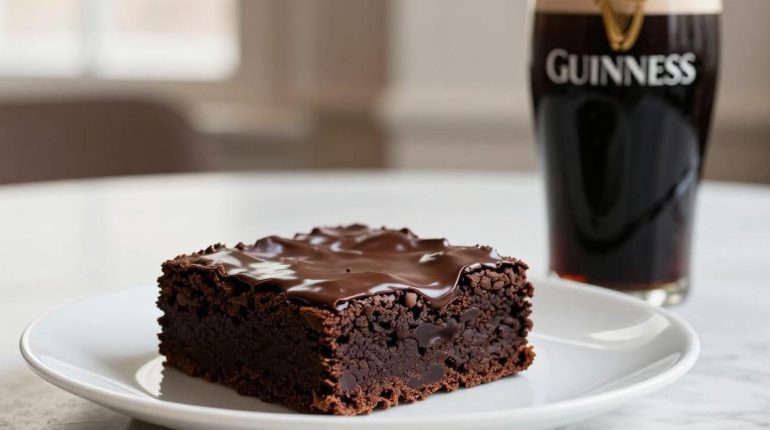
These brownies don’t taste like beer. Guinness acts like coffee in chocolate cake recipes: it naturally intensifies the cocoa flavor thanks to its roasted notes. The roasted barley in this stout develops aromas similar to coffee and caramel, creating an aromatic complexity impossible to achieve with chocolate alone.
The result? An ultra-melting and dense texture, comparable to the most decadent brownies, but enriched with a depth of flavor that classic recipes cannot reach. The profile reveals notes of roasted malt, espresso, and light caramel that intertwine with the melted dark chocolate.
This alliance works on the same principle as adding hot coffee to a chocolate cake batter: Guinness never imposes itself, it reveals. The aromatic compounds of the stout amplify the natural flavors of the cocoa, creating a dessert that appeals even to those who do not enjoy beer.
The texture deserves special attention. Moist, fudgy, and of a remarkable density, these brownies sit halfway between traditional pastry and chocolate confectionery. Each bite melts slowly, gradually releasing its complex aromas. A dessert designed for an adult palate, seeking intensity without excessive sweetness.
The Secret Technique: The Reduction That Changes Everything
Reduction transforms a full bottle of Guinness into a concentrate of aromas in twenty minutes. This process removes water through evaporation while preserving essential aromatic compounds: less liquid, triple the flavor. Without this preliminary step, excess moisture would irremediably compromise the texture, producing cakey brownies instead of the desired melting density.
The principle is simple but decisive. Bring the beer to a boil in a saucepan, then simmer over medium heat until you obtain 160ml of reduced liquid. What remains in the pan is no longer diluted beer, but a concentrated syrup with intense malty notes, ready to reveal all its complexity in the batter.
This technique is similar to reducing fruit for cakes or champagne for fine pastries. The goal remains the same: to concentrate characteristic aromas while precisely controlling the liquid content of the preparation. The 120ml integrated into the batter guarantees the perfect melting structure, while the 40ml reserved for the frosting will bring that distinctive malty signature.
Reduction can be prepared in advance and stored in the refrigerator. This flexibility allows the brownies to be assembled quickly when the craving arises, as the most technical part is already mastered. The rest of the recipe then follows naturally, with each ingredient finding its place in the architecture of the perfect brownie.
The Architecture Of A Perfect Brownie: Ingredients And Balance
The 226 grams of semi-sweet or dark chocolate constitute the sole chocolate source of these brownies. This concentration demands a quality choice: Ghirardelli or Baker’s, no compromise. The chocolate doesn’t just provide flavor; it structures the melting texture with the melted butter, creating that characteristic smooth base.
The deliberate absence of chemical leavening determines everything. Baking soda and baking powder lift the batter, aerate the crumb, and produce cake-like brownies. Here, there is none of that. Maximum density is achieved through subtraction, not addition. The result: a brownie so compact it borders on pure chocolate, barely a step above solidified ganache.
Only 125 grams of flour maintain this tight architecture. More flour would dilute the chocolate intensity and compromise the melt. The three eggs compensate for this low proportion by firmly binding the ingredients, creating that dense crumb that literally melts in your mouth. They provide richness and structure without weighing it down, while the sugar liquefied during baking generates that ultra-moist center and that shiny cracked surface.
Espresso powder remains technically optional, but gustatorily essential. Like Guinness, it doesn’t impose its taste but amplifies the depth of the chocolate. Two complementary enhancers for a result that transcends the simple addition of ingredients. Salt and vanilla balance the whole, preventing any sugary saturation despite the obvious richness.
The Signature Frosting: Guinness, Espresso, And Creamy Sweetness
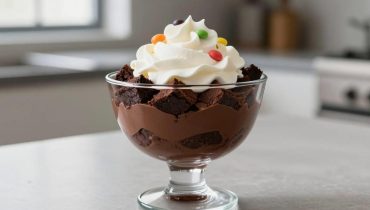
This extreme chocolate density calls for an airy counterpoint. The Guinness frosting meets precisely this need: buttercream whipped to perfect smoothness, enriched with the remaining 40 milliliters of reduced Guinness and a calculated dose of espresso powder. The texture remains light, almost mousse-like, creating a striking contrast with the ultra-compact crumb of the brownie.
The aromatic profile defies simple categorization. Dominant espresso notes, malty and caramelized nuances in the background, a subtlety reminiscent of roasted coffee without ever tipping into bitterness. The reduced Guinness develops its caramel dimension here, amplified by the powdered sugar which softens without overwhelming. Salt and vanilla sculpt the final balance, preventing any heaviness despite the butter base.
This creamy layer transforms the tasting experience. Without it, the richness of the brownie could be saturating. With it, each bite alternates between melting density and whipped lightness, chocolate intensity and malty sweetness. The decadent nature of the dessert finds its balance in this final touch that doesn’t just decorate, but structurally completes the flavor profile.
Alternatives exist: vanilla ice cream for temperature contrast, plain whipped cream for simplicity, mocha whipped cream to reinforce the coffee dimension. But this specific Guinness frosting extends the aromatic coherence of the whole, linking each element in a common gustatory logic. It is no longer an optional topping, but an essential component of a dessert conceived as an inseparable whole.