There’s this scent that rises when the leaves begin to boil—something between green tea and wet earth after the rain, with a yellow-orange hint of turmeric joining in. It takes ten seconds to recognize and after that, you never forget it. It’s the kind of drink you prepare once out of curiosity, and then remake every week because a morning without it feels incomplete.
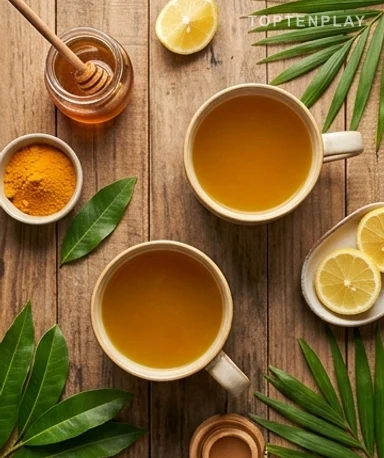
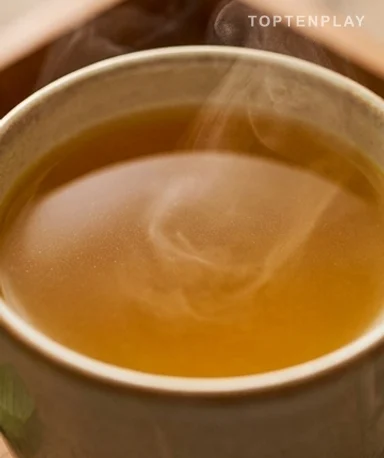
In the cup, the color is strange and beautiful at the same time—a deep amber leaning towards saffron, cloudy like a freshly squeezed juice. The leaves gave up everything they had to give during those fifteen minutes of simmering. On the surface, a light steam. In the mouth, it’s milder than anticipated: slightly bitter, slightly earthy, with that persistent warmth of turmeric lingering in the back of the throat. Not sweet. Honest.
Why you’ll love this recipe
Ingredient Notes
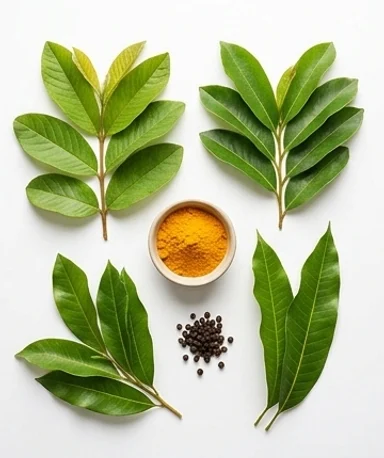
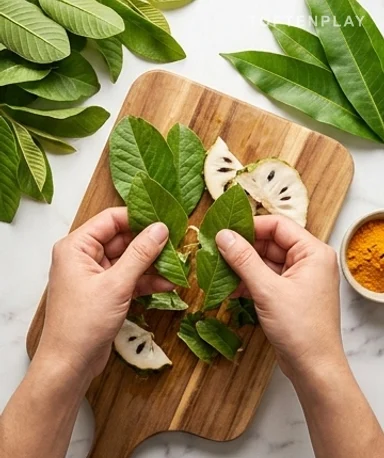
Guava, soursop, and mango leaves with turmeric: the four simple ingredients of this traditional infusion.
- Guava leaves : If you have a Caribbean, African, or Asian market nearby, you’ll find them easily—fresh or dried. Fresh ones have a slightly leathery texture, almost like thicker bay leaves, and they release a green and slightly resinous scent when crushed. Dried ones work too, but reduce the quantity by half.
- Soursop leaves : Rarer than guava leaves, but found in Caribbean grocery stores or online. They are long, dark green, with a characteristic slight bitterness. They are what give the infusion that somewhat mysterious depth. If you can’t find any, replace with lime leaves (makrut) or simply double the guava leaves—the spirit remains.
- Turmeric : In powder form, it’s the easiest. Get it from an Indian or organic grocery store rather than a standard supermarket—the color is more intense, the taste less bland. Half a teaspoon is enough for two cups, but if you want a more pronounced color—that yellow-orange like a sunset in the glass—go up to three-quarters of a spoon.
- Black pepper : Optional on paper, not really in practice. A small pinch increases the absorption of turmeric by the body tenfold. And honestly, it adds a light peppery heat that makes the drink more interesting. Don’t forget it.
Why I always take the time to wash the leaves properly
It seems obvious, but it worth saying: the leaves of tropical plants collect a lot of dust and residue. A good rinse in cold water, leaf by leaf, and you run your hands over them—you feel the slightly waxy, living surface. Then cut them into pieces of four or five centimeters. No need to be precise. This cutting just helps the compounds diffuse better in the water during cooking. Mango leaves are the most rigid—they resist a little under your fingers.
What happens in the pot—and why you must resist the urge to boil hard
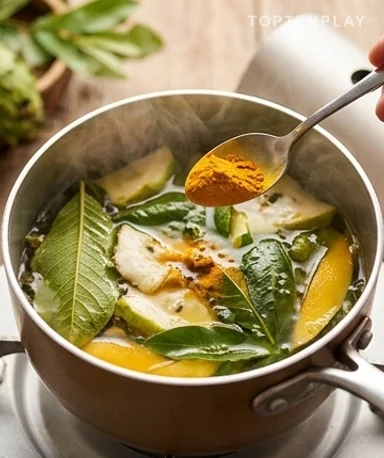
The water begins to simmer, the leaves begin to soften, and the color gradually changes—from a translucent pale green toward that warm golden-brown we are looking for. Now, the natural reflex is to turn up the heat to go faster. Bad idea. A gentle simmer for twelve to fifteen minutes extracts the compounds better than an aggressive boil that burns the delicate aromas. Add the turmeric at the end of cooking, not at the beginning—it tends to foam slightly and stick to the bottom if the temperature is too high. You’ll know it’s ready when the smell in the kitchen shifts from neutral vegetal to something warmer, more spiced.
The part everyone misses: the five-minute rest
Turn off the heat. Let it rest for five minutes before passing through a sieve. This isn’t to let it cool down—it’s so the last compounds finish settling and the infusion reaches that final color, more concentrated, almost visually velvety. Filter through a fine strainer or a tea filter. Press lightly on the leaves with the back of a spoon to extract as much as possible. The liquid that comes out last is the most intense in flavor.
How to serve it so it’s truly memorable
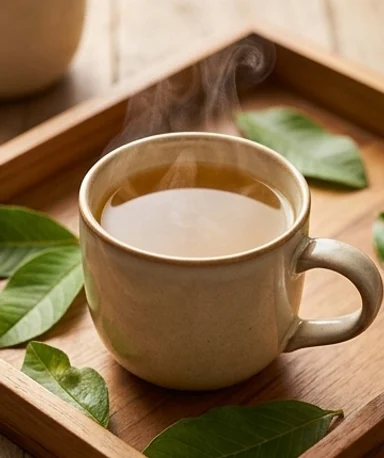
For guests, serve it in transparent glasses or white cups—the amber color deserves to be seen. Place a small bowl of liquid honey, a few lemon slices, and a small dish of cracked black pepper on the table. Let everyone compose according to their taste. It’s this kind of detail that turns a simple herbal tea into a table moment. If someone asks what it is, you can explain the leaves, the tropical regions, the morning rituals. It’s a beautiful story to tell over a cup.
Tips & Tricks
- Dried leaves work very well if you can’t find fresh ones—but reduce the quantity by half, they are much more concentrated and bitterness can quickly take over.
- Prepare a larger quantity (one liter) and store in the refrigerator in a closed bottle for up to two days. It can also be drunk cold, over ice cubes, with a slice of lime—completely different, much more refreshing in summer.
- If the infusion seems too bitter to you, a dash of acacia honey—not forest, too strong—is enough to balance without masking the vegetal flavors.
Can I use dried leaves instead of fresh ones?
Yes, no problem. Dried leaves are often more accessible and work very well. Simply reduce the quantity by half—2 dried leaves replace 4 fresh leaves per plant. The infusion will be slightly more concentrated and a bit more bitter, which is normal.
Where to find soursop and guava leaves in the UK/USA?
Caribbean, African, or Asian grocery stores are your best allies—they can be found in most major cities. Online, several shops offer dried leaves in bags. Mango leaves are sometimes harder to find: an exotic market or a well-stocked organic store might have them.
Can I replace one of the leaves if I can’t find it?
Absolutely. If you can’t find soursop leaves, just double the amount of guava leaves. The infusion loses a bit of its complexity but remains very good. Turmeric and guava leaves are the two truly essential ingredients—the rest can be adapted.
How many cups can I drink per day, and should I take breaks?
One to two cups a day is a good measure. After one to two weeks of daily consumption, a break of a few days is advised—not because it’s dangerous, but so the body doesn’t get too used to it. If you take anticoagulant medication or if you are pregnant, consult a professional before integrating it into your routine.
How to store the infusion and can it be drunk cold?
Prepare up to one liter at a time and store in a closed bottle in the refrigerator for a maximum of two days. Cold over ice cubes with a slice of lime, it’s a completely different refreshing summer drink. Avoid reheating it several times—prepare a fresh one.
The infusion tastes very bitter, is that normal?
A slight bitterness is normal, especially with soursop leaves. If it’s too pronounced, check the quantity of dried leaves (they are much more concentrated than fresh ones) and avoid boiling too hard. A dash of acacia honey or lemon balances it very well without masking the vegetal flavors.
Guava, Soursop, Mango and Turmeric Infusion
Caribbean
Drink
A tropical herbal tea with four plants, mild and slightly bitter, to be drunk hot in the morning or cold in summer. Ready in twenty minutes, without special equipment.
Ingredients
- 4 fresh guava leaves (or 2 dried)
- 4 fresh soursop leaves (or 2 dried)
- 4 fresh mango leaves (or 2 dried)
- 500 ml water
- ½ tsp (1,5 g) turmeric powder
- 1 pinch ground black pepper (optional)
- 1 tsp acacia honey (optional)
- ½ lemon (optional)
Instructions
- 1Rinse all leaves thoroughly under cold water, then cut them into 4 to 5 cm pieces.
- 2Pour water into a pot and bring to a simmer over medium heat. Add the leaves.
- 3Let simmer over low heat for 12 to 15 minutes without boiling vigorously.
- 4Off the heat, add the turmeric powder and black pepper if using. Mix.
- 5Let rest for 5 minutes covered.
- 6Filter through a fine strainer, pressing lightly on the leaves to extract as much as possible. Serve hot, with honey or lemon according to taste.
Notes
• Storage: up to 2 days in the refrigerator in a closed bottle. Can also be drunk cold over ice cubes with lime.
• With dried leaves, divide quantities by two—they are much more concentrated than fresh ones.
• Avoid heavy boiling: a gentle simmer preserves the delicate aromas of the leaves better.
Nutrition Facts (per serving, estimated)
| 5 kcalCalories | 0gProtein | 1gCarbs | 0gFat |