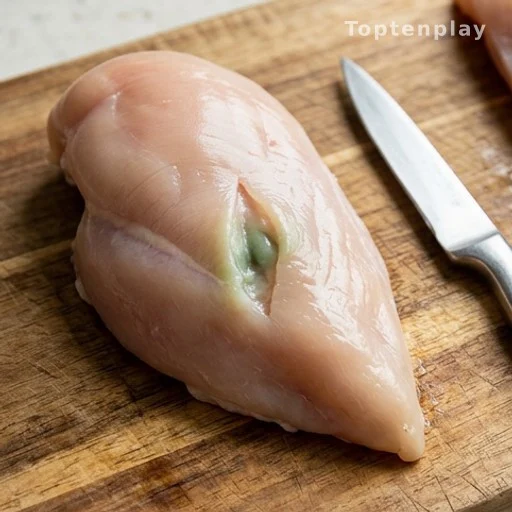
The condition is a direct consequence of modern broiler breeding. Because chickens are selectively bred for large breast muscles, the deep pectoral muscle can grow faster than the blood vessels supplying it. Starved of oxygen, the muscle fibers begin to degenerate — and that degeneration produces the pale, woody green tint that alarms home cooks.
Crucially, this is a muscular issue, not a bacterial infection. Agricultural scientists are clear on this point: Green Muscle Disease does not indicate contamination or a foodborne illness risk. The discoloration can be triggered while the bird is still alive, often by a sudden burst of wing flapping or physical stress inside the coop.
When a bruise turns green: blood breakdown inside the muscle
A second documented cause is far more familiar: bruising. When a bird bumps into a cage or is handled roughly — either on the farm or at the processing facility — blood pools beneath the skin or inside the muscle tissue.
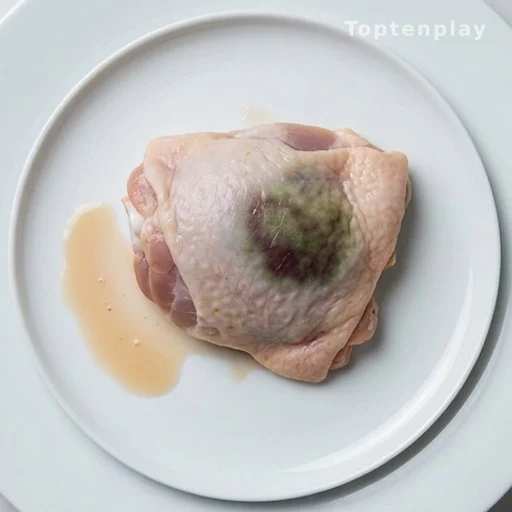
As that pooled blood breaks down over time, it can shift from a dark purplish color to a greenish hue. The biological process mirrors what happens on human skin: a bruise on an arm passes through blue, purple, and eventually green as hemoglobin degrades.
This type of discoloration is localized and typically visible as a distinct patch rather than a diffuse tint throughout the meat. Food safety guidance generally treats bruised areas the same way as bruised fruit — the surrounding tissue is unaffected.
Why commercial chicken looks different today
Modern broiler chickens are bred to reach slaughter weight far faster than breeds raised decades ago, with breast muscles that can account for a disproportionate share of body mass. This selective breeding, while efficient for food production, creates physiological conditions — like Deep Pectoral Myopathy — that were rarely seen in traditional farming. Understanding this context helps explain why green meat in chicken has become a more common kitchen discovery.
Bile staining: a processing issue that leaves a visible trace
A third cause identified by food scientists is bile staining. Bile is a digestive fluid stored in the gallbladder, and if the gallbladder is accidentally nicked or ruptured during the slaughter and processing of the bird, bile can leak onto surrounding tissue.
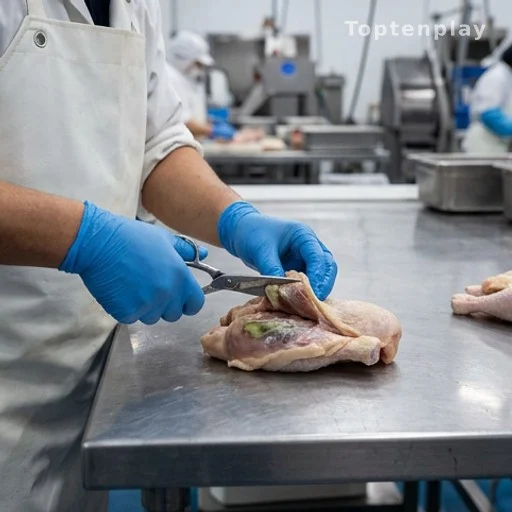
Bile has a distinctly yellow-green color, and even a small amount of contact with raw chicken flesh can leave a visible stain. Unlike Green Muscle Disease, bile staining originates externally — it is a contamination event at the processing stage rather than an internal physiological condition.