📌 Grandmother’s Mashed Potatoes
Posted 12 April 2026 by: Admin
Is there any dish more honest than homemade mashed potatoes? Something that doesn’t try too hard, doesn’t disguise itself, but is just there—warm and creamy. This is exactly what you’ll be serving tonight.
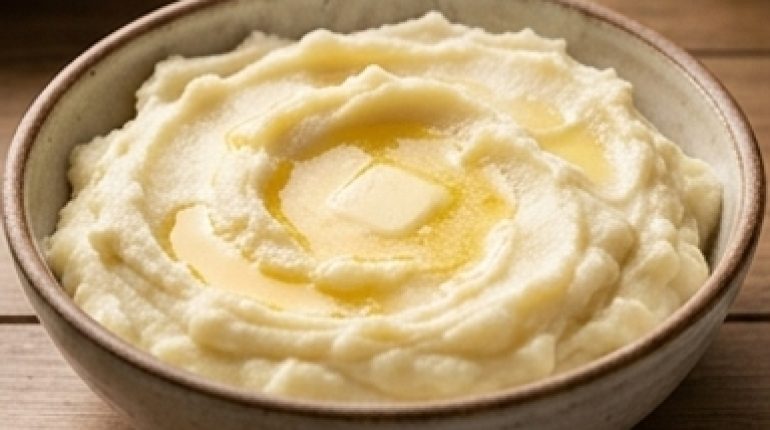
The surface is smooth as silk. In the center, a small lake of melted butter begins to spread, pale yellow and almost transparent. The scent of warm milk and cooked potatoes rises from the bowl. Under the spoon, it barely resists—then gives way in a single, soft movement.
Why you’ll love this recipe
Ingredient Notes
Five simple ingredients, one extraordinary mash: starchy potatoes, whole milk, butter, nutmeg, and Parmesan.
- Starchy potatoes : Russet or Bintje are what you need here. Charlotte, baby potatoes, or waxy varieties in general? Forget them for this recipe. Their low starch content means they don’t absorb fats well and result in a gluey, rubbery texture. A starchy potato crumbles under a fork—that’s exactly what you’re looking for.
- Butter : Don’t skimp on the quantity. 40g is the minimum, but your grandmother probably used twice that. Use a good quality unsalted butter—budget butter has a smell that comes through during cooking and is unforgiving in such a simple dish.
- Warm whole milk : The important word is warm. Pouring cold milk onto hot potatoes cools the mass and activates the starch the wrong way. The result: sticky mash. Heat your milk in a small saucepan or for 90 seconds in the microwave before incorporating it—it’s the absolute rule.
- Whole fresh nutmeg : Buy a whole nutmeg nut and a dedicated small grater. Pre-ground nutmeg that’s been sitting in a box since 2019 has no flavour left. Freshly grated, it releases an almost sweet aromatic warmth that completely transforms the perception of the dish. It’s the secret no one guesses.
- Grated Parmesan : Optional on paper, essential in practice. It brings a subtle umami background that gives depth without you being able to put your finger on it. Grate it yourself—bagged Parmesan is often coated with anti-caking agents that alter the final texture.
Choose well, start well
Peel your potatoes and cut them into large chunks—not too small, or they’ll absorb too much water during cooking. Submerge them in a large pot of well-salted cold water. The water must be salted from the start, not after. This salt penetrates the potato during cooking and gives it flavour from the inside, a taste you can never catch up on by sprinkling at the end. Bring to a boil, then simmer over medium heat for 20 to 25 minutes. To check if they’re done, poke them with a knife: it should slide in and out with no resistance, like a hot knife through butter.
Steam-drying—the step everyone skips
Drain the potatoes and put them back in the empty pot over low heat for 1 to 2 minutes. A light veil of steam will rise. This is the excess water evaporating—and it’s exactly what we want. A drier base will absorb the butter without making the mash watery. Start mashing with a manual potato masher, that’s it. Never use an immersion blender: the intense mechanical action breaks the starch cells and turns your mash into gray paste. By hand, you maintain control over the texture.
Butter, then milk—in that order
Stir in the butter pieces first while the potatoes are still very hot. The fat coats the starch molecules before the liquid arrives—this is the mechanism behind that silky texture that’s often hard to replicate at home. Then slowly pour in the warm milk while continuing to mix with a spatula. Pour gradually until you reach your desired consistency—some like it thick, others more fluid. Taste and adjust the salt. Then grate the nutmeg directly over it, about ten swipes on the grater. One last time, mix gently, and serve immediately.
Tips & Tricks
- Don’t overwork your mash after adding the milk. The more you mix, the more the starch develops and the more elastic it becomes. Two or three turns of the spatula are enough to combine—and then stop.
- If you need to keep it warm for 20 to 30 minutes before serving, cover the pot with a lid and lower the heat to the minimum. Add a splash of warm milk if it starts to dry out, then mix gently just before serving.
- The Parmesan should be incorporated at the very end, off the heat. Added too early to the heat, it can make the mash slightly stringy and change the texture you’ve carefully built.
Why are my mashed potatoes sticky and elastic?
This is almost always a sign that the mash has been overworked or that an immersion blender was used. Intense mechanical action releases too much starch, turning the texture into paste. The solution: a manual masher, and stop mixing as soon as it’s smooth.
Can I prepare mashed potatoes in advance?
Yes, up to 2 hours ahead. Keep it in the covered pot over very low heat and add a splash of warm milk when reheating. It will never be quite the same as freshly served mash, but it’s still very good.
Which potato should I choose if I can’t find Russet?
Bintje is the most common starchy variety in Europe and works perfectly. Monalisa or Marabel are also suitable. Avoid Charlotte, Ratte, or any potato labeled ‘waxy’—their texture resists the butter too much.
Can I replace milk with cream?
Yes, and it’s even more indulgent. Use full-fat heavy cream (30%) and reduce the quantity slightly—it’s richer, so 150ml is enough for 1kg of potatoes. Heat it exactly as you would the milk.
How do I store and reheat leftovers?
In the refrigerator in an airtight container, mashed potatoes keep for 3 days. To reheat, place in a saucepan over low heat with 2-3 tablespoons of warm milk and stir gently with a spatula. The microwave works in a pinch but gives a less consistent result.
Is Parmesan really necessary in mashed potatoes?
You won’t taste it directly like in a pasta dish—but it provides an umami base that makes the mash taste ‘deeper’. It’s subtle, and it’s meant to be. If you don’t have any, a pinch of nutritional yeast gives a similar effect.
Grandmother’s Mashed Potatoes
French
Side Dish
A smooth and buttery homemade mash, with fresh nutmeg as the secret ingredient. Simple, fast, and unbeatable as a side dish.
Ingredients
- 1 kg starchy potatoes (Russet or Bintje)
- 500 ml whole milk, heated
- 60 g unsalted butter (3 generous tablespoons)
- 1 pinch freshly grated nutmeg
- 40 g freshly grated Parmesan (optional)
- 1 tsp salt (+ salt for cooking water)
Instructions
- 1Peel and cut the potatoes into large chunks. Submerge them in a large pot of well-salted cold water.
- 2Bring to a boil then simmer for 20 to 25 minutes over medium heat, until a knife blade enters without resistance.
- 3Drain the potatoes and return them to the empty pot over low heat for 1 to 2 minutes to remove excess moisture.
- 4Mash the potatoes with a manual masher (do not use a blender). Stir in the butter pieces first, off the heat.
- 5Slowly add the warm milk while mixing with a spatula until the desired consistency is reached.
- 6Grate nutmeg directly over, add Parmesan if using, adjust salt, and mix gently one last time. Serve immediately.
Notes
• Storage: 3 days in the refrigerator in an airtight container. Reheat over low heat with a little warm milk, stirring gently.
• Richer variation: replace the milk with 150 ml of full-fat heavy cream for an even creamier version.
• Make ahead: prepare up to 2 hours in advance, keep covered on minimum heat, and add a splash of warm milk just before serving.
Nutrition Facts (per serving, estimated)
| 320 kcalCalories | 9gProtein | 42gCarbs | 13gFat |