A seafood casserole impresses everyone. You imagine a chef, a brigade, hours spent in the kitchen. The reality: twenty minutes, three varieties of seafood, and a hot skillet.
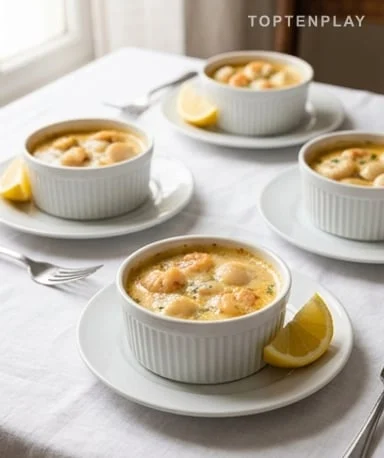
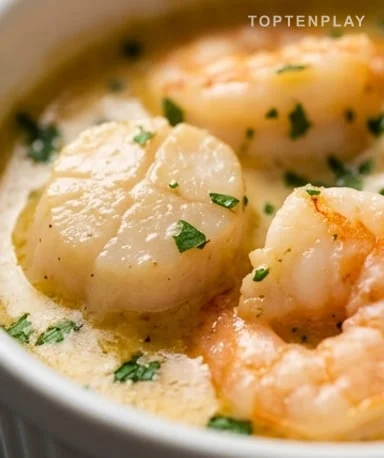
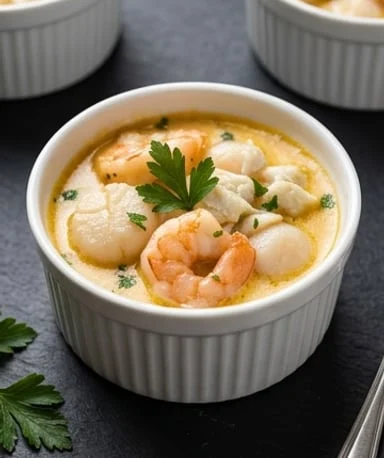
As soon as you lift the lid, the smell of golden shallot in hot olive oil rises directly, carried by an iodized base that announces what follows. The sauce coats the scallops with a shiny veil, slightly golden on the edges. The crab meat crumbles into tender strands among the pink shrimp. It’s generous, precise, and nothing intimidating.
Why you’ll love this recipe
Ingredient Notes
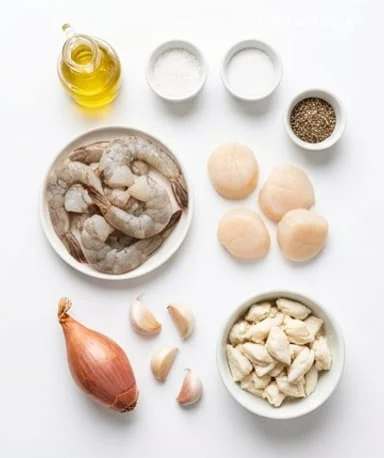
Peeled shrimp, scallops, and crab meat: the three pillars of this casserole.
- Peeled shrimp : Fresh if possible, otherwise frozen and thoroughly thawed in advance on paper towels. Avoid pre-cooked shrimp: they turn rubbery when reheated.
- Scallops : The true star of the dish. Choose large ones — they shrink when cooked. A well-seared scallop should remain translucent in the center with a golden crust on each side.
- Crab meat : Canned or frozen, it doesn’t matter. Just check there’s no hidden cartilage in the pieces before adding.
- Shallot : Prefer it to onions: milder and more delicate, it melts quickly in oil without overpowering the seafood flavors.
- Garlic : Two cloves, no more. Garlic should be a background note, not the lead. It perfumes, it doesn’t dominate.
Choosing the seafood
The quality of the seafood determines 80% of the result. With mushy shrimp and scallops lacking a clean sea scent, even the best technique won’t save the dish. Smell the shrimp before buying: they should smell of iodine, not ammonia. For scallops, a slight sheen and firm flesh are good indicators. Canned crab remains a reliable choice — trustworthy and convenient, without major compromise on taste.
The cooking that makes all the difference
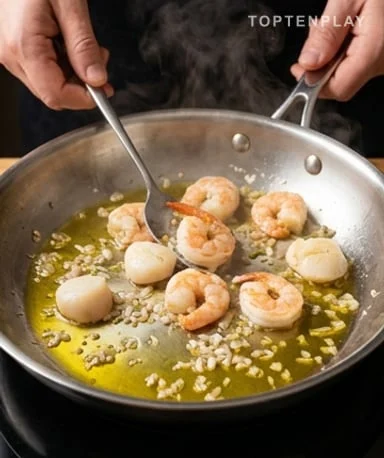
Seafood’s main enemy is overcooking. A shrimp left too long on the fire becomes elastic, an overcooked scallop loses its silky texture and turns cottony. In a very hot skillet with olive oil, the shallot and garlic soften in two minutes. Then add the shrimp and scallops — thirty seconds per side, no more. The outside colors slightly, the inside stays tender. The crab goes in last, just long enough to warm through in the cooking juices.
Assembling in ramekins
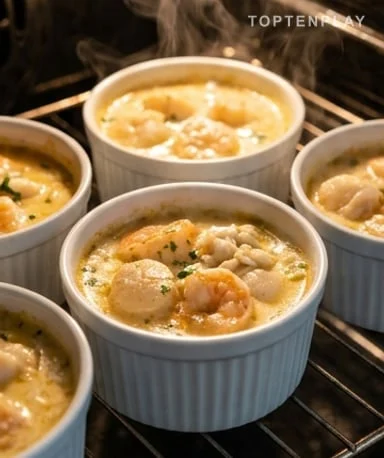
Divide the seafood among buttered individual ramekins, pour the sauce over — it should come to the rim without overflowing. A few minutes in the oven are enough for the surface to brown and the flavors of shallot and garlic to concentrate on top. When it comes out of the oven, the sauce is still gently bubbling at the edges, making a slight sizzling sound. It’s time to serve, and immediately.
Tips & Tricks
- Pat the seafood dry with paper towels before searing. Moisture prevents caramelization and causes steaming instead of searing — resulting in bland flavor.
- Do not overcrowd the pan. Sear in two batches rather than one crowded batch where the seafood releases all its water.
- Serve directly in the cooking ramekins. Transferring the casserole breaks the presentation and cools the dish in seconds.
Can I use frozen seafood?
Yes, no problem. The key is to thaw them completely in the refrigerator overnight, then pat them dry thoroughly with paper towels before cooking. Residual moisture prevents caramelization and turns the sear into a boil — bland result, disappointing texture.
How to prevent the seafood from becoming rubbery?
Short cooking over very high heat. Shrimp and scallops only need 30 seconds per side in the pan. They finish cooking in the oven during the ramekin step, so it’s better to remove them slightly undercooked from the pan.
Can I prepare the casserole in advance?
Partially. You can sauté the shallot, garlic, and quickly sear the seafood a few hours before the meal. The ramekin assembly and oven baking are done at the last moment — reheating seafood twice irrevocably ruins its texture.
What can I substitute for scallops?
Bay scallops, smaller and cheaper, work very well. You can also opt for diced cod or salmon cut into 2 cm cubes — they hold up well during cooking and integrate naturally into the creamy sauce.
What to serve with the seafood casserole?
Slightly toasted country bread is the ideal accompaniment for sopping up the sauce. For a more complete meal, plain basmati rice or fresh pasta work perfectly without overwhelming the briny seafood flavors.
Gourmet Seafood Casserole
French
Seafood
Shrimp, scallops, and crab meat combined in a creamy, slightly briny sauce, served in ramekins browned in the oven. Twenty minutes for a dish that impresses without effort.
Ingredients
- 230g peeled and deveined shrimp
- 230g scallops
- 230g crab meat (canned or frozen, well drained)
- 3 tbsp olive oil
- 1 shallot, finely chopped
- 2 garlic cloves, minced
- 200ml heavy cream
- 1 tbsp fresh lemon juice
- 2 tbsp fresh parsley, chopped
- ½ tsp salt
- ¼ tsp black pepper
Instructions
- 1Preheat the oven to 200°C. Lightly butter 4 individual ramekins.
- 2Pat all seafood dry with paper towels. Heat the olive oil in a large skillet over high heat until it shimmers.
- 3Sauté the shallot and garlic for 2 minutes, stirring, until translucent and lightly golden.
- 4Add the shrimp and scallops. Sear for 30 seconds per side — the outside browns, the inside remains translucent. Remove the skillet from heat.
- 5Stir in the heavy cream, lemon juice, salt, and pepper. Gently toss to coat the seafood.
- 6Add the flaked crab meat and carefully fold it in to avoid mashing it.
- 7Divide the mixture among the 4 ramekins. Bake for 8 to 10 minutes, until the surface starts to brown and the sauce bubbles at the edges.
- 8Sprinkle with fresh parsley and serve immediately in the ramekins.
Notes
• The key to texture: remove the seafood from the pan while slightly undercooked. They finish cooking in the oven without turning rubbery.
• For a gratin version, sprinkle a thin layer of breadcrumbs with a pat of butter on each ramekin before baking.
• Canned crab meat must be thoroughly drained and patted dry — excess water thins the sauce and dilutes the flavors.
Nutrition Facts (per serving, estimated)
| 285 kcalCalories | 31gProtein | 4gCarbs | 16gFat |