📌 Goat cheese and thyme soufflé: the foolproof technique so it never falls
Posted 13 February 2026 by: Admin
The Fragrant Infusion: The Aromatic Base Of The Soufflé
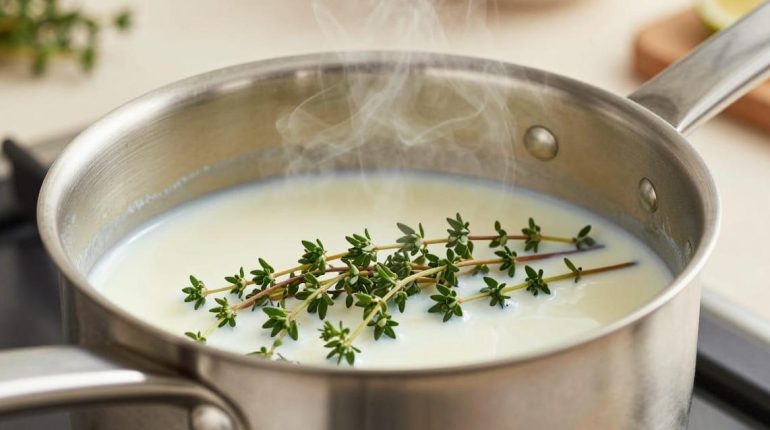
It all starts with a step that amateurs often neglect: infusing the milk with thyme. Bring 300 g of milk to 90°C with two sprigs of fresh thyme for exactly 10 minutes. This temperature, below the boiling point, preserves the herb’s essential oils without burning them. But the secret lies elsewhere: then let it infuse for an additional 10 minutes off the heat. This double time—cooking then resting—allows the aromatic molecules to saturate the liquid, creating an intensely fragrant milk.
Then filter through a fine sieve to remove any plant traces. This step, borrowed from professional pastry chefs, guarantees a silky texture without residue. The resulting milk becomes the aromatic matrix of your soufflé, carrying an herbaceous power that will withstand the final baking. Unlike adding herbs late in the process, this prior infusion diffuses the thyme into every bite.
Michelin-starred chefs know it: a successful soufflé is decided even before it goes into the oven. This fragrant base, prepared with rigor and patience, determines the balance between the bold character of the goat cheese and the herbal freshness that will complement it. Without this mastered aromatic foundation, the soufflé remains a simple egg preparation—with it, it becomes a complex tasting experience.
The Creamy Mixture: Marriage Of Goat Cheese And Fragrant Milk
The cooled infused milk becomes the vehicle for a precise culinary transformation. Pour it into the bowl with 40 g of flour, 200 g of goat cheese log cut into pieces, salt, and ground white pepper. Start cooking for 5 minutes at 95°C at speed 3. This high temperature, combined with rapid rotation, creates a cheese-enriched béchamel of incomparable creaminess. The goat cheese melts gradually, releasing its creamy texture and characteristic acidity into the thyme-scented milk.
While the machine is working, separate the whites and yolks of five eggs. As soon as the mixture reaches the desired texture, incorporate only the yolks—one minute at speed 3 is enough. These yolks act as a binder, thickening the mixture while giving it that iconic golden color. Immediately transfer to a container to stop residual cooking. Meticulously clean and dry the bowl: the slightest trace of fat will compromise the whipping of the whites.
This creamy base concentrates the essence of the soufflé: the herbaceous power of thyme balanced by the roundness of the goat cheese, structured by the egg yolks. But without the next step, it remains a simple thick preparation. The incorporation of the egg whites will transform this dense cream into an airy cloud ready to conquer the heights of the oven.
The Egg Whites: The Magic Of Lightness
Insert the whisk into the perfectly dry bowl. Pour in the five reserved egg whites, then start whipping at speed 3.5 for 3 minutes. This controlled agitation traps thousands of microscopic air bubbles, transforming the translucent liquid into a firm white foam. The resulting texture should form soft peaks that hold their shape without running—a sign of optimal aeration. Remove the whisk immediately: any over-beating would harden the mass, making incorporation impossible.
Take a first spoonful of whipped whites and fold it into the cooled goat cheese preparation. This initial gesture sacrifices part of the aeration to loosen the creamy mixture, making the subsequent mixing easier. Then pour in the rest of the whites in two stages, delicately lifting the mass from the bottom to the surface. Avoid sudden movements: each rotation must respect the fragile air bubbles that will guarantee the spectacular rise.
Generously butter a soufflé dish while the oven reaches 180°C. Transfer the airy preparation without packing it down, smooth the surface with a quick gesture. This creamy foam, born from the marriage between the cheese base and the whipped whites, now contains all the promise of elevation. But it remains vulnerable: only mastered baking will transform this fragile preparation into a triumphant golden dome.
The Sacred Baking: 30 Minutes Without Compromise
Slide the dish into the center of the oven preheated to 180°C. Close the door immediately, then set the timer for exactly 30 minutes. From this moment, the enveloping heat expands the thousands of air bubbles trapped in the mixture, propelling the mass upward. The soufflé rises gradually, forming a spectacular golden dome that defies gravity—but this transformation remains fragile, hanging on an absolute rule.
Never open the oven during baking. This instruction, repeated by all chefs, is based on a relentless physical principle: cold outside air causes an instant thermal shock that collapses the airy structure. The delicate walls of the soufflé, still unstable during the first twenty minutes, do not withstand the sudden drop in temperature. A simple curious glance sabotages 40 minutes of meticulous preparation, reducing the triumphant dome to a depressed pancake.
When the timer sounds, take the dish out without delay. The golden surface cracks slightly, exhaling the scent of melted goat cheese and infused thyme. Serve immediately, accompanied by a crisp green salad that contrasts with the warm creaminess. The soufflé begins to fall as soon as it leaves the oven—this ephemeral culinary perfection tolerates no delay, requiring a table already set and guests ready to savor this technical triumph.