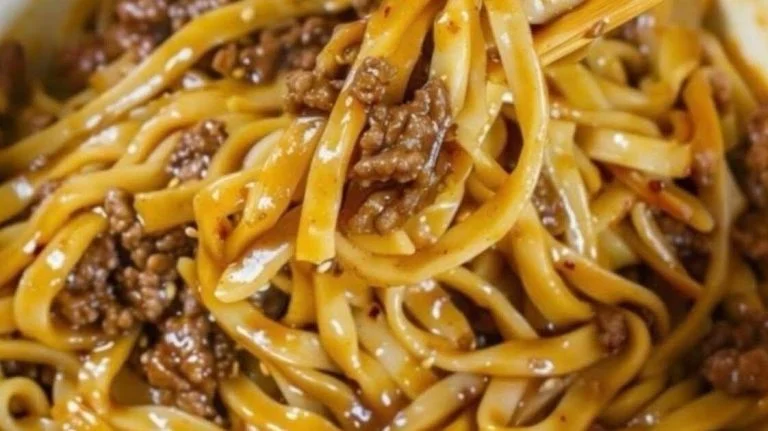
The sauce starts to bubble gently, thick and shiny, with that smell of warm ginger, soy sauce, and sugar caramelizing. It’s the kind of dish that sizzles in the pan, fills the kitchen with a sweet-savory aroma, and makes you want to put a bowl of rice right next to it.
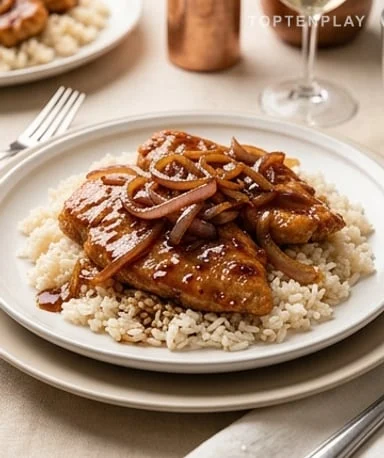
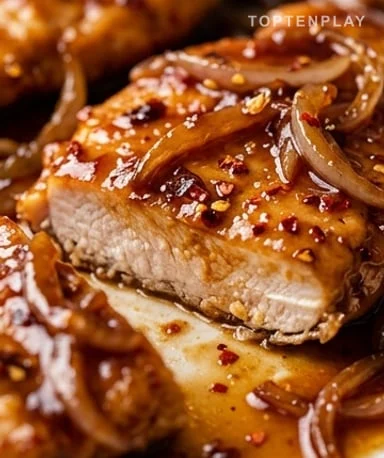
The turkey should come out of the pan with a nice golden, almost lacquered surface, but stay tender when cut. The red onions become soft, slightly confit at the edges, with a sweetness that balances the spiciness of the sauce. The ideal texture is a sauce that clings to the spoon, not a puddle at the bottom of the pan. You’re looking for shine, warmth, comfort, with that little kick of ginger that wakes everything up.
Why you’ll love this recipe
Ingredient Notes
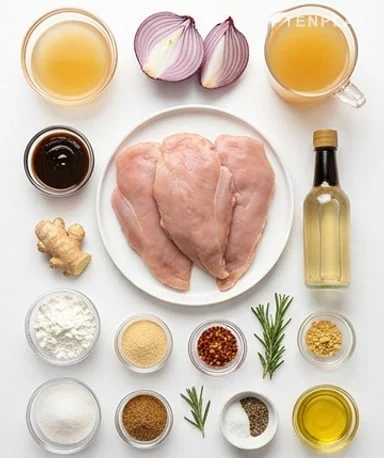
Thick turkey, red onion, ginger, soy sauce, hoisin, and broth: nothing complicated, but it makes a real sauce with character.
- Turkey cutlets : They replace pork while maintaining a firm texture that holds up well to searing and thick sauce. Choose pieces at least 2 cm thick if possible; if unavailable, take thick scallops or chicken fillets and reduce cooking time slightly.
- Hoisin sauce : It brings a rounded, dark, slightly sweet character that gives body to the sauce. Use a fairly dense hoisin, not too runny; if very sweet, slightly reduce the sugar in the recipe.
- Low-sodium soy sauce : It provides umami and deep color without turning the dish into a salt block. The low-sodium version is really useful here, since the sauce reduces and becomes more concentrated during cooking.
- Fresh ginger : It cuts through the richness of the sauce with a bright, almost lemony note that’s felt as soon as it heats. Grate it finely to avoid fibrous bits; as a substitute, use a little ground ginger, but add sparingly.
- Red onion : It melts in the pan, becomes sweet, and adds a tender texture that contrasts with the golden turkey. Cut it into fairly thick wedges so it keeps some structure instead of disappearing into the sauce.
- Cornstarch : It thickens the sauce and gives it that smooth, glossy look that coats the meat well. Mix it first with cold liquids to avoid lumps that ruin the texture.
Making a sauce that coats
Start by mixing broth, hoisin, soy sauce, rice vinegar, sugars, cornstarch, garlic, ginger, and chili flakes in a saucepan. Cold, the sauce seems ordinary, almost too thin, but it changes quickly as it heats: it darkens, becomes shinier, and the bubbles slow down. That’s the sign it’s thickening. Stir often, because sugar and cornstarch can stick to the bottom if the heat is too high. You want a syrupy texture, not a sticky paste; if it gets too thick, add a spoonful of broth to loosen it.
Searing without drying out
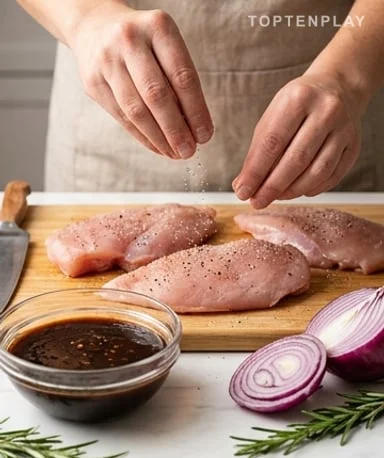
The turkey should go into a very hot pan, with a slight sizzle as it hits the oil. That sound matters: if nothing happens, the meat will release water instead of browning. Simply season with salt and pepper, then let it color without moving it every ten seconds. The surface should develop a golden crust, slightly firm to the touch, while the inside remains juicy. That sear gives character to the dish; otherwise, even with a good sauce, the meat will feel flat.
Letting the onions do their work
The red onion wedges aren’t just for decoration. As they heat, they become sweeter, their edges brown slightly, and they perfume the oil with an almost sweet aroma. You need to sear them enough to soften, but not burn them, as a bitter note would quickly emerge in an already concentrated sauce. If they color too quickly, lower the heat and add a spoonful of broth to deglaze. When they’re tender but still visible, they’re ready to receive the sauce.
Finishing in the oven
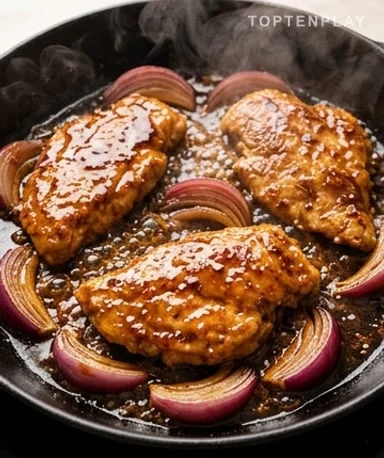
Once the turkey is seared, pour the sauce into the pan and add the rosemary if using. The oven finishes cooking more gently than direct heat, which helps the meat stay tender while the sauce bubbles around it. You should see small thick bubbles at the edges, not aggressive boiling that would reduce everything too fast. Baste the turkey once or twice with the sauce during cooking to create that lacquered finish. If your pieces are thinner, check early: overcooked turkey becomes dry and stringy.
Resting and serving
When you take the pan out of the oven, it’s scorching hot, the sauce is shiny, and the salty-sweet smell is frankly hard to ignore. Yet let the meat rest for a few minutes before cutting. That short time allows the juices to redistribute; otherwise, they’ll run onto the plate at the first cut. Serve with white rice, jasmine rice, or steamed vegetables, because you need something simple to soak up the sauce. A final drizzle of sauce on top, some soft onions, and the dish finds its balance.
Tips & Tricks
- Choose thick turkey rather than very thin scallops, because it holds up better to searing and stays more tender after the oven.
- Don’t turn the heat too high when the sauce reduces, as the sugar can caramelize too quickly and give a heavy bitterness instead of a rounded taste.
- Taste the sauce before pouring it into the pan: if it seems too salty, add a little broth; if it lacks punch, add a few drops of rice vinegar.
- Let the meat rest before serving, even if the sauce smells great, because that short rest makes the difference between juicy turkey and a dry slice.
Can I replace turkey cutlets with chicken?
Yes, thick chicken fillets or boneless thighs work very well. Just watch the cooking time, as chicken dries quickly if the pieces are too thin.
How do I keep the turkey from drying out?
Use fairly thick pieces and sear them just long enough to brown. Resting after cooking is important: it keeps the juices in the meat instead of letting them run onto the plate.
Is General Tso sauce very spicy?
Not necessarily. The chili flakes provide a mild heat, but you can reduce the amount or omit them if you prefer a milder sauce.
What should I serve with this dish?
The simplest is white rice, jasmine rice, or brown rice, because they absorb the shiny sauce well. Steamed broccoli, green beans, or sautéed cabbage also work great.
Can I prepare the sauce in advance?
Yes, it keeps for 3 to 4 days in the refrigerator in a sealed jar. Reheat gently with a spoonful of broth if it has thickened too much.
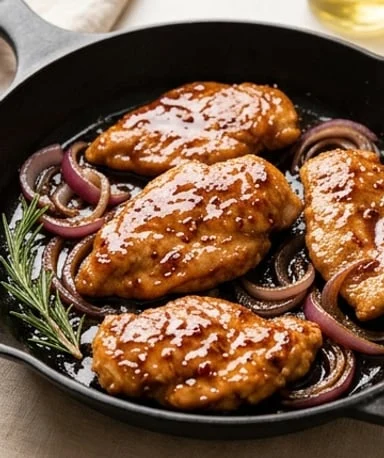
General Tso Turkey Cutlets in a Pan
Asian-inspired
Main course
Golden turkey cutlets coated in a sweet-savory, shiny, and slightly spicy General Tso sauce. A hearty comfort food dish, perfect with hot rice and steamed vegetables.
Ingredients
- 700g thick turkey cutlets
- 1 red onion, cut into wedges
- 2 tbsp neutral oil
- 180ml low-sodium chicken broth
- 80ml hoisin sauce
- 45ml low-sodium soy sauce
- 30ml rice vinegar
- 1 tbsp white sugar
- 1 tbsp brown sugar
- 1 tbsp cornstarch
- 2 tsp freshly grated ginger
- 1 tsp garlic powder
- 1/2 tsp red pepper flakes
- 3 sprigs fresh rosemary
- 1 tsp salt
- 1/2 tsp black pepper
Instructions
- 1Preheat the oven to 220°C.
- 2In a saucepan, mix broth, hoisin sauce, soy sauce, rice vinegar, white sugar, brown sugar, cornstarch, ginger, garlic powder, and chili flakes.
- 3Bring to a simmer over medium heat, then cook for 8 to 10 minutes, stirring often, until the sauce is shiny and slightly syrupy.
- 4Season the turkey cutlets with salt and pepper.
- 5Heat the oil in a large ovenproof skillet, then sauté the red onion wedges for 3 to 4 minutes, until they begin to soften.
- 6Add the turkey cutlets and sear for 3 to 4 minutes per side, just until nicely browned.
- 7Pour the sauce into the skillet, add the rosemary sprigs, then spoon sauce over the turkey.
- 8Bake for 10 to 12 minutes, until the turkey is cooked through but still juicy.
- 9Remove the skillet from the oven, spoon sauce over the meat again, and let rest for 5 minutes before serving.
Notes
• If the cutlets are thin, reduce oven time to avoid dry meat.
• The sauce thickens as it cools; add a little broth to loosen if needed.
• Serve with hot rice, steamed broccoli, or green beans.
• For a milder sauce, reduce chili flakes to 1/4 teaspoon.
Nutrition Facts (per serving, estimated)
| 420 kcalCalories | 43gProtein | 24gCarbs | 17gFat |