📌 Garlic and Parmesan Roasted Potatoes
Posted 10 April 2026 by: Admin
Have you ever spent an hour on the main course only to end up serving bagged rice as a side? These garlic and parmesan roasted potatoes solve that problem once and for all. Simple to prepare, impossible to fail, and the kind of dish that makes people think you really went the extra mile.
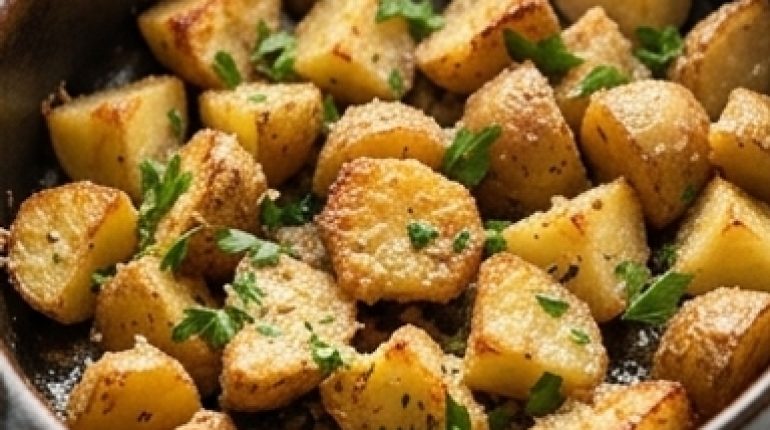
Imagine the tray coming out of the oven: light caramel-colored potato cubes, with edges that have slightly crackled under the heat. The parmesan has melted and then toasted, forming a thin, irregular crust that catches the light. The roasted garlic scents the entire kitchen—that slightly sweet, slightly pungent aroma that announces something good is happening. You set the tray on the table and people reach out before you’ve even put down the tongs.
Why you’ll love this recipe
Ingredient Notes
Everything you need: potatoes, garlic, parmesan, butter, olive oil, and fresh herbs.
- Potatoes : Choose waxy varieties: Fingerling, Charlotte, or Nicola. They hold their shape well when cut and don’t fall apart during cooking. Floury Bintje is for mashed potatoes. Here we want bite, a surface that crunches, and a center that stays intact.
- Parmesan : Grate it yourself; it’s non-negotiable. Pre-shredded parmesan contains anti-caking agents that prevent it from melting properly—you get a sandy texture instead of a real crust. A 150g block of Parmigiano Reggiano is enough, and you can taste the difference in every bite.
- Garlic : Six cloves minimum, and don’t be shy. Roasted garlic loses all its aggression and becomes almost sweet and jammy—nothing like raw garlic. You can be generous without fearing the dish will be overwhelming.
- Butter + olive oil : The duo that gets the job done. Butter brings richness and a rounded flavor. Olive oil withstands high temperatures without burning. Together, they create that crust that crunches under the teeth without bitterness or aftertaste.
Why I never serve dinner without them anymore
There are recipes you keep to yourself and recipes you bring out whenever people are over. This one is definitely the latter. It’s quick to prepare, requires no special technique, and has that rustic-chic vibe that appeals to an eight-year-old as much as a demanding guest. Roasted potatoes are universal. Add garlic and parmesan and you move into another dimension. People consistently ask for the recipe. And the best part? You can serve it with almost anything without a second thought.
The part everyone fails: oven temperature
Most people put their potatoes in an oven that isn’t hot enough and end up with something soft, vaguely beige, and completely lacking personality. The oven must be at 220°C, or even 230°C if yours heats timidly. High heat is what creates that golden-brown surface that cracks slightly when you bite it. The other classic mistake: crowding the pieces on the tray. If there is no space between them, they steam instead of roasting. You get a stew, not roasted potatoes. Leave space, even if it means using two trays.
What parmesan actually does during cooking
Parmesan doesn’t just add cheese flavor. It forms armor around every piece. In direct contact with the hot tray and the fat, it melts, caramelizes, and hardens into a thin crust that smells of toasted hazelnuts. For this to work, add half the parmesan before cooking—mixed directly with the potatoes—and the other half in the last ten minutes to get that golden layer on top. The garlic goes in from the start with the potatoes. Roasted long at high heat, it becomes melt-in-the-mouth, almost candied, and mixes with the cooking fat to coat every piece in a deep, sweet flavor.
The last two minutes that make the difference
When the potatoes come out of the oven, give them a minute—the crust is still a bit soft at first; it hardens as it cools slightly. This is the time to add the chopped parsley. Not during cooking, where it would blacken and turn bitter. Just before serving, for that bright green color and slight herbal freshness that cuts through the richness of the cheese. A squeeze of lemon juice? Optional, but highly recommended. And if you really want to score points, a few flakes of sea salt on top—they crunch under the teeth and contrast with the soft interior.
Tips & Tricks
- Dry the potatoes after cutting and rinsing them—a paper towel is enough. Surface moisture generates steam during cooking and prevents the crust from forming. It’s the detail that changes everything.
- Flip the potatoes only once halfway through cooking, no more. Every time you touch them, you break the crust forming underneath. One rotation is sufficient.
- If you’re cooking for a crowd, don’t overload one tray. Use two trays in parallel, top and bottom racks, and swap them halfway through. Otherwise, the potatoes in the middle soften while the ones on the edges grill.
Can I prepare these potatoes in advance?
Yes, you can cut and season the potatoes up to 4 hours in advance and keep them in the refrigerator covered with plastic wrap. Put them straight into the oven when ready to serve—no need to bring them to room temperature first.
How do I reheat them without losing the crunch?
Avoid the microwave at all costs: it immediately softens the crust. Put them in a 200°C oven for 8 to 10 minutes, or 3 to 4 minutes in a hot pan with a drizzle of olive oil. The pan sometimes creates an even better crust than the initial roast.
Can I replace parmesan with another cheese?
Grana Padano is the closest substitute, with almost identical results. Pecorino also works but is saltier—reduce the added salt in that case. Avoid soft or melting cheeses like mozzarella, which release moisture and will make the potatoes soggy.
Why aren’t my potatoes crispy?
Two likely causes: an oven that isn’t hot enough (you need 220°C minimum), or potatoes crowded too closely on the tray which steam instead of roasting. Dry the pieces well before seasoning and leave space between them—it’s non-negotiable.
What variety of potatoes should I use?
Waxy potatoes are essential: Charlotte, Nicola, Fingerling, or Ratte. Floury varieties like Bintje fall apart during cooking and don’t form a crust. If you only have large potatoes, cut them into roughly 3 cm cubes.
Can I add other spices or herbs?
Absolutely. Smoked paprika adds extra depth. Fresh rosemary added at the start of cooking perfumes well without burning. Dried thyme, Espelette pepper, or a pinch of cumin also work very well depending on what you’re serving them with.
Garlic and Parmesan Roasted Potatoes
Mediterranean
Side Dish
Potato cubes roasted at 220°C until they achieve a golden, crunchy parmesan crust, with candied garlic coating every piece. The side dish that wins everyone over.
Ingredients
- 800g waxy potatoes (Charlotte, Nicola, or Fingerling)
- 80g freshly grated parmesan (Parmigiano Reggiano)
- 6 garlic cloves, finely minced
- 45ml (3 tbsp) olive oil
- 30g butter, melted
- 1 tsp fine salt
- 1/2 tsp freshly ground black pepper
- 1/2 tsp sweet paprika
- 2 tbsp chopped fresh parsley (for serving)
Instructions
- 1Preheat the oven to 220°C. Wash the potatoes and cut them into 3 cm cubes without peeling. Rinse briefly and dry thoroughly with paper towels.
- 2In a large bowl, mix the potatoes with the olive oil, melted butter, minced garlic, half of the parmesan (40g), salt, pepper, and paprika. Coat every piece well.
- 3Spread the potatoes in a single layer on a baking sheet lined with parchment paper. Leave space between each piece—use two sheets if necessary.
- 4Bake for 25 minutes without touching. Flip the potatoes and sprinkle with the remaining parmesan (40g).
- 5Continue cooking for 10 minutes, until the crust is golden like light caramel and the edges are slightly crackled.
- 6Let rest for 1 minute out of the oven, sprinkle with chopped fresh parsley, and serve immediately.
Notes
• Storage: up to 3 days in the refrigerator in an airtight container. Reheat in the oven at 200°C for 10 minutes or in a pan with a drizzle of olive oil to regain crispiness.
• Variation: add 1 tablespoon of fresh lemon juice just before serving for a tangy touch that balances the richness of the cheese.
• Make ahead: potatoes can be cut and seasoned (without the parmesan) up to 4 hours in advance and kept in the fridge. Add the parmesan just before baking.
Nutrition Facts (per serving, estimated)
| 275 kcalCalories | 9gProtein | 34gCarbs | 11gFat |