📌 Garlic and gardening: two natural recipes to protect your plants from harmful insects
Posted 8 February 2026 by: Admin
Garlic Alcohol: A Natural Solution Against Insects
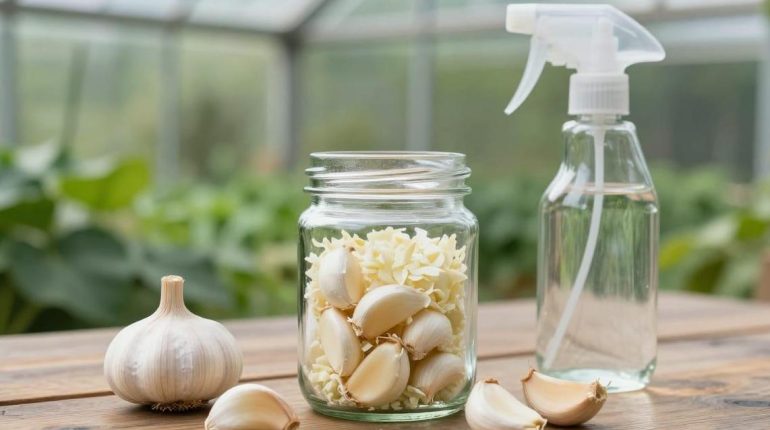
One head of garlic, one liter of alcohol, and three liters of protective solution: here is the recipe that is revolutionizing natural gardening. This ancestral preparation, rediscovered by modern gardeners, offers a formidable alternative to chemical pesticides.
The manufacturing process is based on a precise extraction of the active compounds in garlic. After crushing a full head, maceration in alcohol for one hour in the refrigerator releases the natural repellent principles. This crucial step allows the sulfur molecules to dissolve in the alcohol, creating a powerful concentrate.
Dilution with two liters of water then transforms this concentrate into an applicable solution. Passing it through a sieve removes solid residues, ensuring a homogeneous spray on the foliage. This method acts as an invisible shield: insects naturally flee the characteristic smell of garlic, without the plant undergoing any aggressive treatment.
The economy of this technique is as attractive as its effectiveness. For a few cents in ingredients, gardeners obtain three liters of protective treatment, enough to cover several square meters of crops. An approach that reconciles performance and respect for the environment, without compromising on results.
Garlic Infusion: The Gentle Alternative For The Soil
Where alcohol acts on the surface, garlic infusion targets the depths of the soil. This second method favors water extraction, releasing sulfur compounds through a gentler but equally formidable process against underground parasites.
The technique relies on a double soaking-cooking action. Five to six garlic cloves macerate in water for 24 hours, allowing the first active molecules to diffuse. The slow 20-minute cooking that follows intensifies the extraction: the heat breaks down the garlic’s cell walls, releasing the active principles previously trapped in the plant tissues.
Once cooled, this infusion is applied directly to the soil around the plants. Unlike foliar spraying, it penetrates the earth and creates a natural chemical barrier at the root level. Soil insects and pests, particularly sensitive to sulfur compounds, flee this treated area.
The effectiveness manifests gradually. Several applications over a few days establish long-lasting protection: the impregnated soil maintains its repellent effect long after the treatment. This persistence makes garlic infusion a preventive solution of choice, especially for crops sensitive to root attacks.
Two Complementary Methods For Optimal Protection
This double approach reveals a complete defensive strategy. Garlic alcohol and the infusion do not compete: they complement each other to cover the entire parasitic spectrum.
Spraying garlic alcohol offers an immediate response to aerial attacks. Aphids, mites, and flying insects instantly flee this repellent applied to the foliage. Its rapid action is suitable for emergency situations when pests are already threatening the plant.
The infusion, on the other hand, protects what the eye cannot see. Applied to the soil, it establishes an underground defense against worms, larvae, and root parasites. This deep protection acts over time, consolidating the overall health of the plant from its foundations.
Alternating the two treatments adapts to parasitic cycles. During periods of flying insect invasion, spraying takes over. During egg-laying or larval infestation phases, the soil infusion intervenes. Some gardeners even combine the two: weekly infusion establishes basic protection, while alcohol is used occasionally as needed.
This strategic flexibility transforms garlic into the gardener’s complete arsenal. Aerial or underground, preventive or curative, each preparation finds its place in a natural protection protocol that definitively bans chemical pesticides from the garden.
Garlic: The Secret To Healthy And Productive Gardening
A single teaspoon of these preparations is enough to radically transform the appearance and vitality of a plant. This promise, which may seem exaggerated, is based on a biochemical reality: the sulfur compounds in garlic stimulate natural plant defenses while keeping parasites away.
The results manifest quickly. The foliage gains density and brilliance, the stems firm up, and flowering intensifies. Fruit-bearing plants produce more, and their fruits reach a larger size. This regained vigor does not come from a fertilizing effect, but from a liberation: freed from the predators that were draining their energy, the plants finally fully exploit their potential.
Accessibility is the second major asset. A head of garlic costs a few cents, compared to several euros for a chemical pesticide. This economical solution democratizes organic gardening, proving that effectiveness does not require a large budget.
The environmental impact completes this picture. Unlike synthetic products that persist in the soil and contaminate groundwater, these natural treatments degrade without leaving a toxic trace. Beneficial insects, bees, and ladybugs remain preserved, maintaining the ecological balance of the garden.
This revelation overturns certainties: the gardener’s best ally was already in their kitchen. Garlic demonstrates that ancestral solutions, far from being outdated, often surpass chemical innovations through their simplicity, effectiveness, and safety.