📌 Fresh goat cheese verrines with candied carrots: the sweet-savory recipe that reinvents the aperitif in 30 minutes
Posted 29 December 2025 by: Admin
The Bold Alliance Of Goat Cheese And Candied Carrots
Thirty minutes flat to master a recipe that defies the codes of the traditional verrine. This gastronomic creation orchestrated by Bernhard Winkelmann for ANICAP transforms six simple ingredients into an accessible culinary feat. At the heart of this composition is a fresh goat cheese whipped cream, obtained through a bold emulsion technique: boiling liquid cream poured over 80g of cheese, whisked vigorously, then cooled before being whipped with an electric mixer.
Balance relies on a meticulous layering of contrasting textures. Finely grated carrots, cooked al dente in a mixture of sugar, butter, and lemon juice enhanced with crushed coriander, deliver an unexpected tangy sweetness. The reduction of their cooking juice over high heat, gradually thickened with cornstarch and then enriched with 100g of commercial carrot juice, creates a concentrated syrup that coats every strand of the vegetable. This separate double cooking guarantees the ideal texture without the risk of overcooking.
The sweet-savory profile is amplified with the final touch: 90g of pineapple roasted for 30 seconds in sweetened butter, its juice reduced to near evaporation, all sprinkled with fleur de sel. This intermediate layer between candied carrots and cheese whipped cream constitutes the flavor pivot of the whole, revealing an unsuspected complexity from the first bite.
The Magic Of Candied Carrots With Coriander
This crucial step reveals all the technical subtlety of the recipe. The secret lies in a fractional cooking process that preserves the integrity of the carrots while creating an intensely flavored syrup. Once finely grated, they simmer over medium heat in 2 dl of water enriched with 45g of sugar, 30g of butter, and 50g of lemon juice, to which are added crushed coriander seeds and two pinches of fleur de sel.
The cooking stops as soon as the strands reach an al dente consistency. A slotted spoon extracts them from the broth to spread them out and stop their cooking immediately. This separation is not a detail: it prevents the carrots from turning into a shapeless compote. While they cool flat, the remaining juice undergoes an energetic reduction over high heat until it loses half its volume.
Thickening then occurs through successive additions of cornstarch diluted in cold water, whisked vigorously to avoid lumps. The liquid transforms into a smooth syrup that coats the spoon. Off the heat, the incorporation of 100g of commercial carrot juice revives the orange color and reinforces the earthy flavor of the vegetable. Once lukewarm, this nectar welcomes the cooled carrots which soak it up without falling apart. This preparation constitutes the first layer of the verrines, the aromatic foundation on which the entire construction will rest.
Roasted Pineapple With Fleur De Sel, An Unexpected Sweet-Savory Touch
After the earthy sophistication of the candied carrots, the second layer brings a radically opposite exotic dimension. This intermediate layer relies on a flash cooking of 30 to 40 seconds that sears 90g of pineapple flesh in a pan where a knob of butter and a teaspoon of sugar melt together. The goal: to caramelize slightly without browning, preserving the tangy freshness of the tropical fruit while concentrating its natural sugars.
Timing is critical. As soon as the pieces shine and begin to release their water, the bottled pineapple juice joins them in the pan. Cooking then continues over low heat, gradually transforming the liquid into a syrupy reduction that coats each piece of fruit. The near-complete evaporation of the juice signals the end of the operation: the pineapple should bathe in barely a few drops of concentrated nectar, almost candied.
Cooling then allows for the intervention of the signature ingredient: a few grains of fleur de sel sprinkled over the lukewarm pieces. This minimal gesture creates the flavor twist that differentiates this verrine from conventional creations. The crystalline salt exalts the sweetness of the pineapple while establishing an aromatic bridge to the fresh goat cheese of the upper layer. This salty tropical layer, wedged between the spicy base and the milky top, transforms each bite into a contrasted sensory journey.
Assembly And Finishing Worthy Of A Starred Chef
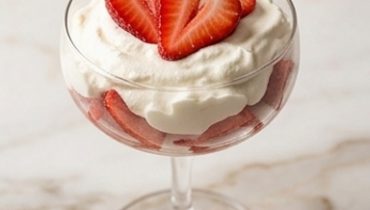
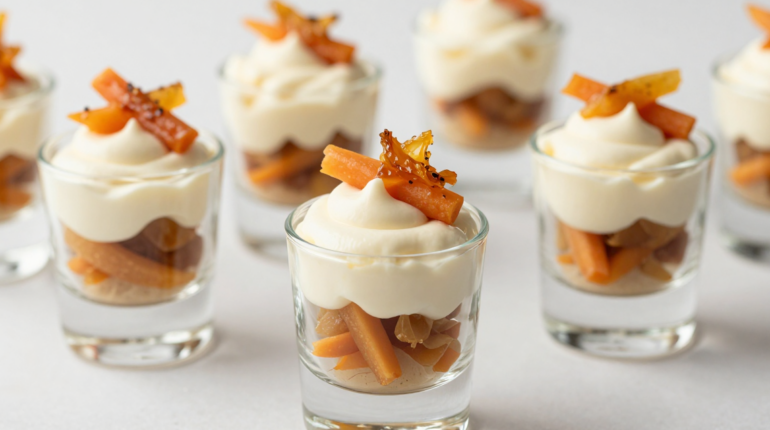
This three-layer stratification requires surgical precision to fully reveal the flavor potential of each element. At the bottom of each verrine, two teaspoons of coriander carrots set a spicy and slightly tangy base. On top, the pineapple pieces roasted with fleur de sel form the intermediate layer, bringing their salty tropical contrast. Finally, using a spatula, the fresh goat cheese whipped cream tops the whole, creating a milky summit that visually hides the buried treasures.
Complete cooling of each component before assembly guarantees the architectural stability of the verrine. The candied carrots must have cooled to lukewarm, the pineapple returned to room temperature, and the goat cheese whipped cream maintained its refrigerated firmness. This thermal discipline prevents the layers from mixing prematurely and preserves the flavor surprise effect upon tasting.
Bernhard Winkelmann’s signature tip for ANICAP transforms this creation into a visual masterpiece: carrot slices cut on an ultra-fine bias, fried in peanut oil over medium heat until they become translucent and crispy. Drained on paper towels, two golden chips planted vertically in each verrine provide that spectacular final touch. “Guaranteed effect and pleasure,” promises the chef – a statement confirmed by the airy crunch of these vegetable tuiles contrasting with the creamy sweetness of the lower layers.