📌 French-Style Fish Parmentier
Posted 31 March 2026 by: Admin
This is a Friday recipe. Not a festive Friday — more like a gray March Friday where winter refuses to let go. Fish Parmentier is exactly what you need on a night like that.
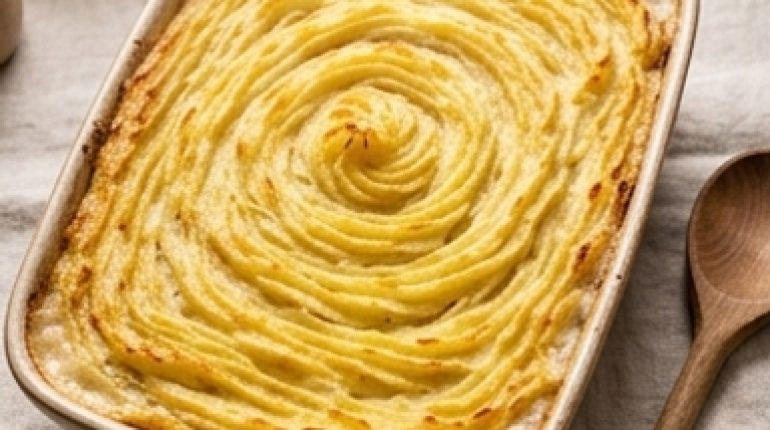
The surface is a deep gold, almost light caramel in spots where the mash has really taken on color. Underneath, the sauce is still simmering, thick and velvety, with chunks of white fish that break away into large flakes at the slightest touch of a spoon. Fresh dill releases a slightly aniseed scent — sweet, a bit briny — that mixes with melted butter to make you want to sit down even before the plates are out. When the spoon breaks through the potato crust, there’s that dull, satisfying sound that says it’s exactly how it was meant to be.
Why you’ll love this recipe
Ingredient Notes
Everything you need for this fish gratin: firm white fish, leek, fennel, and a good amount of butter.
- Firm white fish : Cod, pollock, ling, sea bass — whatever is fresh at your fishmonger that day. The important thing is the thickness: minimum 2 cm, otherwise the pieces will shrink to nothing during cooking. Avoid fish that are too thin like sole or plaice — they melt completely into the sauce and disappear.
- Leek : Use mainly the white and pale green parts, not the dark green top leaves which are too fibrous. Cut it into thin rounds so it melts quickly in the butter without remaining crunchy. One medium leek is enough — it’s not the star; it provides tenderness and a discreet sweetness.
- Fennel : This is what makes this recipe distinctly French. The anise flavor is very mild once sautéed in butter, nothing like raw fennel. If you can’t find any, substitute with celery, but you’ll lose something authentic. Half a bulb is plenty.
- Fresh dill : Not dried. Truly fresh. Dried dill is tasteless here. Add it off the heat at the last second before assembling to keep its bright green color and delicate fragrance. Heat kills it in minutes.
- Fish stock : It replaces the white wine from the original recipe and gives the exact same depth to the sauce. A good quality cube diluted in hot water works well. Taste it before adjusting the salt in the dish — some cubes are already very salty.
- Starchy potatoes : Bintje, Agria, Russet — any floury variety. They absorb butter and milk to produce a light mash that holds well on the spoon. Waxy potatoes make a sticky mash that will never brown properly in the oven.
The sauce: don’t rush it
It all starts by melting the leek and fennel in butter over medium heat — not high. We want them to soften and become translucent, not brown. It takes a good ten minutes, and meanwhile, the whole kitchen starts to smell like the Brittany coast after the rain. Once the vegetables are tender, add the flour, stir for two minutes to cook off the raw taste, then pour in the stock and milk gradually while whisking constantly. The sauce must be thick — really thick, almost like a dense béchamel — because it will loosen during cooking with the fish’s natural juices. If it’s too liquid at the start, the finished dish will be watery and disappointing.
The fish shouldn’t cook twice
Classic mistake: poaching the fish before incorporating it. It will overcook in the oven and become dry, cottony, and uninteresting. Cut it into large chunks — really large, like 4 cm — and fold them raw directly into the cooled sauce before assembling the dish. It will finish cooking in the oven, encased in the creamy sauce, and stay tender with that flaky texture which is the key to the plate’s success. The size of the pieces is essential: too small, and they disappear.
The mash: thick, buttery, not perfect
The top mash should be a bit firmer than what you’d serve as a side dish — easier to work with. Mash the potatoes while still hot with plenty of butter, warm milk, salt, and white pepper. It should be smooth but not runny, with that slight resistance under the spatula that indicates it will hold up during baking. A piping bag with a star tip gives those crispy rosettes seen in the photo — but a simple spoon with fork ridges works great too. The essential part: cover the entire surface to the edges so the sauce doesn’t boil over.
The part everyone misses: the baking
Many take the dish out too early. The mash is hot, it looks ready — but no. You must wait for the top to reach a deep gold, between blond and light caramel, with peaks starting to brown slightly. That’s when the crust is truly crunchy under the fork, when it crunches a bit as you break it. This usually takes 25 to 30 minutes at 200°C, sometimes more if the dish comes straight from the fridge. If the mash browns too quickly but the bottom isn’t hot yet, lower to 180°C and cover with foil for five minutes.
Tips & Tricks
- Do not salt the sauce until you’ve added the stock — many cubes are already quite salty. Taste first, adjust later. A dish that’s too salty cannot be fixed.
- If using frozen fish, thaw it completely and pat it dry with paper towels before folding it in. Thawing water in the sauce is the quickest way to dilute everything.
- This dish freezes perfectly before cooking. Assemble, wrap tightly, and freeze. On the day, bake directly from the freezer at 180°C for 45 to 50 minutes. Convenient for always having a portion ready.
Can I prepare fish parmentier in advance?
Yes, and it’s actually recommended. You can assemble the entire dish the day before, cover it with plastic wrap, and keep it in the fridge. Just bake it directly the next day — allow 5 to 10 extra minutes of cooking since it’s starting cold. The sauce even tends to be more flavorful after a night’s rest.
What fish should I use if I can’t find cod?
Any firm white fish at least 2 cm thick works: pollock, ling, sea bass, hake, or sea bream. The key is firmness—the fish must stay in chunks in the sauce after cooking. Avoid very thin fish like sole or plaice; they disappear completely.
My sauce is too liquid after cooking, what happened?
Two possible causes: the béchamel wasn’t thick enough at the start, or the fish was frozen and released a lot of water while cooking. Next time, ensure the sauce coats the back of a spoon well before assembly, and if using frozen fish, thaw and dry it thoroughly.
Can I freeze this dish?
Yes, but only before cooking. Assemble the dish, wrap tightly, and freeze for up to 3 months. Bake directly from the freezer at 180°C for 50 to 55 minutes. After cooking, the mash doesn’t refreeze well — the texture becomes grainy.
I don’t like dill, what can I replace it with?
Fresh flat-leaf parsley is the most neutral substitute. To keep the maritime spirit, fresh chives or fresh tarragon also work very well. Avoid dried herbs in any case — they lack the necessary freshness for this dish.
How do I get a golden and crispy mash on top?
Two conditions: the mash must be sufficiently firm (not too much milk) and the oven must be hot, at least 200°C. If after 30 minutes the surface isn’t colored enough, put it under the broiler for 2 to 3 minutes, watching closely. Fork ridges or piping bag rosettes help create peaks that brown faster.
French-Style Fish Parmentier
French
Main Course
Chunks of white fish poached in a creamy dill, leek, and fennel béchamel, then baked under a thick layer of buttery mashed potatoes. The ultimate Friday comfort food.
Ingredients
- 800g firm white fish fillets (cod, pollock, ling)
- 1kg starchy potatoes (Bintje or Agria)
- 1 medium leek (white and pale green parts only)
- 1/2 fennel bulb
- 1 medium onion
- 2 garlic cloves
- 300ml fish stock
- 250ml whole milk
- 150ml heavy cream
- 50g all-purpose flour
- 40g butter (for the sauce)
- 2 tbsp olive oil
- 30g fresh dill (leaves only)
- 80g unsalted butter (for the mash)
- 150ml warm whole milk (for the mash)
- 1 tsp salt (adjust according to stock)
- 1/2 tsp white pepper
Instructions
- 1Peel and cut the potatoes into large chunks. Cook for 20 minutes in salted boiling water until they mash easily with a fork.
- 2Drain the potatoes, mash them with 80g of butter and 150ml of warm milk. The mash should be firm and smooth. Season with salt and white pepper. Set aside.
- 3Thinly slice the leek into rounds, finely dice the fennel, onion, and garlic. Melt 40g of butter with olive oil in a wide skillet over medium heat.
- 4Sauté leek, fennel, onion, and garlic for 10 to 12 minutes over medium heat until tender and translucent. Do not let them brown.
- 5Add the flour and stir for 2 minutes to cook off the raw taste. Gradually pour in the fish stock while whisking, then the milk and cream. Bring to a gentle boil while stirring until a thick sauce forms.
- 6Remove the skillet from the heat. Cut the raw fish into large 4 cm chunks and gently fold them into the sauce. Add the dill leaves off the heat. Adjust seasoning.
- 7Preheat oven to 200°C. Pour the fish mixture into a large baking dish. Spread the mash over the entire surface to the edges. Create ridges with a fork or rosettes with a piping bag.
- 8Bake for 25 to 30 minutes until the surface is golden, light caramel color, with some slightly darker peaks. Let rest for 5 minutes before serving.
Notes
• Make ahead: The dish can be prepared entirely the day before and kept in the fridge. Add 5 to 10 minutes of cooking time if baking directly from cold.
• Freezing: Can be frozen before cooking for up to 3 months. Bake from frozen at 180°C for 50 to 55 minutes.
• Variation: Add 150g of raw peeled shrimp to the fish mixture for a more generous version. They cook perfectly in the oven with the rest.
Nutrition Facts (per serving, estimated)
| 490 kcalCalories | 33gProtein | 40gCarbs | 22gFat |