Cumin sizzling in hot oil, that smell that wafts through the whole kitchen and makes you want to just stand there in front of the pot, doing nothing but waiting. That’s what a vegetable tajine is. A dish that enters your daily life with disconcerting ease — and impresses every single time.
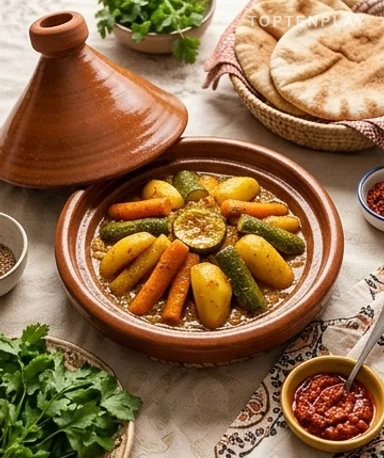
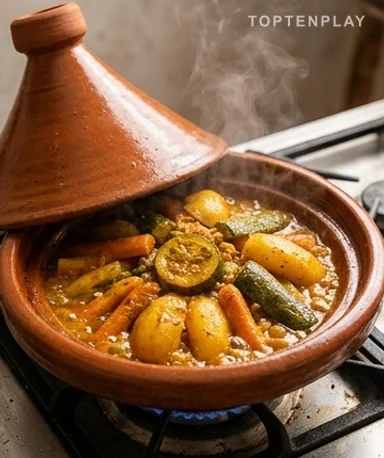
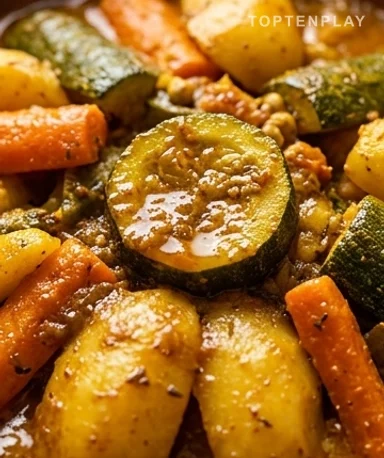
The sauce has that golden ochre hue, like honey that has spent an hour absorbing turmeric and paprika. The vegetables are melt-in-the-mouth, preserved in their own juices and spices without ever falling completely apart. You catch the ginger in the background — subtle but there. And on the edges of the dish, that slight film where the sauce has reduced and concentrated: that’s where the best flavors hide.
Why you’ll love this recipe
Ingredient Notes
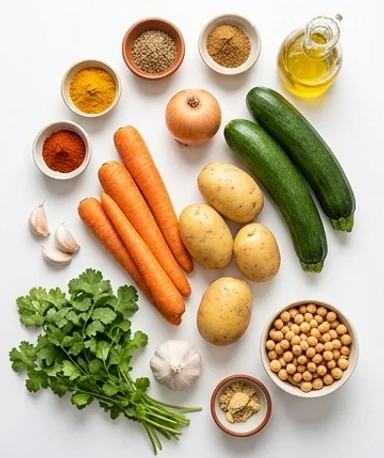
All the tajine ingredients gathered: fresh vegetables, generous spices, and quality olive oil.
- The spices : This is where it all happens. The vital minimum: cumin, turmeric, sweet paprika, ground ginger. If you have ras el hanout in the cupboard, a teaspoon is enough to replace everything. Above all, use fresh spices — a spice that has been sitting in the back of a drawer for two years no longer has much fragrance, and you can tell immediately in the final result.
- The potatoes : Choose waxy potatoes, like Charlotte or Amandine. They hold up during cooking and don’t fall apart in the sauce. Floury types like Bintje will melt and turn your tajine into mashed potatoes — not the desired effect.
- The onion : One large yellow onion, not small white onions. It must cook for a long time and become almost jam-like — that’s what gives the sauce its roundness. Mince it finely: large pieces don’t melt the same way and stay a bit raw in the middle.
- Olive oil : No need for a pricey bottle. But a fruity oil, not neutral. We use it at two moments: at the start to build the base, and at the end as a raw drizzle to wake up all the flavors just before serving.
The base that provides all the character
Start with the onion in hot olive oil over low heat. No rush. It should soften slowly, become translucent, almost shiny — this takes five good minutes and is non-negotiable. Add the minced garlic, stir, another two minutes. It’s at this precise moment that the spices arrive: the cumin crackles slightly upon contact with the hot oil and immediately releases its toasted hazelnut fragrance. The turmeric colors everything in seconds, the mixture taking on a golden hue like light caramel. Mix quickly so the spices coat the onion without burning — thirty seconds maximum before adding the vegetables.
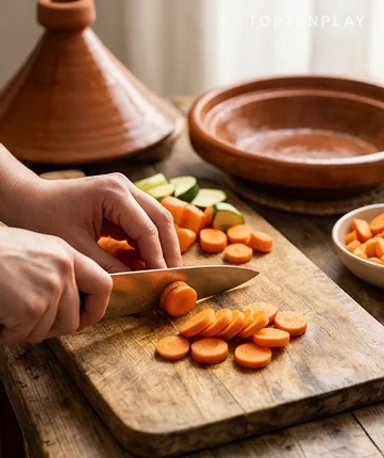
Vegetables in the right order
Carrots and potatoes first. They are dense; they need time. Roll them in the spicy base so they are well coated. Add a small glass of water, put the lid on, let it cook for twenty minutes over low heat without touching it. Then comes the zucchini — it’s fragile. Too long and it melts completely, disappearing into the sauce. Cut it into thick chunks, not thin slices, and add it only when the carrots start to soften. It will absorb the cooking juices and soak up the fragrant broth that has formed at the bottom.
Low heat is truly the key
The temptation is strong to turn up the heat to go faster. Resist. Slow cooking is what makes the vegetables melt-in-the-mouth without bursting, and causes the sauce to concentrate and thicken naturally rather than staying watery. Put your ear near the lid: you should hear a tiny, steady bubbling, not an aggressive boil. Lift occasionally, stir gently, check that there is still a layer of liquid. If it catches slightly, that’s a good sign. If it burns, the heat is too high.
The final touch that changes everything
When the potatoes give way easily under the tip of a knife, it’s ready. Taste the sauce. Adjust the salt, perhaps a bit more cumin if you find it too subtle. A drizzle of raw olive oil poured over the vegetables just before serving — it wakes everything up, makes the sauce shine, and adds that little fruity side you can’t get during cooking. Serve directly in the dish, lid to the side: the effect at the table is worth it.
Tips & Tricks
- Prepare it the day before and reheat gently the next day: the spices have had time to penetrate the vegetables and the result is honestly better than on the day itself.
- If you don’t have a clay tajine, a cast-iron pot works exactly as well — the goal is simply to keep the steam inside during cooking.
- For a heartier version, add a can of drained chickpeas at the same time as the carrots: it doesn’t change the cooking time and makes the dish much more substantial.
Can the tajine be prepared in advance?
Yes, and it’s even recommended. Prepared the day before, the spices have time to properly permeate the vegetables and the taste is much deeper. Store it in the refrigerator in the covered dish and reheat gently over very low heat, adding a small splash of water if the sauce has thickened too much.
I don’t have a clay tajine, does it still work?
Absolutely. A cast-iron Dutch oven, a deep skillet with a lid, or a heavy-bottomed pot work just as well. The key is to keep the steam inside during cooking — that’s what makes the vegetables meltingly soft. The clay tajine mainly provides a visual effect at the table.
Which vegetables can be added or replaced?
The recipe is very flexible. You can add chickpeas (canned, drained), eggplant, bell peppers, celeriac, or turnips. Sweet potatoes instead of classic potatoes add a slightly sweet side that pairs very well with the spices. Avoid overly watery vegetables like cherry tomatoes in large quantities — they make the sauce too thin.
How do I prevent the vegetables from falling apart during cooking?
Two simple rules: cut the vegetables into generous chunks (not too small) and respect the order of addition. Carrots and potatoes first, zucchini last. The heat must stay low throughout — a boil that is too strong breaks the vegetables and disperses the flavors.
How long does this tajine keep?
Three days in the refrigerator without a problem. The flavors even continue to develop the next day. Freezing is not recommended — potatoes and zucchini get a grainy and spongy texture after thawing.
What should I serve with this vegetable tajine?
Steamed couscous is the classic accompaniment — it absorbs the spicy sauce and is a perfect match. Homemade flatbread or naan bread works very well too. For a lighter meal, a simple arugula salad on the side is more than enough.
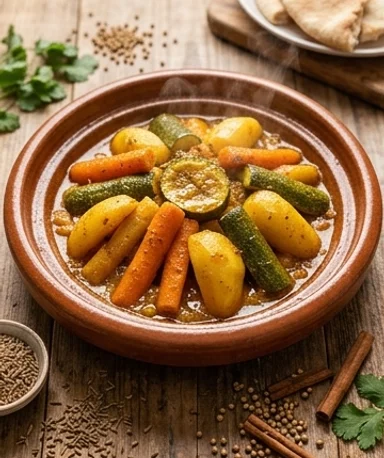
Fragrant Vegetable Tajine
North African
Main Course
A meltingly soft vegetarian tajine with North African spices, prepared with simple vegetables and plenty of patience. Easy to prepare in advance, even better the next day.
Ingredients
- 2 (about 350g) waxy potatoes (Charlotte or Amandine)
- 2 (about 250g) carrots
- 1 (about 200g) zucchini
- 1 large (about 150g) yellow onion
- 2 garlic cloves
- 3 tbsp (45ml) olive oil
- 1 tsp ground cumin
- 1 tsp turmeric
- 1 tsp sweet paprika
- ½ tsp ground ginger
- 1 glass (150ml) water
- Salt and pepper to taste
Instructions
- 1Peel the potatoes and carrots. Cut the potatoes into 3 cm cubes, the carrots into thick rounds, and the zucchini into large chunks. Finely mince the onion and chop the garlic.
- 2Heat the olive oil in a tajine or pot over low heat. Add the minced onion and cook for 5 minutes until translucent.
- 3Add the chopped garlic and stir for 2 minutes. Then pour in all the spices and stir quickly for 30 seconds to toast them without burning.
- 4Add the potatoes and carrots. Mix well to coat them in the spices. Pour in the water, cover, and simmer on low heat for 20 minutes.
- 5Add the zucchini, mix gently. Cover again and continue cooking for 20 minutes on low heat.
- 6Check the potatoes with the tip of a knife — they should give way easily. Taste, adjust salt and pepper. Finish with a drizzle of raw olive oil before serving.
Notes
• Prepared the day before, this tajine is even better: the spices penetrate the vegetables deeply. Reheat gently over very low heat with a little water if necessary.
• For a heartier version, add a 400g can of drained chickpeas at the same time as the carrots. No cooking time adjustment needed.
• Keeps for 3 days in the refrigerator. Do not freeze — the texture of the potatoes and zucchini does not withstand thawing well.
Nutrition Facts (per serving, estimated)
| 205 kcalCalories | 3gProtein | 24gCarbs | 11gFat |