📌 Fluffy Cream Cheese Cake
Posted 3 April 2026 by: Admin
It’s Sunday, past 3 PM, and you want something homemade for your afternoon snack. Not a New York cheesecake with its water bath and three hours of refrigeration — just a simple, fluffy cake that smells like vanilla and lemon. And that cream cheese that’s been waiting in the fridge for three days will finally find its destiny.
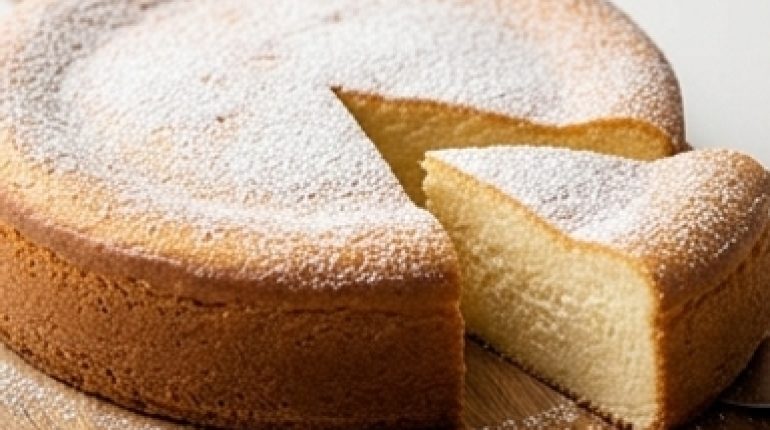
The cake comes out of the oven with a light hazelnut-colored crust, slightly domed in the center like a soufflé that decided to behave. Inside, the crumb is off-white, moist without being sticky, with that particular texture you only get from cream cheese: neither a brioche nor a classic cake, but something in between. The powdered sugar melts gently on the still-warm crust. And the smell — lemon, vanilla, baked egg — fills the kitchen even before you’ve closed the oven door.
Why you’ll love this recipe
Ingredient Notes
All the ingredients gathered: cream cheese, room-temperature eggs, and a few pantry staples are enough.
- Philadelphia-style cream cheese : This is what makes all the difference in texture. Kiri works, Saint-Morêt too. However, avoid low-fat versions — they make the cake rubbery and bland. Take it out of the fridge 30 minutes before starting; it should be soft to the touch.
- The 4 eggs : Room temperature is mandatory. Cold eggs = egg whites that don’t whip as well = a denser cake. Take them out at the same time as the cheese. Separate the whites from the yolks right at the start, before doing anything else.
- T45 Flour / All-purpose flour : The original recipe uses Italian type 00 flour, which is very fine. Regular T45 or all-purpose works exactly the same. What matters is sifting it — it takes 30 seconds and really changes the final lightness.
- Fresh lemon juice : Only one tablespoon, but it does two things at once: it balances the taste of the cheese (otherwise it can feel a bit heavy on the palate) and it helps the whites whip up. Use fresh, not bottled — the bottle has a preserved taste that you can detect in the cake.
Take everything out of the fridge 30 minutes before — really
Baking is all about temperature. When all ingredients are at the same temperature, they incorporate effortlessly, the batter stays homogeneous, and the whites whip better. This is the advice everyone forgets, and it explains most failures. Start by whisking the yolks with the sugar until the mixture is slightly frothy and pale cream-colored — it takes barely two minutes. Then add the cheese chunks, lemon juice, and vanilla. If you feel resistant lumps under the whisk, your cheese was still too cold. Put everything over a water bath for one minute; that should fix it.
Sift the flour, then stop mixing
Sift the flour with the baking powder directly over the bowl. Fold them in with a spatula, not a whisk — and stop mixing as soon as the traces of flour have disappeared. Every extra movement activates the gluten and makes the cake more compact. The batter should stay a bit thick and slightly shiny. It doesn’t look like a classic cake batter yet — that’s normal, the whipped egg whites will change everything.
Egg whites: whip them, then stop
Stiff egg whites are the delicate moment. Whisk them until the whisk leaves well-marked furrows and the peaks hold without falling — then stop. Over-whipped whites become grainy, they incorporate poorly, and form lumps in the batter. The sound changes when they are ready: at first it’s liquid and light, then it becomes thick, almost matte, with resistance in the whisk. Fold them in three batches with a spatula, using bottom-to-top movements. The goal is to wrap the batter rather than mix it — the difference is subtle but it matters.
30 minutes in the oven, and don’t touch a thing
Oven preheated to 180°C, traditional heat. Pour the batter into the pan lined with parchment paper, smooth the surface slightly, and bake. Do not reopen the door before 25 minutes — the thermal shock would make the cake collapse. After 30 minutes, insert a knife blade in the center: it should come out almost dry, with perhaps a very slight moist trace. The top will be golden like light caramel, slightly cracked in the center. This is perfectly normal — it’s even the sign that the interior is still slightly melting, exactly as it should be.
Wait before unmolding — it’s worth it
Let the cake cool for 10 to 15 minutes in its pan before unmolding it onto a rack. Too early, and it breaks. The structure needs these few minutes to stabilize. Once on the rack, wait until it is completely cold before dusting with powdered sugar — otherwise, it gets absorbed in seconds and disappears. Use a sieve for the powdered sugar; it gives a clean, even result effortlessly.
Tips & Tricks
- The cake is even better the next day. The texture firms up slightly and the lemon-vanilla aromas really develop. Store it wrapped in the refrigerator and take it out 20 minutes before serving.
- If your cake cracks a lot on top, your oven is probably too hot. Drop to 170°C next time and extend the baking time by 5 to 8 minutes.
- For unmolding, parchment paper at the bottom of the pan is more reliable than buttering and flouring — the bottom edge stays clean and you don’t lose the golden crust.
Can I replace Philadelphia with another cream cheese?
Yes — Kiri or Saint-Morêt give very similar results. Avoid low-fat versions (0% or light) which contain too much water and make the cake rubbery. Ricotta also works, but the texture will be slightly grainier and less creamy.
How do I store this cake?
In the refrigerator, wrapped, it keeps for 3 days without any problem. Take it out 20 minutes before serving so it regains its soft texture — cold, it is a bit firm. It also freezes very well in individual wrapped portions for up to 3 weeks.
Why did my cake crack on top?
A slight central crack is normal and indicates a still-fudgy core — that’s a good sign. A wide, deep crack indicates an oven that’s too hot or over-baking. Drop to 170°C next time and check for doneness after 28 minutes.
Can I prepare this cake in advance?
It is even recommended. Prepared the day before, the lemon-vanilla aromas develop and the texture improves. Keep it whole, wrapped in the refrigerator, and dust with powdered sugar just before serving.
Can I add fruit or other flavorings?
Absolutely. Blueberries or raspberries gently folded into the batter at the end work very well. For flavorings, lemon or orange zest is a great replacement for vanilla extract. Avoid watery fruits (strawberries, peaches) which make the batter too wet.
Can I make this cake without an electric mixer?
Yes for the yolks — they whisk easily by hand. For the stiff egg whites, it’s technically doable by hand but requires 8 to 10 minutes of sustained effort. An electric mixer is strongly recommended for this step.
Fluffy Cream Cheese Cake
European
Dessert
A light and melt-in-your-mouth cake made with Philadelphia cream cheese, whipped egg whites, and lemon. Simpler than a cheesecake, more indulgent than a classic sponge cake.
Ingredients
- 200g Philadelphia-style cream cheese (at room temperature)
- 4 eggs (at room temperature, whites and yolks separated)
- 100g granulated sugar
- 120g T45 flour (sifted)
- 1 sachet (16g) baking powder
- 1 tbsp fresh lemon juice
- 1 tsp vanilla extract
- 20g powdered sugar (for decoration)
Instructions
- 1Preheat the oven to 180°C (traditional heat). Line a 22 cm round cake pan with parchment paper.
- 2Separate the whites from the yolks. Whisk the yolks with the sugar until you get a frothy, pale cream-colored mixture.
- 3Add the cream cheese chunks, lemon juice, and vanilla extract. Mix until the texture is homogeneous and creamy.
- 4Sift the flour with the baking powder, then fold them in gently with a spatula using bottom-to-top movements.
- 5Whip the egg whites to stiff peaks until they hold their shape without falling.
- 6Fold the whites into the batter in three batches, gently with a spatula, without breaking the air bubbles.
- 7Pour the batter into the pan, smooth the surface slightly, and bake for 30 to 35 minutes without opening the oven before 25 minutes.
- 8Check for doneness with a knife blade — it should come out almost dry. Let cool for 15 minutes in the pan, then unmold onto a rack.
- 9Let cool completely before dusting with sifted powdered sugar.
Notes
• Storage: 3 days in the refrigerator wrapped. Take out 20 minutes before serving to regain the fluffy texture. Freezes in individual slices for up to 3 weeks.
• Make ahead: the cake is better the next day — aromas develop and the texture improves. Prepare it the day before without the powdered sugar.
• Variation: add the zest of one lemon to the batter to intensify the scent, or fold in 80g of blueberries gently at the end.
Nutrition Facts (per serving, estimated)
| 215 kcalCalories | 6gProtein | 30gCarbs | 7gFat |