📌 Fig latex: this traditional skin remedy that requires serious precautions
Posted 18 February 2026 by: Admin
Fig Sap: A Natural Treasure with Millennial Origins
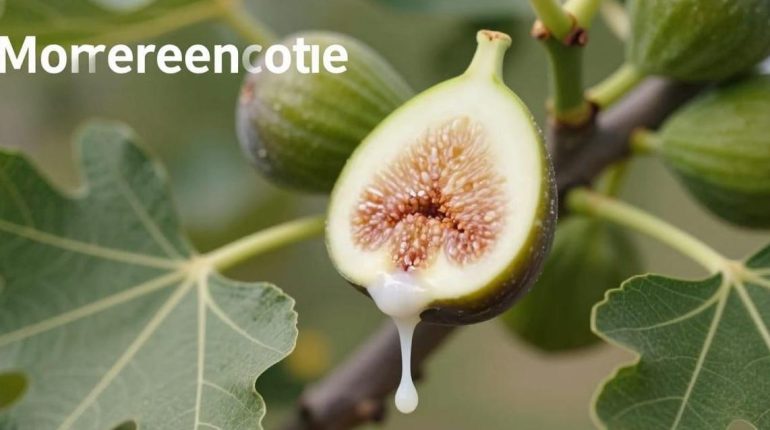
Behind the ordinary appearance of a Mediterranean tree lies a substance with remarkable properties, known since Antiquity and rediscovered today by natural cosmetics. Fig sap — also called fig milk, fig tears, or fig latex — is a thick white liquid that flows spontaneously from the stems, leaves, and unripe fruits of the Ficus carica when they are incised.
Cultivated for millennia around the Mediterranean basin and the Middle East, this tree has generated much more than its fruits. Its sap constitutes an ethnobotanical heritage of rare richness, passed down from generation to generation in traditional care practices.
Its composition explains this lasting interest: water, natural latex, plant bioactive compounds and, above all, proteolytic enzymes among which ficin occupies a central place. It is precisely this enzyme that determines all the therapeutic and cosmetic properties historically attributed to the substance. By efficiently breaking down proteins, it acts directly on keratinized skin tissues, paving the way for targeted applications on thickened or damaged skin.
It is therefore not simple popular folklore: the biochemical composition of fig sap offers a solid scientific basis for the uses passed down by traditional medicines, inviting researchers and naturalists to examine it with a fresh eye.
Active Composition and Properties: What Science Says about Fig Latex
While ficin constitutes the active heart of fig sap, it does not act alone. Each component of this plant latex fulfills a precise role, and their association creates a biochemical synergy that research is beginning to document seriously.
On the front line, ficin exerts a direct proteolytic action: by breaking down the protein chains of keratin, it gradually softens areas of thickened skin such as calluses or warts. This mechanism is the basis for most of the traditional uses recorded throughout the centuries.
The natural latex present in the sap acts as an exfoliating agent, stimulating cell renewal without mechanical intervention. A gentle but real action, which explains its historical integration into complexion care.
What gives this substance a scientific interest beyond simple folklore is the laboratory evidence of antimicrobial compounds capable of inhibiting certain microorganisms. These studies, still preliminary, open a serious path for targeted therapeutic applications.
Finally, the presence of antioxidants completes this profile: by neutralizing free radicals responsible for cellular aging, these plant molecules protect tissues from oxidative stress, a property common to substances from the Mediterranean plant kingdom.
This coherent biochemical architecture transforms fig sap into a natural candidate for precise skin applications — provided that the methods of use are perfectly mastered.
Traditional Skin Applications: Methods, Recipes, and Practical Uses
Mastering the biochemical composition of the sap is not enough — one must also know how to use it correctly. Because it is precisely in the dosage and method that the difference between effective care and skin irritation lies.
For areas of thickened skin — warts, calluses — the protocol is strict: clean and dry the area, apply a single, targeted drop, carefully protect the surrounding healthy skin, then rinse after a few hours. Any direct and undiluted application must remain exclusively occasional. Raw sap is not a product to be applied over a wide surface.
For gentler cosmetic use, two preparations stand out from tradition. The brightening mask combines 2 to 3 drops of fresh sap with a tablespoon of raw honey and a few drops of lemon: the mixture is applied to targeted spots, kept for a maximum of 10 to 15 minutes, then rinsed with lukewarm water. The toner for oily skin is obtained by diluting 1 to 2 drops in a cup of rose water, to be applied gently to clean skin.
In both cases, dilution is imperative and the frequency should not exceed one to two applications per week. A golden rule: avoid any immediate sun exposure after the mask, at the risk of accentuating imperfections rather than reducing them.
These uses, as promising as they may be, cannot be improvised — and this is what a careful examination of the precautions surrounding each application reveals.
Precautions, Contraindications, and Responsible Collection: What You Absolutely Must Know
These uses, as precise as they may be, rest on a fundamental principle that too many followers of natural remedies neglect: natural does not mean harmless.
Fig sap is an enzymatically powerful substance, likely to cause irritation, redness, and mild burns, even in skins that are not particularly sensitive. Some individuals develop allergic reactions upon first contact. This is why a preliminary skin test on a small area — the inside of the wrist, for example — is a non-negotiable step before any first use. In case of severe irritation, immediate cessation and abundant rinsing with clear water are required without delay.
Contraindications are clear: pregnant or breastfeeding women, mucous membranes, eye areas, and large skin surfaces must stay strictly away from any contact with the latex. Internal consumption, practiced in some ancient traditions, is formally discouraged by modern recommendations, as the latex can be irritating, or even toxic, without medical supervision.
For those who wish to collect the sap directly from the tree, the protocol is simple but essential: protective gloves mandatory, collection of a few natural drops from a cut stem or leaf, immediate use before oxidation.
Fig sap deserves interest — provided that these safeguards are respected, transforming an ancestral remedy into a truly mastered skin ally.