📌 Fairground fritters: this apple brioche bread recipe reproduces the soft texture without frying
Posted 29 January 2026 by: Admin
The Essence Of The Fritter Transformed Into Homemade Bread
The sweet scents of traveling fairs, that golden crunch of apple fritters dipped in boiling oil—all this gourmet folklore is condensed today into a loaf pan. The Cinnamon Swirl Apple Fritter Bread reinvents the fairground classic in a domestic, accessible version, without splashes or a frying thermometer. This recipe captures the soul of the original fritter while eliminating its technical constraints.
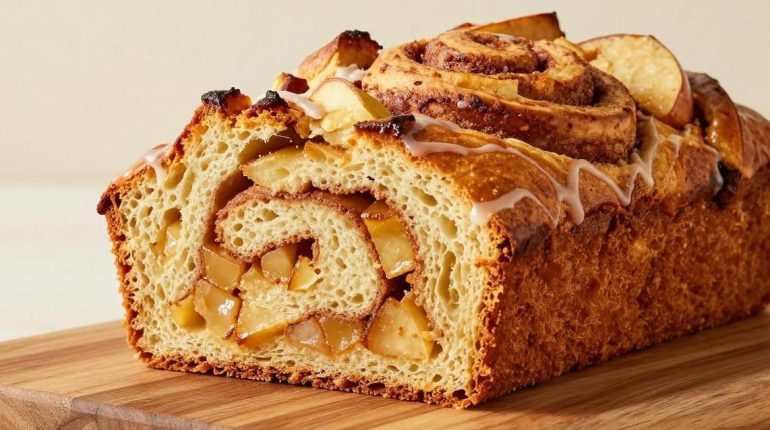
The magic happens right from the preparation: sour cream provides a remarkably tender crumb, while Granny Smith apples bring that sharp acidity that contrasts with the surrounding sweetness. Unlike ordinary cakes, this bread incorporates two generous layers of swirled cinnamon, creating spicy veins that run through each slice like aromatic threads. The translucent vanilla glaze seals the whole with a delicate finish—”the whispered final touch, simple and totally irresistible,” according to the recipe’s creators.
It’s not just a simple breakfast cake. It’s what Americans call a breakfast dessert in its most honest form: neither pretentious nor sugar-coated, just that gourmet sincerity that recalls autumn mornings when the biting cold calls for sweet comforts. Each bite promises that characteristic crunch of caramelized edges, that enveloping warmth of cinnamon, and those bursts of melting apples that punctuate the tasting.
The Secrets To Guaranteed Success
Where most fruit breads fail—apples sunk to the bottom, failed swirls, spongy texture—this recipe methodically eliminates every trap. The preparation fits in one single bowl, without an electric mixer or complex technique. The mixing of dry and wet ingredients is done with broad movements, preserving that airy structure that makes all the difference between a dense cake and a melting crumb.
The cinnamon swirl requires no piping bag or expert pastry skills. You simply layer the sugar-spice mixture in two successive layers, then trace zigzags with a knife—the marbling forms naturally during baking, creating those aromatic veins that characterize real fritters. The Granny Smith apples, cut into small dice, remain suspended in the batter thanks to the balanced density of the sour cream, escaping the gravity that sabotages so many fruity recipes.
But the real secret lies in patience. Twenty-four hours after baking, the bread reveals its full personality: the spices infuse every cell, the apple pieces transform into almost jammy candied pockets, and the whole gains aromatic cohesion. This rest transforms a good cake into a memorable taste experience—one that justifies wrapping a slice in parchment tied with string, to give as a gift or savor alone, facing a steaming cup.
When And How To Savor This Creation
This bread transcends the simple “brunch recipe” category. Served sliced during a weekend with loved ones, it becomes the centerpiece of a table where steaming coffee and conversations stretch until noon. Its unadorned presentation—that golden crust striped with cinnamon, those apple bursts visible in the cut—speaks for itself, dispensing with any culinary discourse.
For the holidays, it turns into a gift as sincere as it is elegant. Wrapped in parchment paper tied with raw string, it carries the authenticity of a homemade gesture without the stiff codes of professional pastry. Teachers, neighbors, or colleagues immediately recognize the attention given—the kind that requires time, not money.
But its most honest use remains perhaps that of solitary pleasure. A thick slice, warmed for fifteen seconds, accompanied by a strong black coffee in the silence of an early morning. No set table, no witnesses—just this alchemy between caramelized sugar, fruity acidity, and the bitterness of the grounds. The moment when you understand that some recipes don’t exist to impress, but to comfort. This bread belongs as much to festive Sundays as to difficult Mondays, to collective celebrations as to intimate rituals. Its versatility is not a marketing quality, but the reflection of a simple truth: good taste knows no protocol or mandatory occasion.
The Promised Sensory Experience
The first bite reveals what words struggle to capture: that caramelized crust at the edges, slightly crunchy like that of an authentic fairground fritter, gives way under the tooth before releasing a dense, almost creamy crumb. The contrast is not accidental—it’s the thermal signature of mastered baking, where sugar and butter have fused on the surface while the interior maintained its protective moisture.
The cinnamon aromas do not emerge in a brutal wave, but settle in progressively, layer after layer, like those October mornings where the fresh air still carries the memory of summer. The double spice spiral guarantees this constant presence without saturation—each slice offers its own balance between swirled zones and more neutral areas.
It is in the tartness of the Granny Smiths that the bread finds its anchor. Where other recipes sink into one-dimensional sweetness, these apple bursts inject a lemony liveliness that wakes up the palate, renewing the desire for the next bite. After twenty-four hours of rest, their texture evolves—the pieces lose their firmness to become those almost jammy candied pockets that release their juice when cut.
The whole composes a precise taste geometry: peripheral crunch, central softness, fruity acidity, spicy warmth, vanilla sweetness of the glaze. No dominant note, no hierarchy—just this fragile balance that defines recipes remembered long after the last crumb.