📌 Express Korean Ground Beef

Posted 15 April 2026 by: Admin #Recipes

Prep Time
10 minutes
Cook Time
15 minutes
Total Time
25 minutes
Servings
4 servings

Have you ever stared at the back of the fridge on a Sunday night wondering what on earth to do with a pack of ground beef? This Korean bowl is the answer. In 25 minutes, you go from nothing to something that smells of fresh ginger and caramelized soy sauce — and everyone comes back for seconds.
Advertisement:
Final result
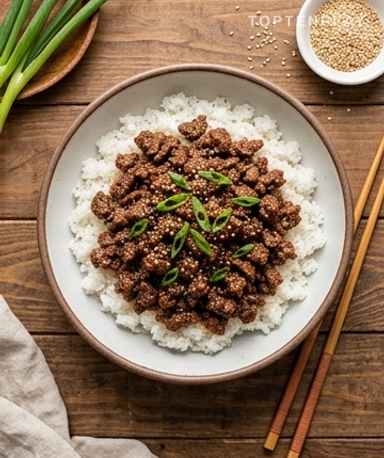
A Korean ground beef bowl over white rice, scented with sesame and green onions — the kind of dinner you’ll make all week long.

The beef is glazed, shiny like dark caramel, with tiny sesame seeds catching the light. It smells of fresh, slightly spicy ginger mixed with the toasted depth of sesame oil. On the compact white rice, green onion slices add a touch of bright green. And when you dive in with a spoon, the pieces of meat crumble gently, glistening with sauce.

Why you’ll love this recipe

The shopping list is almost nothing : Ground beef, soy sauce, ginger, garlic, brown sugar, and sesame oil. That’s it. No need to run to three different Asian grocery stores — most of these ingredients are already hanging around somewhere in your kitchen.
It freezes perfectly : Make a double batch on Sunday, freeze in portions, and you have a meal base for the week. Korean beef handles thawing very well without losing its texture or flavor.
Only one pan to wash : No extra pots, no blenders, no strainers. Just the rice on the side, and you’re done. the post-cooking cleanup is frankly minimal — and that matters.
The flavor-to-effort ratio is unbeatable : The sweet-salty-umami blend of the sauce makes it feel like you spent two hours in the kitchen. You didn’t do anything magical, but the result doesn’t look like a slapped-together dinner at all.

Ingredient Notes

Ingredients

Advertisement:

All the ingredients for Korean beef: simple, affordable, and probably already in your fridge.

  • Ground beef : Get 80/20 if you can — the fat is what helps it brown and carries the flavors. With 90/10 or leaner, you end up with meat that steams instead of searing. If you only have lean meat on hand, a tablespoon of avocado oil in the pan at the start of cooking will fix it easily.
  • Toasted sesame oil : Don’t confuse it with non-toasted white sesame oil. The one that matters here is dark amber, with an immediately recognizable smell of roasted nuts. It’s not for cooking — you add it at the end, otherwise its aroma disappears with the heat. Look for Kadoya or Lee Kum Kee brands in the Asian aisle or the specialty oil section.
  • Fresh ginger : Powdered ginger doesn’t do the same job here. Fresh brings a bright, almost floral spice that leaves a gentle warmth after cooking. Grate it finely with a microplane — you get a paste directly rather than filaments that stay in the meat.
  • Soy sauce : Use low-sodium soy sauce. The classic version can make the dish too salty as it reduces in the hot pan. Kikkoman light is what I use. If you only have regular, start with a bit less than the indicated amount and taste before adding more.
  • Brown sugar : This is what caramelizes the meat and creates that deep mahogany color. Ordinary brown sugar or honey also works — the texture will be slightly different, but the result remains very good.

The part everyone misses: actually browning the meat

This is where 90% of failed Korean bowls start. The pan isn’t hot enough, the meat is added too early, stirred immediately — and you end up with gray meat that cooked in its own steam. The pan must be truly hot, to the point where a drop of water evaporates in two seconds. Pour a drizzle of avocado oil, then add the grated ginger and garlic. Barely thirty seconds, just long enough to hear that sharp sizzle and smell the aromas rise suddenly. Only then, the beef. And then: don’t touch it. Let it form a golden-brown crust, light caramel color, before starting to break it up with a wooden spoon. This prolonged contact with the hot surface creates the Maillard reaction — that browning that concentrates sugars and proteins into pure flavor. That’s what makes the difference between a bland bowl and a bowl where you scrape the pan.

The part everyone misses: actually browning the meat
The key: let the meat brown without touching it to get that caramelized crust that makes all the difference.

The sauce: two minutes that change everything

Once the meat is well-browned and the excess fat drained, comes the satisfying moment. Soy sauce, brown sugar, toasted sesame oil, chili flakes. Mix them first in a bowl if you want to avoid the stress of measuring on the fly over a hot pan. Pour over the meat and let reduce over medium heat for two or three minutes. The sauce will thicken slightly and coat every piece of beef — you’ll see the meat go from matte brown to a shiny, almost glazed brown, with a sweet-salty smell rising immediately. When everything starts to look glossy, remove from the heat and add the green onions. Not before: prolonged heat destroys the aroma of the sesame oil.

Advertisement:

What goes underneath, and why it matters as much as the meat

Over freshly cooked jasmine white rice, this bowl is hard to beat. The slightly sticky surface of jasmine rice catches the sauce, and every grain gets soaked. But it’s not your only option. Soba noodles, roasted cauliflower, or even a simple cucumber salad with rice vinegar completely change the vibe with no effort. Sprinkle with sesame seeds — from a bowl, not from the packet, otherwise you’ll put them everywhere. A few extra green onion slices, a drizzle of sesame oil if you like bold flavors. And if you like heat, adjust the chili flakes directly in the sauce during cooking rather than correcting afterward.

What goes underneath, and why it matters as much as the meat
Soy sauce, sugar, and sesame oil join the pan — this is where the magic happens.

Tips & Tricks
  • Pat the meat dry with paper towels before putting it in the pan. Surface moisture prevents browning — it’s one of the most frequent reasons meat steams instead of searing properly.
  • Heat your pan empty for a minute before adding the oil. A truly hot surface from the start guarantees a beautiful crust in less time without unnecessary waiting.
  • Leftovers keep for three days in the fridge and reheat very well over high heat in the same pan with a splash of water. Avoid the microwave — the texture becomes mushy and the meat loses that slight firmness that makes it pleasant.
Close-up
Close-up of the shiny, caramelized beef, sprinkled with sesame — a texture that instantly makes you hungry.
FAQs

Can I prepare this Korean beef in advance?

Advertisement:

Yes, and it’s even recommended. You can cook the beef the day before and store it in the fridge in an airtight container. The flavors concentrate even more after a night’s rest. Just reheat it over high heat in the pan with a splash of water to get the original texture back.

Is the recipe spicy? Can I adapt it for kids?

With half a teaspoon of chili flakes, the result is slightly spicy but not burning. For children, simply remove the chili flakes — the recipe remains very tasty thanks to the sweet-salty combination of the sauce.

Advertisement:

What can I replace sesame oil with if I don’t have any?

There is no perfect substitute, but a small amount of peanut butter diluted in the sauce can provide a similar nutty note. If you cook this dish regularly, toasted sesame oil is really worth the detour — it lasts a long time in the fridge and transforms everything from dressings to marinades.

Can I use another meat instead of ground beef?

Advertisement:

Ground turkey works very well and gives a lighter result. Ground chicken is also an option, but since it’s leaner, add a bit more oil to the pan to compensate and get a good browning.

My meat released a lot of water and isn’t browning. What’s wrong?

Two common causes: the pan wasn’t hot enough at the start, or the meat wasn’t dried with paper towels before cooking. If the meat has released water, turn the heat to high and let the excess moisture evaporate before continuing — the crust will come afterward.

Advertisement:

How to store and use leftovers during the week?

Leftovers keep for 3 days in the fridge and freeze for 3 months without any problem. Beyond the classic rice bowl, Korean beef fits perfectly into an omelet, lettuce wraps, or served over soba noodles with sliced cucumber.

Express Korean Ground Beef

Express Korean Ground Beef

Easy
Korean
Main course
Advertisement:
Prep Time
10 minutes
Cook Time
15 minutes
Total Time
25 minutes
Servings
4 servings

A generous bowl of glazed beef with soy-sesame sauce, ready in 25 minutes using just one pan. The express dinner that doesn’t feel like a last-minute meal.

Ingredients

  • 500g ground beef (80/20 preferred)
  • 1 c.s. avocado oil (or neutral high-heat oil)
  • 3 garlic cloves, finely minced
  • 1 c.c. fresh grated ginger (approx 5g)
  • 60ml low-sodium soy sauce (4 c.s.)
  • 25g brown sugar (2 c.s.)
  • 15ml toasted sesame oil (1 c.s.)
  • ½ c.c. red pepper flakes
  • 3 green onions (scallions), sliced
  • 10g sesame seeds (1 c.s.)
  • 800g cooked jasmine rice (to serve, about 200g dry)

Instructions

  1. 1Heat a large skillet over high heat until very hot. Pour in the avocado oil, then add the minced garlic and grated ginger. Sauté for 30 seconds, stirring constantly.
  2. 2Add the ground beef in a single layer. Let brown without touching for 2 to 3 minutes, until a golden-brown crust forms on the bottom.
  3. 3Crumble the meat with a wooden spoon and continue cooking until no longer pink (5 to 6 minutes total). Drain excess fat.
  4. 4Add the soy sauce, brown sugar, toasted sesame oil, and chili flakes. Mix and let reduce for 2 to 3 minutes over medium heat, until the meat is shiny and glazed.
  5. 5Remove from heat and stir in the green onions. Sprinkle with sesame seeds and serve immediately over cooked jasmine rice.

Notes

• Storage: keeps for 3 days in the fridge in an airtight container. Reheat over high heat in a pan with a tablespoon of water — avoid the microwave which makes the texture mushy.

• Freezing: freeze the beef alone (without the rice) in individual portions. Keeps for 3 months. Thaw in the fridge overnight.

Advertisement:

• Light variation: replace the rice with lettuce leaves to serve as wraps, or with sautéed cauliflower rice for a low-carb version.

Nutrition Facts (per serving, estimated)

610 kcalCalories 27gProtein 64gCarbs 26gFat

Advertisement:
Share it!

Thanks for your SHARES!

You might like this

Add a comment:

Latest posts

Build-Your-Own Japanese Bowls — Tsukurioki Meal Prep

Vegetable Salad and Carrot Tartare, Chef Style

Homemade Rosemary Tea

Cheesy Pizzettes with Mushrooms and Peppers

Tomato Carrot Lemon Juice

Creamy Cancoillotte Risotto with Crispy Smoked Sausage

Walking Taco Casserole

Homemade Hamburger Steaks

Homemade Oven-Baked Chicken Nuggets

Gua Bao with Marinated Chicken and Crunchy Vegetables

Loading...