📌 Exotic fruit trifle: how three creams and a layering technique transform a classic dessert
Posted 25 December 2025 by: Admin
Preparation of Smooth Creams: The Gourmet Heart of the Dessert
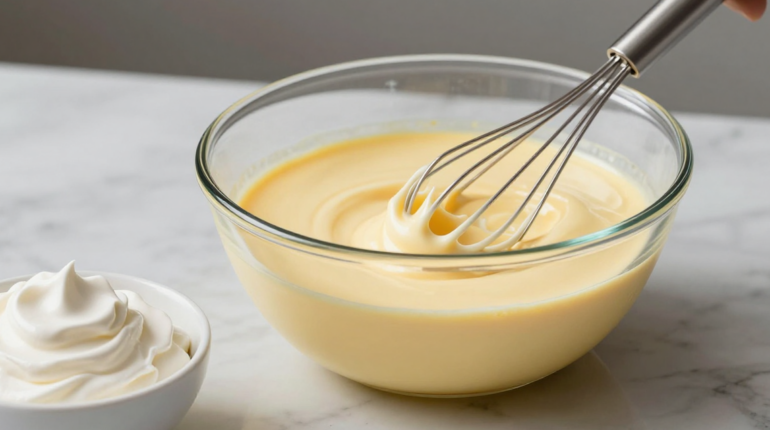
The magic of the trifle relies on a perfect alliance between vanilla pastry cream and chantilly cream. The first is prepared by bringing milk with vanilla extract to a boil, while the egg yolks are mixed with sugar and flour using a vigorous whisk. The hot milk tempers this mixture before returning to the heat for cooking over medium heat under constant supervision. Uninterrupted whisking remains the only guarantee of a smooth, lump-free texture until it returns to a boil.
Once poured into its cooling dish, the cream requires plastic wrap placed directly on its surface: this precaution eliminates any unwanted crust and preserves its smoothness. Complete cooling in the refrigerator is essential for the success of the next step.
Chantilly cream requires impeccable freshness to whip correctly with a mixer. Kept cool until final assembly, it brings that airy lightness that contrasts with the velvety density of the pastry cream. These two complementary textures, enhanced by vanilla, form the gourmet base upon which the vibrant tropical palette will rest.
The Explosion of Tropical Flavors: Selection and Cutting of Fruits
The mango, previously frozen, begins its gradual thawing in the refrigerator while the fresh fruit is prepared. The kiwis reveal their vibrant green flesh when peeled, before being transformed into regular cubes. The oranges, peeled to the quick using the chef’s technique, reveal their segments freed from any white membrane. One sacrificed orange yields its precious juice, soon joined by that recovered during the cutting of the pineapple cubes.
This double juice composes the aromatic bath in which the pastry bar slices will soak. The bright acidity of the orange meets the sweet mildness of the pineapple to create a soaking nectar that will transform each biscuit into a fragrant sponge. The final fruit mixture composes an exotic palette where the solar yellow of the mango dialogues with the intense green of the kiwi, while the saffron orange punctuates the whole with tangy touches.
The eight slices of pastry bar, precisely cut to one centimeter thick, await their mission: to serve as a soft foundation for the gourmet architecture of the trifle. This meticulous preparation of the elements guarantees the final gustatory harmony, where each fruit will bring its distinct aromatic signature.
Layering: The Architectural Construction of the Trifle
The tall glass bowl becomes the stage for a meticulous superposition where each layer reveals its role. The first four slices of pastry bar, dipped in the citrus and pineapple nectar, overlap at the bottom of the transparent container. Their mission: to absorb flavors while maintaining a structure firm enough to support the gourmet edifice.
On this soaked base, a generous layer of vanilla pastry cream is spread, previously softened with a whisk. The exotic fruits then take possession of the next level, mixing their bright colors and contrasting textures. The whipped cream tops this first sequence with an airy sweetness, creating a smooth contrast with the fruity density.
The operation is repeated identically: four new juice-soaked slices, pastry cream, fruit, then chantilly. This double repetition guarantees the visual generosity of the dessert through the transparent walls of the bowl. The final layer of fruit crowns the whole, transforming the trifle into a tropical painting where each orange segment, kiwi cube, and piece of mango composes an appetizing mosaic.
This layered architecture now requires a resting time for the flavors to merge and the textures to find their optimal balance.
Resting Time and Tasting: Patience Rewarded
Once the gourmet edifice is completed, one hour of refrigeration is required before tasting. This delay is not incidental: it transforms the assembly into a harmonious creation where each component finds its definitive place. The pastry bar slices continue their impregnation in the tropical juices, reaching that melting softness that characterizes a successful trifle.
During this critical phase, the creams abandon their initial rigidity to intimately embrace the fruits and biscuits. The vanilla from the pastry cream gradually diffuses its aromas through the layers, while the acidity of the citrus fruits tempers the milky richness. The whipped cream, initially airy, stabilizes without collapsing, creating that semi-firm texture that characterizes traditional English desserts.
This resting time in the cold also allows the flavors to dialogue: the sweet mango meets the acidity of the kiwi, the juicy pineapple accords with the freshness of the oranges, all wrapped in the vanilla smoothness of the creams. When the spoon finally plunges into the transparent bowl, it easily passes through these now-unified layers, revealing with each bite the perfect balance between the crunch of fresh fruit and the melting of creamy textures.