The Mysterious Code Protecting Your Health
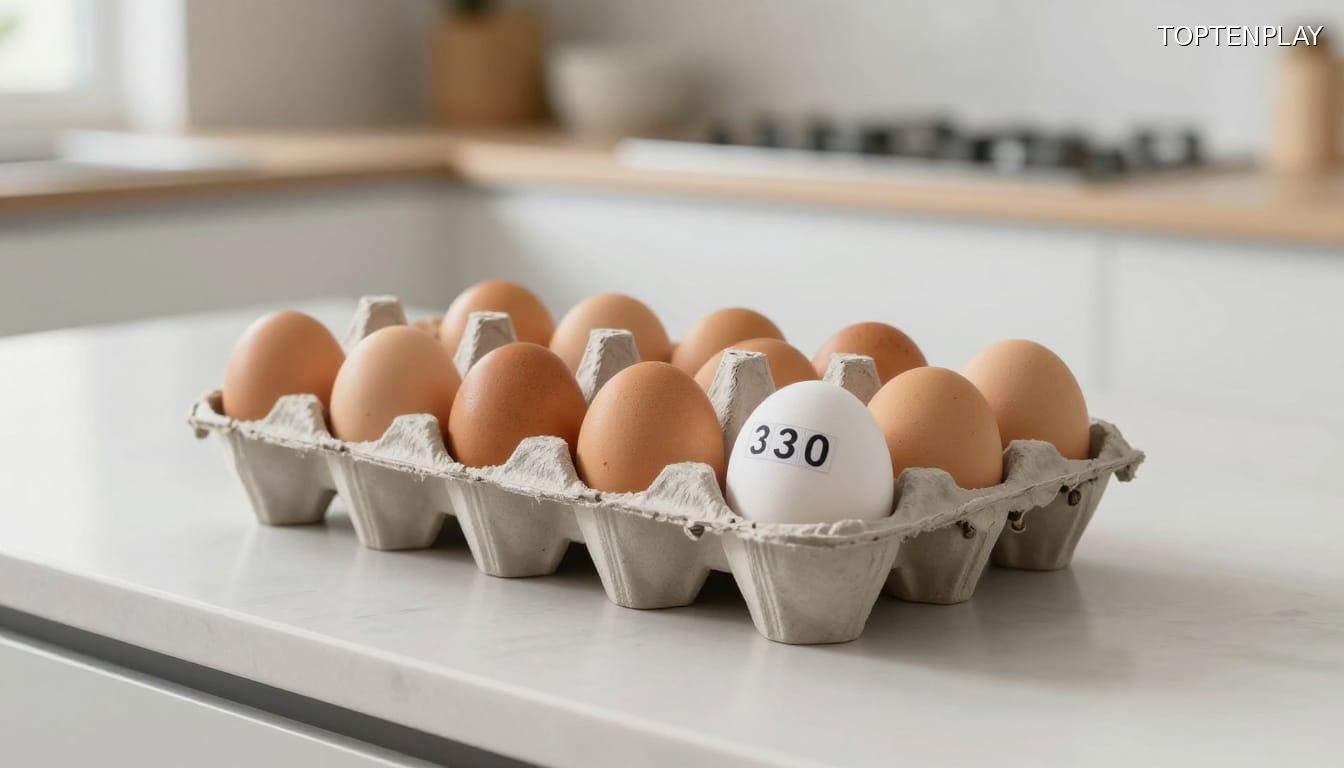
You’ve noticed it dozens of times without paying attention: a small three-digit number stamped on the side of your egg carton. It’s easy to assume it’s an unimportant internal code, a price reference, or a packaging detail you can safely ignore.
That assumption could cost you dearly.
This discreet number is one of the most important food safety indicators in your refrigerator. It reveals the true age of your eggs, regardless of how long the store wanted to keep them on the shelf. Ignoring it is one of the most common reasons for food poisoning, stomach aches, or disastrous dinners.
Unlike expiration dates printed in large characters, this three-digit code indicates the exact day your eggs were packed. Not the day they expire. Not the day you bought them. The precise day of their packaging. This information radically changes your ability to assess their real freshness and prevent health risks associated with consuming expired eggs. Digestive issues, food poisoning, and more serious symptoms often originate from this neglect: using eggs without knowing their true packing date.
Understanding what this number means and how to use it can significantly reduce your risk of illness related to eggs.

The Julian Date: Decoding a Precise System
This three-digit number has a technical name: the Julian date. It represents the exact day of the year your eggs were packed, according to a numerical system ranging from 001 to 365, corresponding to January 1st and December 31st respectively.
A carton marked 001 was packed on January 1st. A code of 032 indicates packaging done on February 1st. The label 120 corresponds to April 30th, the 120th day of the year. No guesswork is involved once you master this decoding.
The essential point lies in what the Julian date is not. It is not an expiration date, nor a sell-by date, nor a guarantee of quality or safety in itself. It simply functions as an objective timestamp, significantly more reliable than any “best by” mention printed in large characters on the box.
This fundamental difference changes how you read labels. While visible commercial dates primarily serve store inventory management, the Julian date gives you raw, verifiable information: the precise moment your eggs left the packing center. Understanding this distinction transforms a simple code into a home food safety tool that you fully control.
Misleading Dates: What Labels Hide
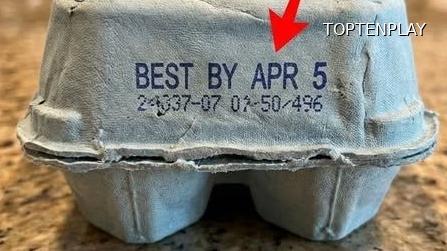
This raw information contrasts radically with the dates displayed in large characters on your cartons. These “best if used by” or “sell by” mentions primarily meet commercial imperatives, not health ones. They help supermarkets manage their stock, minimize waste, and ensure efficient product rotation. They do not define a strict food safety limit.
Food safety guidelines confirm this: eggs remain edible well beyond these printed dates, provided they have been properly refrigerated. The difference between the sell-by date and the packing date reveals the full ambiguity of the system. A carton may display an expiration date in fifteen days even though the eggs were packed two weeks ago. You think you are buying fresh eggs when they are already approaching their third week of existence.
This confusion benefits the industry. Visible dates reassure the consumer and smooth distribution, but they hide the decisive information: the true age of your eggs. The Julian date, discreet and technical, delivers this truth that commercial labels voluntarily dilute. Mastering this decoding puts you back in control of your food safety.
The 3 to 5 Week Rule: Your Safety Guarantee
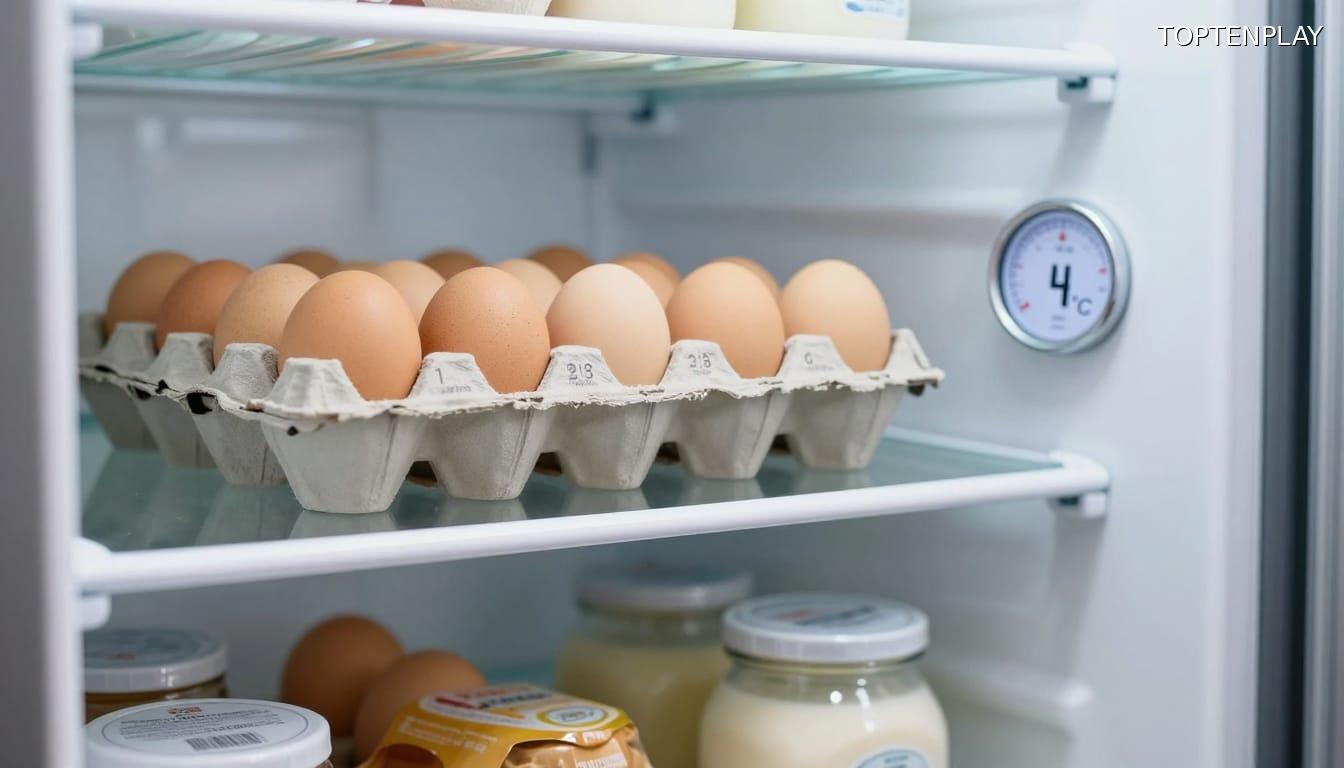
Mastering this decoding gives you access to the only rule that really matters: raw eggs in the shell remain edible for three to five weeks after the packing date, provided there is constant refrigeration at a maximum of 4°C (40°F). This directive issued by health authorities is based on decades of microbiological studies, not marketing strategies.
Concretely, a carton marked 045 (February 14th) remains safe until late March or even mid-April, even if the commercial label indicates a deadline of February 28th. Temperature is the determining factor. Below 4°C, bacterial growth slows drastically, preserving the egg’s integrity well beyond the displayed dates. Above this temperature, risks accelerate exponentially.
This three to five-week window applies exclusively to eggs refrigerated immediately after purchase and kept cold without interruption. An egg left at room temperature for several hours loses this temporal privilege. A broken cold chain voids all guarantees, regardless of the initial freshness indicated by the Julian code.
Systematically checking this three-digit number before purchase transforms your eating habits. You stop throwing away perfectly healthy eggs out of conformity to commercial dates. You also avoid consuming eggs that are too old hidden behind reassuring labels. This simple vigilance significantly reduces your risk of poisoning, without any particular effort or specialized equipment.