Putting an egg in coffee is the kind of idea that makes people raise an eyebrow. And yet, in Vietnam, they’ve been drinking it since the 1940s. The version we’re making here — with honey and ginger — might be even better.
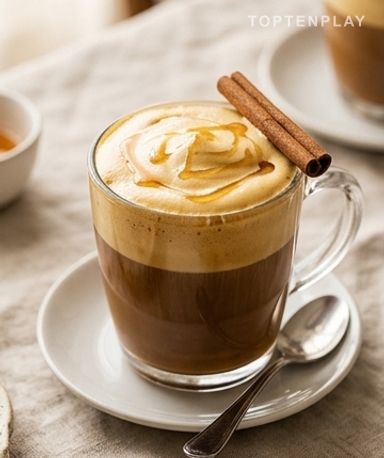
In the cup, the foam is a deep straw yellow, almost orange in spots, like a very light caramel floating on top of the black coffee below. The grated ginger leaves a slight warmth in the back of the throat, right after the sweetness of the honey. The texture is nothing like a classic coffee — it’s thick, almost silky, and smells of both strong coffee and something buttery, slightly sweet. A true contrast in a single cup.
Why you’ll love this recipe
Ingredient Notes
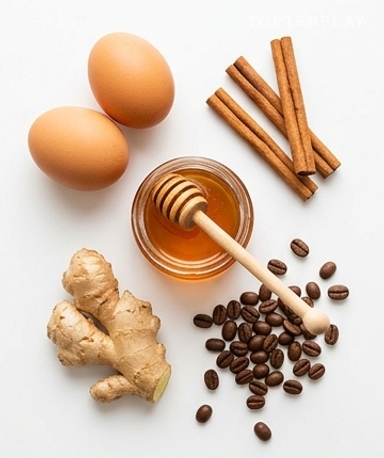
Three simple and accessible ingredients: a fresh egg (yolk only), honey, cinnamon or ginger, and a strong coffee.
- The coffee : It needs to be strong. Really strong. A well-packed moka pot, a double espresso, a very concentrated filter coffee — any method works, but a light coffee will be drowned out by the egg yolk and you’ll taste almost nothing. If you have a moka pot, use it. It’s the ideal format for this.
- The egg yolk : Use fresh eggs, ideally from free-range hens — the yolk is more orange, more flavorful, and the difference is visible to the naked eye. A well-whisked fresh yolk smells slightly like butter. A low-end industrial egg will produce a duller foam and a much less interesting result.
- The honey : Not the industrial plastic-bottle honey that tastes like sugar. A flower honey that’s a bit thick, with character. Chestnut honey is excellent here — it brings a slight bitterness that complements the coffee well. A level teaspoon is more than enough.
- Fresh ginger (or cinnamon) : Freshly grated ginger is significantly superior to the powder — it tingles slightly at the end of the sip, like a little heat signal in your chest. Cinnamon gives something softer, more wintery. It’s up to you depending on your mood. Both work, but don’t put them together — they overpower each other.
Why this coffee surprised me the first time
I was skeptical. An egg yolk in my morning coffee, seriously? But the logic is there: the yolk is naturally rich in lecithin, an emulsifier that incorporates easily into hot liquids. When you whisk it with coffee, it doesn’t cook — it integrates. The result looks vaguely like an ultra-dense cappuccino, but without the milk, with a roundness in the mouth that coffee alone doesn’t have. It’s baffling the first time. Then logical. Then indispensable.
The part everyone fails: whisking the yolk correctly
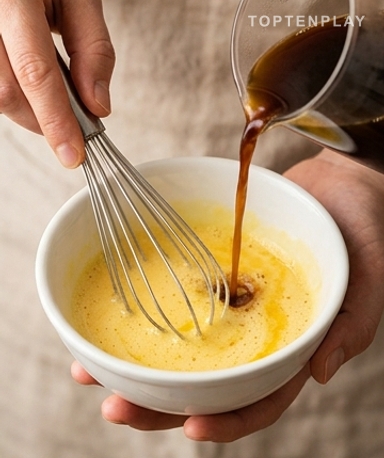
This is where it counts. If you whisk the yolk for barely thirty seconds, you just get a yellow liquid — no point. You have to keep at it. Two to three minutes vigorously with a fork, or one minute with a small electric whisk. The yolk should go from a bright orange to a very pale straw yellow, almost cream, and nearly double in volume. You can feel the change under the utensil: first liquid and slippery, then progressively resistant, with a texture that grips and forms ribbons. Only at this stage do you add the coffee.
The assembly — and why coffee temperature changes everything
The coffee should not be boiling. Just hot — which you get naturally by letting the moka pot rest for two minutes after brewing. Too hot, and you will slightly coagulate the yolk, creating tiny lumps that are invisible but very detectable in the mouth. Pour in a thin stream onto the whisked yolk while mixing gently, and watch the color change in real-time: the creamy white turns golden, the foam rises to the surface, the coffee disappears underneath. Add the honey at that moment — it melts instantly in the heat — then the grated ginger or cinnamon. Give it one last stir, and drink immediately while the foam is still puffed up.
What you can vary without breaking everything
The base (yolk + coffee + honey) is solid. Beyond that, you have some wiggle room. Fresh ginger brings a heat that tingles at the end of the sip — my favorite version. Cinnamon is softer, more comforting, perfect for a cold morning. Some add a pinch of cardamom powder for an elegant Middle Eastern coffee vibe. Others reduce the honey and add half a teaspoon of tahini for an even richer, more savory version. Don’t mess with the egg-coffee proportions until you’ve made the base version at least two or three times.

Tips & Tricks
- Whisk the egg yolk before starting your moka pot, not after. The coffee will have time to cool slightly while you whisk, and you won’t be waiting around.
- If the coffee is too hot when you pour it, place the bottom of the moka pot on a damp cloth for a few seconds. Simple and effective.
- For a caffeine-free version, a very concentrated chicory also works — the taste is different but the texture remains identical and the foam holds up just as well.
Does the egg yolk cook in the hot coffee? Is it safe?
The yolk does not cook if the coffee is at the right temperature — around 65-70°C, which you get naturally by letting the moka pot sit for two minutes. Below 70°C, the yolk emulsifies without coagulating. If your coffee comes directly out of the machine at 90°C+, really wait those two minutes; you’ll taste the difference.
Why do you have to whisk the egg yolk so much?
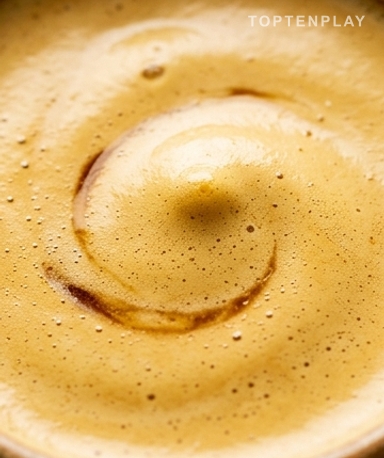
This is the step that makes all the difference in texture. A barely mixed yolk gives an uninteresting yellow liquid. Whisked for 2-3 minutes until pale and frothy, it creates a dense emulsion that floats on the coffee. That’s what we’re looking for.
Can I use instant or decaf coffee?
Yes, both work. Instant should be prepared very concentrated (twice as much powder as usual) so as not to be drowned out by the egg yolk. Decaf gives exactly the same result in terms of texture and taste — a good option if you are sensitive to caffeine in the morning.
Ginger or cinnamon — which one to choose?
Freshly grated ginger gives a heat that tingles slightly at the end of the sip, more vibrant and a bit spicy. Cinnamon is softer and more comforting, perfect for autumn and winter. Both are good, but don’t put them together — they overpower each other. Start with cinnamon if you’re not a fan of spicy heat.
Can I prepare this coffee in advance or store it?
No — this is a drink to be prepared and consumed immediately. The foam subsides after a few minutes and fresh unpasteurized egg yolk does not keep once incorporated. Good news: it takes 5 minutes, there’s no reason to make it ahead.
Can I replace honey with something else?
Maple syrup works well and brings an interesting woody note. Coconut sugar is also an option, more subtle in taste. Avoid classic white sugar — it doesn’t melt as well in the lukewarm liquid and leaves an unpleasant grainy bottom.

Egg and Honey Coffee
Asian
Beverage
A hot drink inspired by Vietnamese egg coffee: whisked egg yolk, strong coffee, honey, and ginger. Five minutes, four ingredients, a texture you won’t forget.
Ingredients
- 60 ml very strong coffee (double espresso or well-packed moka pot)
- 1 fresh egg yolk (preferably from a free-range hen)
- 1 cuillère à café (7 g) honey (flower or chestnut)
- 1 cm freshly grated ginger — or ¼ teaspoon of ground cinnamon
Instructions
- 1Brew a double espresso or fill a well-packed moka pot. Let it rest for 2 minutes off the heat so the coffee cools to about 65-70°C.
- 2Separate the egg yolk into a small bowl. Whisk vigorously with a fork or an electric whisk for 2-3 minutes, until pale, creamy, and nearly doubled in volume.
- 3Pour the warm coffee in a thin stream over the whisked yolk while mixing gently with a spoon — no sudden movements.
- 4Add the honey and grated ginger (or cinnamon). Mix gently one last time.
- 5Serve immediately in a cup or glass while the foam is still puffed up.
Notes
• Coffee temperature is the key variable: too hot (above 75°C), the yolk curdles slightly and the texture becomes grainy. Two minutes of rest after extraction is enough.
• For a caffeine-free version, replace the coffee with 60 ml of very concentrated prepared chicory. The texture and foam remain identical.
• This drink does not keep. Fresh uncooked egg yolk must be consumed immediately after preparation.
Nutrition Facts (per serving, estimated)
| 82 kcalCalories | 3 gProtein | 6 gCarbs | 5 gFat |