📌 Ecological cleaning: how half a lemon and baking soda replace your toxic household products
Posted 5 January 2026 by: Admin
The Magic Lemon-Baking Soda Duo: A Natural Alternative To Chemicals
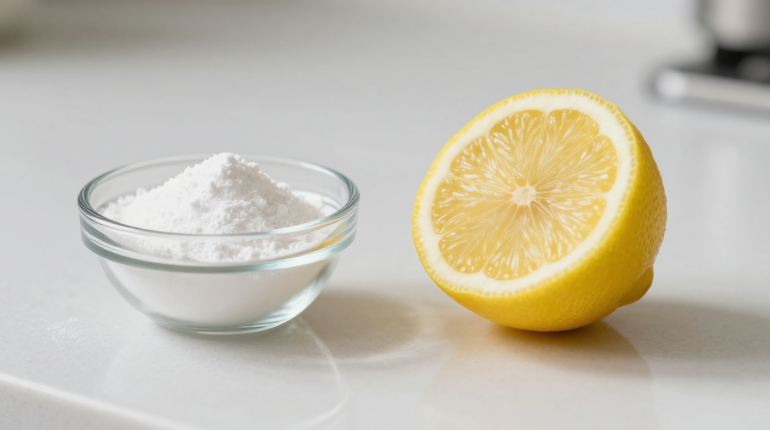
In aisles saturated with industrial cleaners with opaque compositions, a remarkably effective solution is hidden in your kitchen. Lemon and baking soda form a formidable alliance against stubborn dirt, and their combination challenges the performance of conventional products.
The method takes just a few steps: slice a lemon in half, squeeze it slightly, then dip the surface in baking soda. The natural acidity of the lemon dissolves greasy stains while the baking soda acts as a gentle abrasive and odor neutralizer. This chemical complementarity eliminates limescale residues, grease marks, and encrusted dirt without leaving toxic residues.
Unlike commercial detergents that accumulate volatile compounds and chemical agents in indoor air, this solution is entirely non-toxic. For households with young children or pets, the advantage is decisive: no risk of accidental ingestion of dangerous substances, no irritating fumes for the respiratory tract.
The effectiveness surprises even the skeptics. Surfaces regain their original shine in a few circular strokes, while a fresh citrus scent replaces the characteristic chemical odors of industrial cleaners. This natural alternative sacrifices nothing in performance while protecting the health of occupants and the environment.
Sparkling Surfaces: The Technique For Cleaning Kitchen And Bathroom
Countertops and bathroom surfaces immediately reveal the effectiveness of this combination. The direct application of lemon soaked in baking soda on these daily-used areas produces visible results in seconds.
The technique relies on gentle and regular circular movements. No need for excessive force: the grainy texture of the baking soda combined with the acidity of the lemon naturally dissolves encrusted dirt, soap scum, and limescale residues. After a few passes, a rinse with a damp cloth is enough to reveal a sparkling surface.
The advantage goes beyond simple cleaning. Unlike disposable wipes or conventional sprays that leave a chemical film, this method generates no residue. Surfaces regain their natural shine without a greasy effect or whitish veil. The fresh lemon scent permeates the space without artificially masking odors: it truly neutralizes them.
Tile joints, particularly sensitive to mold and accumulation, respond remarkably well to this treatment. Stubborn dirt that resisted classic cleaners yields under the combined action of citric acid and the gentle abrasive power of baking soda.
This immediate effectiveness transforms daily cleaning into a simple and quick gesture. But the applications of this natural duo extend far beyond visible surfaces.
Kitchen And Laundry: The Unexpected Applications Of This Mixture
Stained kitchen utensils are one of the most stubborn domestic challenges. Burnt pots, pans marked by charred residues: this lemon-baking soda mixture excels precisely where classic sponges fail.
The approach differs slightly. Apply the sprinkled lemon directly to the affected areas, then let it act for a few minutes. This pause allows the citric acid to penetrate the layers of encrusted dirt. A light rubbing is then enough to restore the original shine of the metal or ceramic. Stains that seemed permanent disappear without requiring excessive elbow grease.
Deodorization represents another major asset. Trash cans, refrigerators, microwaves: these confined spaces accumulate persistent odors that synthetic fragrances mask without eliminating. Baking soda neutralizes odor molecules while the lemon diffuses an authentic freshness. Rub the inside of the refrigerator or the walls of the microwave with this combination, then wipe. The result is long-lasting.
Laundry also benefits from this natural alliance. Add lemon juice and baking soda during washing to whiten textiles without resorting to bleach. Stubborn stains on white shirts or tablecloths fade naturally, replaced by a fresh scent devoid of chemical residues.
This versatility, however, raises an essential question: do all materials tolerate this treatment?
Precautions For Use: Surfaces To Avoid And Practical Recommendations
The answer requires caution. Some materials react poorly to the acidity of the lemon or the abrasive action of the baking soda. Marble, unsealed granite, and limestone risk irreversible damage. Citric acid attacks their porous structure, creating dull marks impossible to erase. Lacquered finishes, varnished wood surfaces, and certain delicate metals like anodized aluminum also undergo alterations.
The rule remains simple: systematically test on an inconspicuous area. Apply the mixture in a less visible corner, wait a few minutes, rinse, then examine. The absence of discoloration or roughness indicates compatibility. This elementary precaution prevents costly damage to fragile surfaces.
The economic aspect deserves attention. A lemon costs a few cents, baking soda is sold in affordable packs that last for months. Compare this derisory budget to the dozens of euros spent annually on specialized detergents. Households achieve substantial savings while reducing their exposure to volatile chemical compounds present in conventional cleaners.
This method therefore combines efficiency, health safety, and environmental responsibility. It simply requires discernment regarding the materials treated. Intelligence lies in adaptation: using this powerful solution where it excels, while preserving vulnerable surfaces with appropriate alternatives. This reasoned approach transforms two commonplace ingredients into true daily allies.