📌 Duck confit: the complete method to prepare and preserve it in homemade jars
Posted 26 February 2026 by: Admin
Duck Preparation: Fundamental Techniques
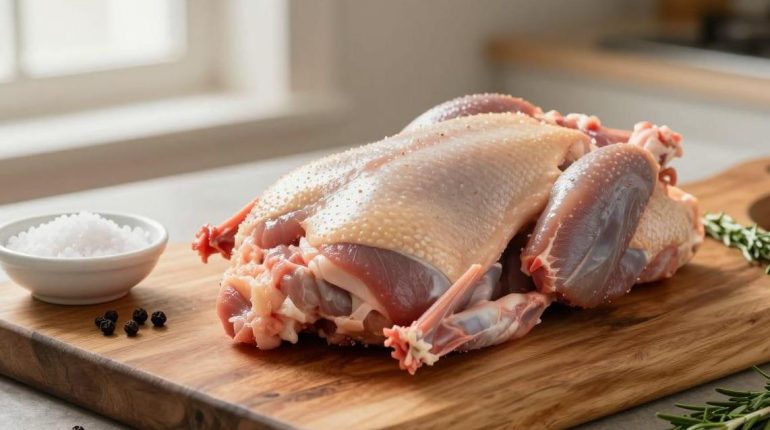
The success of an authentic confit relies first on a methodical preparation of the duck. After careful plucking and gutting, the crucial step consists of incising the bird along its entire length to cleanly detach the meat from the carcass, a technical gesture that requires precision and patience. This professional cut allows for more control over the meat while preserving the integrity of the muscle fibers.
The strategic recovery of the natural fat located at the back of the duck is the chefs’ hidden secret. This precious raw material, often neglected, will be melted to become the cooking and preservation medium for the confit. It guarantees a gustatory authenticity impossible to reproduce with commercial fats, however refined they may be.
The duck is then cut into four generous pieces while the wings, legs, and neck find a second life. These offcuts, far from being waste, will be transformed into savory rillettes according to the anti-waste tradition that characterizes great regional cuisine. This respectful approach to the animal reflects a culinary philosophy where every part contributes to the excellence of the final result.
This meticulous preparation, although demanding, lays the foundations for a confit that will develop complex flavors during maceration.
The Secret Of Maceration: The Art Of Dry Salting
This carefully prepared base will now reveal its potential thanks to an ancestral technique too often neglected: aromatic dry salting. The mixture of salt, pepper, spices, and crushed aromatics is applied by energetic rubbing on each piece of duck, forcing the crystals to penetrate deep into the muscle fibers. This repeated gesture creates an alchemy that transcends simple preservation to become a true flavor enhancer.
Wrapped in cling film, the pieces then begin their mandatory twelve-hour minimum overnight rest. During this crucial period, osmosis occurs: the salt draws out surface moisture while allowing the aromatics to diffuse their essential oils into the heart of the meat. This biochemical process naturally tenderizes the meat by partial breakdown of proteins, preparing a melting texture impossible to obtain by simple cooking.
This maceration radically distinguishes authentic artisanal confit from industrial versions processed in a few hours. Traditional South-West chefs know that this patience is rewarded with layered aromas, where each bite successively reveals peppery, herbaceous notes and then the intrinsic sweetness of the duck. Dry salting thus becomes the invisible architect of a gustatory depth that will fully blossom during cooking in fat.
Low Temperature Cooking: The Key To Perfect Texture
These aroma-infused pieces now require a thermal transformation controlled with goldsmith-like precision. The duck fat recovered during the initial cutting melts gently in a saucepan with a small amount of water, creating a smooth emulsion that will maintain a stable temperature. Once the salt is removed by wiping, the pieces are submerged in this lipid bath kept at low and steady heat, never boiling.
This cooking of 30 to 60 minutes depending on the thickness of the pieces relies on a simple but implacable scientific principle: moderate heat progressively breaks down collagen into gelatin without drying out the muscle fibers. The duck tenderizes from the inside, the connective tissues slowly dissolve while the surrounding fat prevents any sudden evaporation. The cooking test reveals the full rigor of this ancestral method: a matchstick must pass through the meat without resistance or pink discharge.
This thermal patience fundamentally differentiates traditional confit from accelerated methods that produce dry and stringy meat. Périgord cooks know that this gentle cooking chemically transforms the texture, creating that characteristic melting consistency that falls apart under the fork. Once this perfect cooking is achieved, speed takes over to guarantee optimal preservation that will further magnify these patiently built flavors.
Canning: Guaranteeing Preservation For Several Months
This perfect cooking requires immediate action to permanently set the obtained organoleptic qualities. The still-hot pieces are arranged tightly in Le Parfait Super or Familia Wiss terrines, this compression eliminating any air pockets likely to promote bacterial development. The cooking fat, kept liquid and hot, then completely covers the pieces up to two centimeters from the rim, creating a hermetic barrier against oxidation.
This generous covering is not a simple precaution: it forms a protective seal that preserves the moisture of the meat while preventing any contact with the ambient air. The edges of the terrines require meticulous wiping before closing, as any trace of fat compromises the seal of the rubber gasket. The thermal treatment starts without delay, the closed jars plunging into a water bath heated to 100°C for exactly two hours.
This heat sterilization permanently destroys pathogenic microorganisms while creating a vacuum that hermetically seals the preserves. Confits treated this way improve during the first months of storage, the aromas gaining complexity while the texture continues its evolution towards an incomparable tenderness. This ancestral method, validated by contemporary health standards, allows for preservation of twelve months minimum in a cool and dark place, transforming each terrine into a true gastronomic time capsule.