📌 Double frying at 150°C then 180°C: the Belgian fry shop technique for perfectly crispy fries
Posted 2 February 2026 by: Admin
The Heritage Recipe: An Authentic Belgian Technique
Belgian fries are like no other. Their secret lies in an ancestral technique that transcends simple cooking: double immersion, the true signature of Belgian expertise. Unlike ordinary fries, dipped only once in boiling oil, authentic Belgian fries require two successive baths at distinct temperatures. This method, passed down from generation to generation in the fry shops of the flat country, creates that sought-after contrast: a golden, crunchy crust enveloping a melting, almost creamy heart.
This process is not a culinary whim, but the result of an empirical understanding of the transformation of the potato under the effect of heat. The first bath cooks the inside without coloring the surface, while the second, more intense, seals the outer envelope in a few minutes. This thermal duality forges the very identity of the Belgian fry, inscribed in the national gastronomic heritage with the same pride as chocolate or beer.
Mastering this technique requires rigor and patience. It’s impossible to cheat: a single cooking session, even if prolonged, will never produce this characteristic layered texture. The real Belgian fry is built in stages, each playing a precise role in the final architecture of the crunch. This technical requirement explains why artisanal fry shops remain institutions in Belgium, where quality is measured by scrupulous respect for these founding principles.
The Fundamentals: Ingredients and Initial Preparation
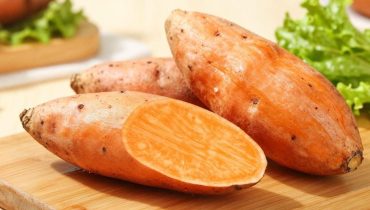
This culinary architecture relies first on the choice of raw material. Floury varieties, Bintje or Agria, are the obvious choices: their high starch content and low water content create that soft-to-the-core texture that purists seek. Firm-fleshed potatoes, which are too dense, resist transformation and produce rubbery fries, lacking that characteristic smoothness.
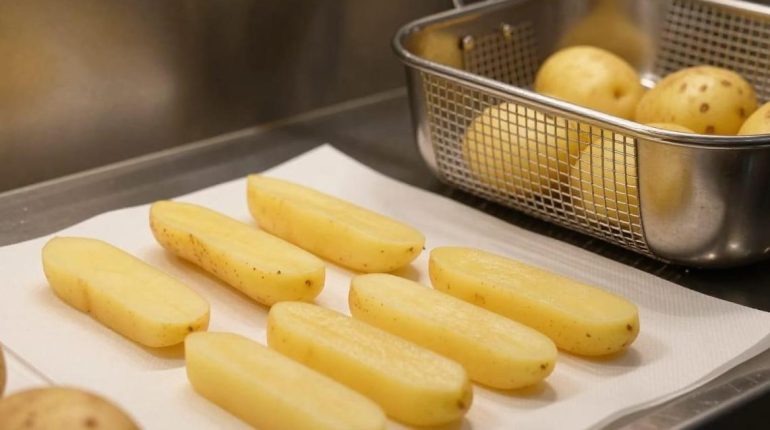
The regularity of the cut then determines the homogeneity of the cooking. Sticks 1 cm thick allow for uniform heat penetration, preventing some fries from carbonizing while others remain whitish. This dimensional precision is not gratuitous perfectionism: it guarantees that each fry simultaneously reaches the same degree of cooking during the two successive baths.
Repeated rinsing with clear water is the invisible but decisive step. Surface starch, released by cutting, forms a viscous film when cooking that prevents the crunch from developing. Rinsing until the water is clear eliminates this threat, creating a surface conducive to caramelization. Meticulous drying completes this preparatory work: any trace of residual moisture causes dangerous splashing and slows down the temperature rise, compromising the final texture. These simple gestures, often neglected, separate successful fries from disappointing approximations.
Double Frying: Secret to a Perfect Texture
These meticulous preparations find their purpose in the double bath technique, the backbone of the Belgian method. The first bath at 150°C for 6 to 7 minutes accomplishes a discreet but vital mission: cooking the inside without brutalizing the outside. At this moderate temperature, the potato transforms into melting flesh while its surface remains pale, almost white. No coloring should appear: the Maillard reaction will wait for its time. This gentle cooking structures the fry from the inside, creating the conditions for its future crunch without rushing things.
A rest of at least 30 minutes at room temperature then separates the two acts of this thermal symphony. This pause allows internal moisture to migrate to the periphery and partially evaporate, drying the surface while maintaining the soft heart. Without this downtime, fries plunged back into boiling oil would develop a superficial crust trapping water inside, producing that spongy texture that connoisseurs dread. This rest can extend over several hours, offering appreciable flexibility in the kitchen.
The second bath at 180°C closes the operation in 3 to 5 explosive minutes. The intense heat seizes the cooled fries, causing rapid caramelization that forms this golden and crunchy shell. Residual water evaporates brutally, creating micro-bubbles that aerate the crust while the heart, already cooked, retains its tenderness. The high temperature, however, requires constant vigilance: overloading the fryer causes the temperature to drop, prolongs cooking, and produces greasy, soft fries. Frying in small quantities maintains the thermal stability necessary for this crunchy alchemy.
Finishing Touches and Guaranteed Success
This thermal transformation ends in the seconds following removal from the oil. Immediate salting is the decisive gesture: thrown onto the still greasy and burning surface, the fine salt adheres instantly, creating that flavorful alliance that characterizes the authentic Belgian fry. Waiting for the fries to cool condemns the salt to slide off without sticking, depriving the result of an essential part of its taste identity. Some cooks add a pinch of fresh chopped parsley, bringing a herbaceous note that subtly contrasts with the richness of the frying.
Service suffers no delay. Every minute lost erodes the hard-won crunch, as ambient humidity progressively softens the golden crust. Belgian fries are consumed piping hot, directly out of the second bath, when the thermal and textural contrast reaches its climax. This immediacy explains why traditional fry shops serve their products in paper cones, a rudimentary but effective packaging that preserves heat without trapping steam.
The versatility of the dish nevertheless allows for several presentations. Alone, they constitute a complete and satisfying snack. Accompanied by a homemade sauce — mayonnaise, andalouse, or samurai —, they become a convivial ritual. Their apparent simplicity masks a technical complexity that transforms the humble potato into a sophisticated culinary expression, demanding patience, precision, and respect for temperatures. This methodical rigor, passed down from generation to generation, forges the identity of a know-how that spans eras without losing its relevance or its power of seduction.