You know that moment when your stomach feels heavy after a big meal? Before you go digging through the medicine cabinet, there’s a much more pleasant option. Three spices you probably already have at home, some hot water, and you’re good to go.
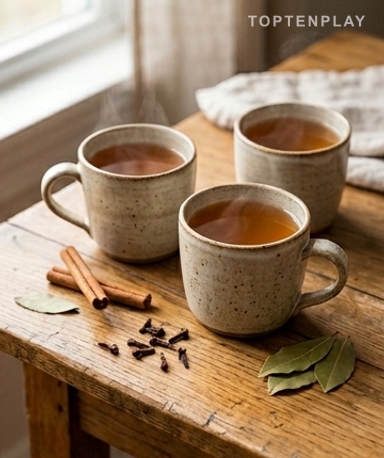
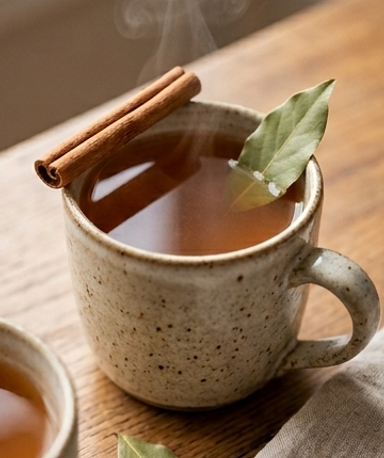
In the cup, the herbal tea takes on a deep amber hue, almost coppery when the light passes through. The scent rises instantly — warm, slightly sweet, with that subtle woody undertone that only bay leaves can provide. You wrap your hands around the cup and the warmth spreads through your palms in seconds. You don’t need anything else to feel like everything’s going to be okay.
Why you’ll love this recipe
Ingredient Notes
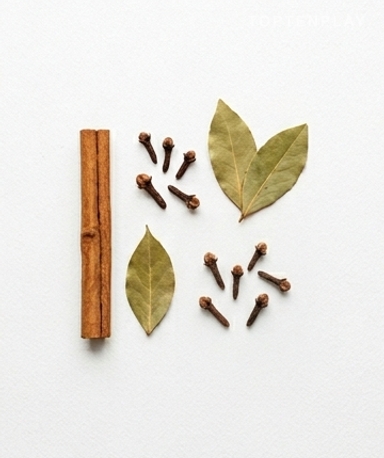
Cinnamon, cloves, and bay leaves: three pantry spices that make all the difference.
- Cinnamon stick : The stick is far better than powder here. It releases its aromas slowly during cooking without making the tea cloudy or grainy. A teaspoon of ground cinnamon works in a pinch if you don’t have any, but the stick gives a much rounder and more gradual flavor. If you have the choice at the store, go for Ceylon cinnamon rather than Cassia — it’s milder and less aggressive over time.
- Whole cloves : Four or five, no more. It’s a powerful spice and if you use too much, the whole tea shifts into medicinal territory. Whole, they diffuse gradually without overwhelming everything else. Avoid powder here — it gives a very direct bitterness and makes the tea difficult to strain cleanly.
- Dried bay leaves : Classic bay laurel, the kind you use for your stocks. Two or three leaves are enough. Dried ones are better than fresh for this preparation — their taste is woodier, less herbaceous, and they infuse more consistently in hot water.
- Honey or lemon (optional) : If the bitterness of the clove remains present at the bottom of the cup, half a teaspoon of honey softens it without masking the spices. Lemon brings a little acidity that lifts the whole thing and gives a sense of lightness. One, the other, or both — it’s up to you depending on your mood.
Start with water and spices
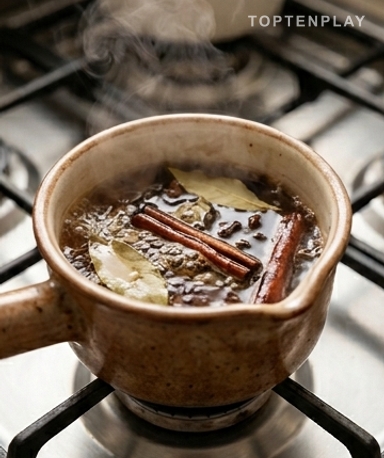
In a small saucepan, pour two to three cups of cold water. Add the cinnamon stick, cloves, and bay leaves directly — without crushing them or soaking them beforehand. Bring to a boil over medium heat. You’ll hear the first bubbles starting to rise, and almost at the same time, the first aromatic scents will escape the pot. A warm, spicy smell that fills the kitchen. That’s when you understand why this tea works: the olfactory experience already does half the work.
A gentle simmer is key
As soon as the water boils, turn the heat down to minimum. We don’t want a rolling boil for fifteen minutes — that would make the tea bitter and too concentrated. We want a gentle simmer. Just a few lazy bubbles on the surface. Ten to fifteen minutes like this. The color of the water will evolve gradually, moving from transparent to a golden brown, like a very light caramel turning toward amber. The bay leaves will float up and soften slightly. The smell in your kitchen will vaguely remind you of mulled wine without the wine — warm, spicy, comforting.
Strain without rushing
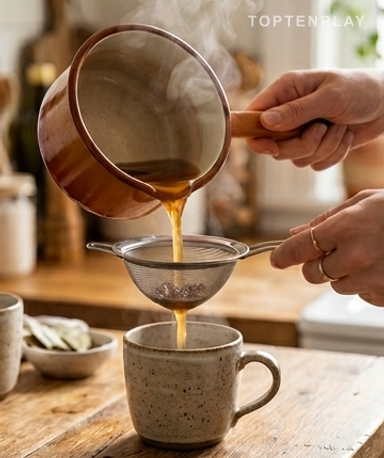
A fine mesh strainer, a waiting mug. Pour slowly to collect all the liquid without the spices. Cloves are tricky — if just one slips into the cup, the last sip becomes very intense. If you don’t have a fine strainer, two layers of cheesecloth or a coffee filter will work perfectly. Let it cool for two or three minutes before drinking. Not scalding — just warm, at the temperature where you can hold the cup comfortably between your palms.
When to drink it for best results
After a meal is the ideal time. Not during — let the body start the digestion process first, then support that process with the tea. In the evening after dinner, it has the advantage of being naturally caffeine-free, so it won’t disrupt your sleep. One cup a day to start is enough. If you want to prepare enough for two days at once, it keeps perfectly in the refrigerator and reheats in two minutes over very low heat.
Tips & Tricks
- Keep the spices after the first infusion: you can make another tea with the same cinnamon stick and the same cloves. The second batch is lighter, perfect if you find the first cup a bit too concentrated.
- If you want to vary it, slide a slice of fresh ginger into the pot from the beginning. It adds a spicy heat that wakes everything up — guaranteed winter version.
- Ten minutes of simmering gives something milder, fifteen minutes a bolder result. Start with ten and adjust to what suits you — everyone’s palate is different.

Can I use cinnamon powder instead of a stick?
Yes, a teaspoon of ground cinnamon replaces a stick without a problem. The tea will be a little cloudier and the taste slightly more direct, but the result is still very good. Strain well with a coffee filter to avoid residue at the bottom of the cup.
How many cups a day can I drink without overdoing it?
One to two cups a day is a good measure to start. Cloves contain eugenol, an active compound, and in large quantities over the long term, it can become irritating. One cup after the evening meal is more than enough to feel the effects.
How long does the tea keep?
It keeps for up to two days in the refrigerator, in a closed jar or a container with a lid. Reheat it over very low heat in a saucepan — the microwave also works but results in a slightly different taste. Do not leave it at room temperature for more than an hour.
Can I drink this tea on an empty stomach in the morning?
It’s possible, but start with half a cup to test your stomach’s reaction. Cloves can be a bit aggressive on a totally empty stomach for some people. After a meal remains the most comfortable and logical time for a digestive drink.
Do regular kitchen bay leaves really work?
Yes, those are exactly the ones. The dried bay laurel you use for your stocks and stews is perfect for this recipe. Fresh leaves also work but their taste is a bit more herbaceous and less woody — dried ones give a more balanced result in this infusion.
Can I reuse the spices for a second infusion?
Yes, once. Put the same cinnamon stick, cloves, and bay leaves back into a pot of water and proceed exactly the same way. The second tea will be lighter and gentler — some even prefer it to the first. Beyond two uses, the spices don’t have much left to give.
Digestive Cinnamon, Clove, and Bay Leaf Tea
Traditional
Hot beverage
A homemade infusion with three spices that helps soothe the belly after meals. Simple, fast, and everything you need is already in your cupboard.
Ingredients
- 600 ml water (about 2 to 3 cups)
- 1 cinnamon stick (or 1 tsp ground cinnamon)
- 4 to 5 whole cloves
- 2 to 3 dried bay leaves
- 1 tsp honey (optional, to sweeten)
- 1/2 lemon, juice (optional, for freshness)
Instructions
- 1Pour water into a small saucepan and add the cinnamon stick, cloves, and bay leaves.
- 2Bring to a boil over medium heat.
- 3Reduce heat to minimum and let simmer gently for 10 to 15 minutes.
- 4Remove from heat and strain through a fine mesh strainer directly into mugs.
- 5Add honey and/or lemon juice if desired. Let cool for 2 minutes before drinking.
Notes
• Storage: the tea keeps for 2 days in the refrigerator in a closed jar. Reheat over low heat before serving.
• The spices can be reused a second time for a lighter and gentler infusion.
• Winter variation: add a slice of fresh ginger (about 1 cm) from the beginning of cooking for a warmer and slightly spicy version.
Nutrition Facts (per serving, estimated)
| 8 kcalCalories | 0gProtein | 2gCarbs | 0gFat |