📌 Deep-Dish Apple Pie
Posted 13 April 2026 by: Admin
Have you ever bitten into an apple pie and felt like you’d been cheated? Scanty filling, too thin a crust, one bite and it was already over. The deep-dish apple pie is the absolute opposite of that—a pie that embraces its generosity without apology.
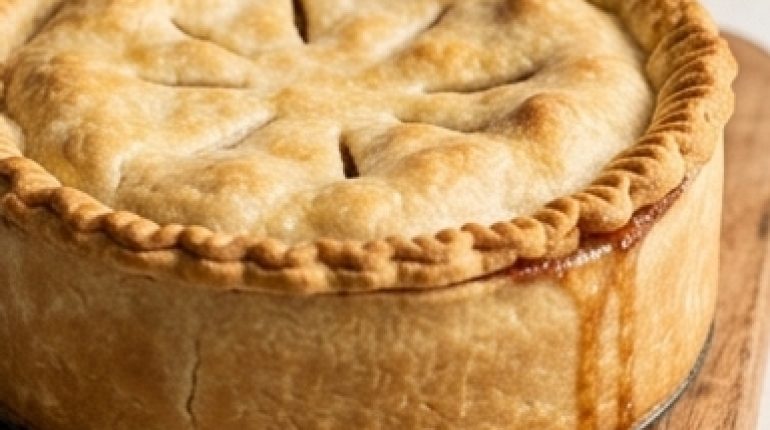
The pie sits on the counter, and it impresses even before being sliced. The top crust is golden like light caramel, sprinkled with sugar grains that have melted into tiny, shiny crystals. Under the knife’s blade, it resists for a second—that small, sharp crackle—then gives way to reveal several centimeters of melting apples, coated in a thick, amber juice. The scent of cinnamon and warm butter fills the room.
Why you’ll love this recipe
Ingredient Notes
Simple and honest ingredients—apples, butter, spices—for a pie that doesn’t pretend.
- The apples : Take at least two varieties—a Golden or Fuji for melting sweetness, a Granny Smith for acidity and holding up during baking. Avoid mealy varieties like Reinette: they turn into mush and you lose all texture. A kilo seems like a lot, but it reduces well.
- Cold butter : Cold, really cold. Straight out of the refrigerator just before using, cut into small cubes. This is what creates small pockets of steam in the dough during baking—those famous crispy layers. If the butter softens along the way, the result will be compact rather than flaky.
- Cinnamon : One teaspoon, no more. The cinnamon should fragrance, not dominate. If you have freshly ground cinnamon, it’s significantly more intense—you can then reduce to three-quarters of a spoon.
- Cornstarch : Prefer cornstarch over flour if you have it. It binds the apple juices during baking without making the filling heavy. Flour also works but gives a slightly more opaque and stickier result.
- Lemon juice : It does two things at once: prevents the apples from browning in the open air, and cuts through the sweetness of the filling. Don’t forget it, even if it seems incidental.
Why this pie is like no other
The deep-dish apple pie comes from the United States, where “deep-dish” simply refers to a pan that is taller than normal. The result: a pie with double the filling compared to a classic version. No pastry cream, no shiny glaze. A straightforward pie that plays on universal flavors—apple, cinnamon, warm butter—and pushes them until the scent fills the entire kitchen. It’s suitable for any informal occasion: a family lunch, a cold evening where you’re looking for a dessert as comforting as the blanket on the sofa.
The dough: the part everyone rushes
This is where it’s all decided, often. The dough must stay cold at all times—the butter, the water, even the mixing bowl if you can. Work quickly with your fingertips, just enough for the texture to become sandy, with small pieces of butter still visible. These pieces are what will create the crunch during baking. Add cold water tablespoon by tablespoon, until the dough holds in a ball—but stop as soon as it does. Overworked dough becomes elastic and hard after baking. Divide it in two, wrap in film, and let rest for 30 minutes in the cold. This rest is short but it changes everything.
The apples: how to avoid soup
Peel the apples, remove the cores, slice them into even wedges—about 5 to 6 mm thick. Too thin, and they melt completely, losing the interplay of textures. Too thick, and they stay firm, making the filling lack cohesion. Drizzle them immediately with lemon juice while you prepare the rest, otherwise they brown quickly. Add the sugar, brown sugar, cornstarch, cinnamon, and nutmeg if you have it. Mix by hand—the apples will start to release a bit of viscous and fragrant juice. This is exactly what we’re looking for.
Assembly: don’t be afraid to overstuff
Roll out the first dough on a lightly floured surface and line the pan, letting the edges overhang by a centimeter. Pour in the apples, packing them in well, slightly domed—they will reduce during baking, so fill without hesitation. Place a few dots of butter on top. Cover with the second dough, seal the edges by pressing firmly, and make 4 to 5 small slits with a knife to let the steam escape. Brush with beaten egg—this is what gives it that characteristic copper color—and sprinkle with sugar for surface crunch. Bake at 180°C for 50 to 60 minutes. The pie is ready when you hear the filling bubbling gently through the slits.
The rest: the step everyone ignores
Take the pie out of the oven and let it cool for at least one hour. Truly one hour. The filling comes out of the oven liquid and shaky—it needs this time to set and hold together in a clean slice. Cut too early, and everything collapses on the plate. It’s not the end of the world for taste, but it’s a fail for presentation. Two hours of rest is even better if you can wait. Serve warm, with a scoop of vanilla ice cream melting slowly over the still-warm crust.
Tips & Tricks
- Always mix at least two varieties of apples—one tart and one sweet. Alone, each variety has its limits; together, they complement each other and the filling gains real depth.
- Never cut the pie straight out of the oven. The filling is still liquid at 100°C; it needs to drop in temperature to set. One hour minimum, two hours if you can hold out.
- If the crust starts to brown too much before the filling is cooked, simply place a sheet of aluminum foil on top for the last 15 minutes. No rush.
What pan should I use for a deep-dish apple pie?
A springform pan or a cake tin at least 6 cm deep, 22 to 24 cm in diameter. Avoid classic pie dishes, which are too flat—all the generosity of this recipe relies on the height of the pan. A ceramic or cast-iron dish retains heat better and helps the bottom crust cook properly.
Why is my filling too liquid after baking?
Two possible reasons: not enough cornstarch to bind the apple juices, or the pie was cut too soon after coming out of the oven. The filling leaves the oven liquid at 100°C—it needs at least an hour of rest to set. If the problem persists, add an extra 10g of cornstarch to the next batch.
Can the pie be prepared in advance?
Yes, and it is even recommended. The filling is more compact and flavorful the next day, once the juices have redistributed. Prepare the pie the day before, let it cool completely, then reheat in the oven at 150°C for 15 to 20 minutes before serving.
Can you freeze this apple pie?
Yes, cooked or raw. Cooked, freeze it in individual slices wrapped in cling film—keeps for 2 months. Reheat directly in the oven at 160°C without prior thawing. Raw, freeze it unbaked in its pan, then bake directly, adding 15 to 20 minutes to the cooking time.
Which apples give the best result?
A mix of two varieties is always superior to just one. Granny Smith for acidity and holding shape, Golden or Fuji for sweetness and melting texture. Avoid mealy varieties like Reinette or Boskoop—they turn to purée and the filling loses all texture.
How do I know if the pie is fully cooked without opening it?
Two reliable indicators: the crust should be golden like light caramel over the entire surface, and you should hear the filling bubbling gently through the slits. If the crust browns too quickly, cover it with aluminum foil and extend the baking time. A knife inserted into a slit should come out without resistance.
Deep-Dish Apple Pie
American
Dessert
An American-style apple pie, thick and generous, with a homemade double crispy crust and an abundant filling of melting cinnamon apples.
Ingredients
- 300g flour
- 150g cold butter, cut into cubes
- 80g granulated sugar
- 1 pinch salt
- 8 tbsp cold water (approx. 120 ml)
- 1 kg apples (Granny Smith and Golden, mixed)
- 120g granulated sugar
- 50g brown sugar
- 40g cornstarch (or flour)
- 1 tsp ground cinnamon
- 1/2 tsp ground nutmeg (optional)
- 1 lemon (juice)
- 30g butter (in dots for the filling)
- 1 egg (for egg wash)
- 1 tbsp sugar (for sprinkling)
Instructions
- 1In a bowl, mix the flour, sugar, and salt. Add the cold cubed butter and work with your fingertips until you get a sandy texture with small pieces of butter still visible.
- 2Add the cold water tablespoon by tablespoon, just enough for the dough to come together in a ball without being sticky. Divide into two equal balls, wrap in film, and refrigerate for 30 minutes.
- 3Peel the apples, remove the cores, and slice into 5 to 6 mm thick wedges. Mix immediately with lemon juice to prevent browning.
- 4Add the sugars, cornstarch, cinnamon, and nutmeg to the apples. Mix by hand until everything is well coated.
- 5Preheat the oven to 180°C. Roll out the first dough on a floured surface into a disk slightly larger than the pan, then line the pan leaving 1 cm of overhang.
- 6Pour the apple filling in, packing it slightly to form a gentle dome. Distribute the dots of butter on top.
- 7Roll out the second dough, cover the pie and seal the edges by pressing firmly. Make 4 to 5 slits with a knife on top to let steam escape.
- 8Brush the entire surface with beaten egg and sprinkle with a tablespoon of sugar. Bake for 50 to 60 minutes, until the crust is golden brown and the filling is bubbling.
- 9Remove from the oven and let rest for at least 1 hour before slicing. The filling stabilizes as it cools.
Notes
• Storage: at room temperature for 1 to 2 days under cling film, in the refrigerator for up to 4 days. Reheat in the oven at 150°C for 15 minutes to restore the crust’s crispness.
• Crumble variation: replace the top crust with a mixture of 100g flour, 80g cold butter, and 60g brown sugar worked into crumbs—faster and just as delicious.
• Make ahead: prepare the pie the day before, let it cool completely, then reheat in the oven the next day. The filling is even better after a night of resting in the refrigerator.
Nutrition Facts (per serving, estimated)
| 470 kcalCalories | 5gProtein | 65gCarbs | 20gFat |