That sound. That sharp, almost mineral crunch when your tooth sinks into a fresh fry. We all know it — we look for it every time — and yet, most of our homemade fries end up soft, soggy, and disappointing. This technique changes that.
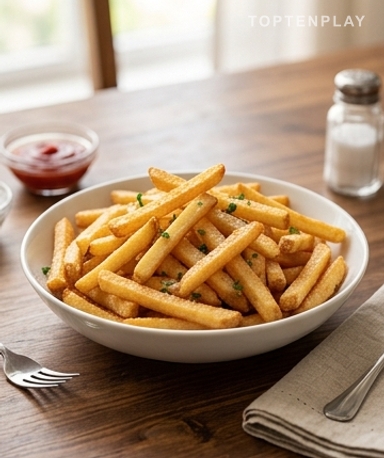
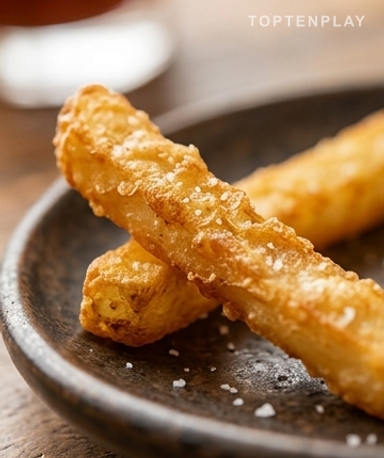
Imagine them there, in their bowl: a deep, even golden brown, like light caramel, without a single pale or soft spot. The smell rising is that of well-cooked starch — round, indulgent, without that greasy weight that lingers in the back of the throat. Under your fingers, the surface crunches slightly. Dry. Not oily at all. And inside, the flesh is melting, almost creamy — that contrast is exactly what we’re looking for.
Why you’ll love this recipe
Ingredient Notes
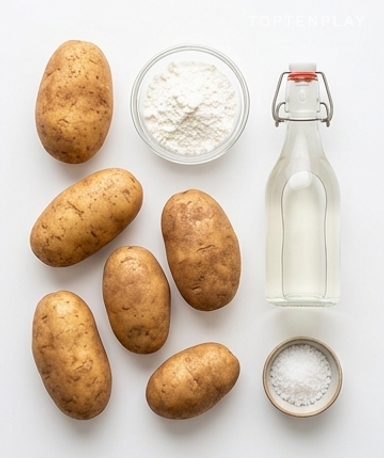
All you need: potatoes, cornstarch, white vinegar, and oil.
- The potatoes : Go for a floury variety: Bintje, Agria, or Russet if you can find them. These are the ones that provide the melting interior. Firm-fleshed potatoes — like Charlotte or Ratte — don’t hold up as well to frying. The final texture is denser and less pleasant.
- White vinegar : Ordinary white vinegar, not cider or balsamic. It must be neutral. Its role: the acidity tightens the surface of the potato and helps gelatinize the outer starch. This translates directly into a sharper crust. Two tablespoons for a large bath is enough.
- Cornstarch : Classic cornstarch (like Maizena) does the job perfectly. No flour — it absorbs oil and softens. Starch, on the other hand, creates a light, very fine crust upon contact with hot oil. One heaping tablespoon per good batch of fries.
- Frying oil : Sunflower or peanut oil. Neutral in taste with a high smoke point. Avoid extra virgin olive oil — it burns too quickly and imparts a flavor that doesn’t go well with fries at all.
Be picky with your potatoes
The vinegar technique is effective, but it can’t fix everything. A bad potato will always make a bad fry. Choose floury varieties — Bintje primarily, it’s the fry potato par excellence, available everywhere and cheap. Peel them and cut them into even sticks about 8 mm thick. Not too thin: they dry out too fast in the oil and harden before cooking through. Not too thick either, or the crust won’t have time to form. The consistency of the cut really changes the final cooking result.
Pour the vinegar and let it work
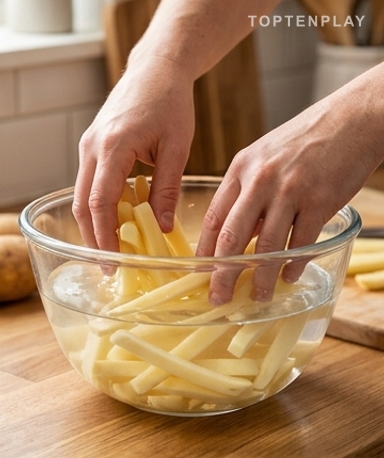
In a large bowl, submerge the sticks and add the two tablespoons of white vinegar. Toss to coat well, then cover with cold water — truly cold, not lukewarm. Let it rest for at least ten minutes. The water will take on a slight whitish tint: that’s the starch being released, exactly what we want. The vinegar, meanwhile, does its work silently. No strong smell, no visible change. But the surface of the potato changes at a cellular level, and that’s what makes all the difference.
Dry until the last drop — don’t rush it
This is the step everyone rushes through. Drain the fries, then spread them out on a clean kitchen towel and pat dry thoroughly. Flip them, pat again. Water is frying’s number one enemy: a damp fry hitting hot oil creates steam, and that steam prevents the crust from forming. Once the fries are very dry — truly dry — sprinkle the cornstarch and mix by hand to coat every stick. The surface should have a slight matte, almost powdery feel.
Don’t touch anything for the first two minutes
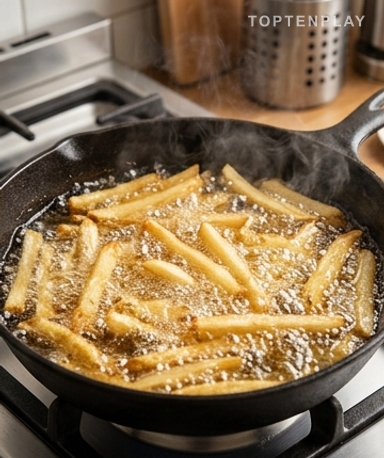
Heat the oil to about 175°C in a deep pot. Drop the fries in small batches — never all at once, as it causes the temperature to drop abruptly. The moment they enter the oil, the sound is immediate: an intense sizzling, almost a continuous hiss. Resist the urge to stir right away. The crust needs to set upon first contact with the hot oil. After two minutes, stir gently with a slotted spoon. The color should be even, a straw yellow gradually turning to amber.
Tips & Tricks
- Never salt before frying. Salt draws out moisture and destroys everything you’ve just built. Salt immediately after taking them out of the oil, while they are still piping hot — the salt sticks better and distributes evenly.
- If you can, do a double fry: a first cook at 160°C until they are cooked through but still pale (5-6 minutes), then a second cook at 185°C just before serving (2-3 minutes). This is the Belgian fry shop technique — the crunch is in another league.
- Oil can be reused 3 to 4 times if you filter it between each use with a fine sieve. Clean oil heats up faster — and fries cooking in hot oil absorb half as much fat.
Can you taste the vinegar in the fries?
No, not at all. The vinegar evaporates almost entirely during frying and does not impact the final taste. If you’re really worried, do the test: you won’t detect any acidity in your fries.
Why does vinegar make fries crispier?
The acidity of the vinegar modifies the starch structure on the surface of the potatoes by slightly gelatinizing it during the soak. This gelatinized layer then creates a crispy barrier upon contact with the hot oil, while limiting fat absorption.
Can I replace cornstarch with flour?
You can, but the result is very different. Flour absorbs oil and creates a thick crust that softens quickly. Cornstarch creates a very thin, very crispy film that lasts much longer. It’s better to find cornstarch.
Which potato variety should I choose for this recipe?
Floury varieties give the best results: Bintje, Agria, or Russet. Avoid firm-fleshed potatoes like Charlotte or Ratte — they won’t melt inside and the final texture is disappointing.
How to reheat homemade fries without them getting soft?
The microwave is a absolute no-go. Put them in the oven for 5 minutes at 200°C on a wire rack (not a baking sheet), using the fan setting. The rack allows hot air to circulate under the fries — they regain 80% of their initial crispiness.
Can I prepare the potatoes in advance?
Yes, it’s actually quite convenient. The sticks can soak for up to 30 minutes in the water-vinegar bath without any problem. Beyond that, they start to soften slightly and the final texture is less sharp. Keep the bowl in the fridge if you wait longer than 15 minutes.
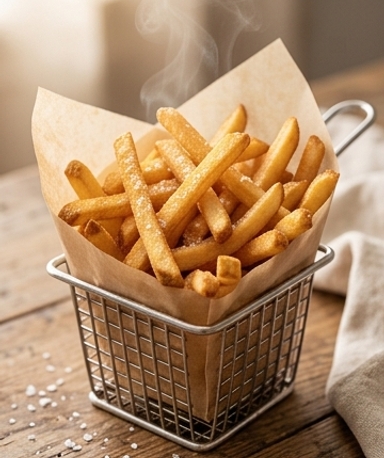
Crispy Fries with White Vinegar
French
Side Dish
The simple technique that changes everything: a vinegar bath and a thin layer of starch for golden, crispy fries that are much less greasy than usual.
Ingredients
- 800g floury potatoes (Bintje or Agria)
- 2 tbsp white vinegar (30ml)
- 1 heaping tbsp cornstarch (15g)
- 1,5L sunflower or peanut oil for frying
- cold water for soaking (enough to cover the fries)
- fine salt to adjust at the end
Instructions
- 1Peel the potatoes and cut them into regular sticks about 8mm thick.
- 2Place the sticks in a large bowl. Add the white vinegar, toss to coat, then cover completely with cold water. Let soak for 10 minutes.
- 3Drain the fries and dry them thoroughly with a clean towel, flipping them to remove all traces of moisture.
- 4Sprinkle the cornstarch over the fries and mix by hand to coat each stick. The surface should look slightly matte and powdery.
- 5Heat the oil to 175°C in a deep pot. Drop the fries in small quantities without overloading. Don’t touch them for the first 2 minutes.
- 6Fry for 5 to 7 minutes in total, stirring gently halfway through, until they reach a light caramel golden color.
- 7Drain on paper towels and salt immediately after removing from the oil.
Notes
• Double frying (pro option): do a first cook at 160°C for 5-6 minutes until fries are cooked but still pale. Let them rest for 5 minutes, then do a second cook at 185°C for 2-3 minutes just before serving. The crunch is in another league.
• Never salt before frying: salt attracts moisture and destroys the crust. Always salt fresh out of the oil while fries are still hot.
• Frying oil can be reused 3 to 4 times if filtered with a fine sieve between uses. Store in an airtight jar away from light.
Nutrition Facts (per serving, estimated)
| 310 kcalCalories | 4gProtein | 42gCarbs | 14gFat |