📌 Creole Jambalaya: how this one-pot dish marries chicken, shrimp, and smoky rice in 45 minutes
Posted 26 December 2025 by: Admin
Jambalaya: A Deep Dive Into A Louisiana Culinary Treasure
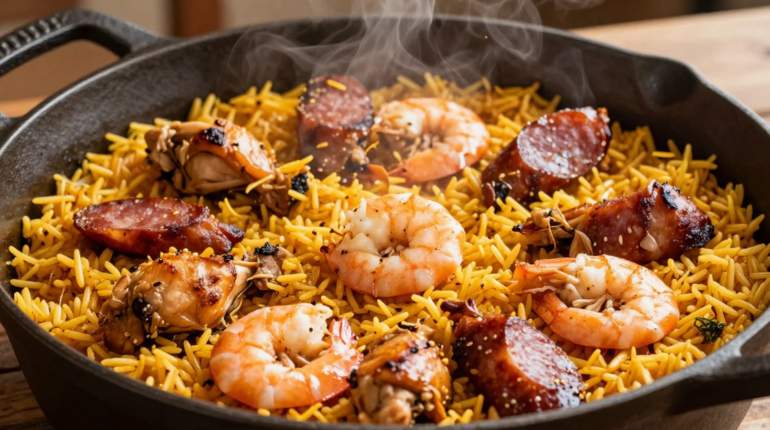
In the bayous of Louisiana, jambalaya has reigned for generations as the undisputed emblem of Creole cuisine. This all-in-one dish embodies a culinary philosophy where tender chicken, smoky andouille sausage, and juicy shrimp don’t just coexist, but merge in a single pot to create something radically different from the sum of their parts.
The alchemy begins from the first minutes of cooking. The andouille sausage releases its smoky aromas that permeate the chicken, while the chicken brings its substantial roundness to the broth. The shrimp, added at the end, capture these concentrated flavors while offering their delicate marine sweetness. The rice, far from being a simple side dish, becomes the vessel for this symphony, absorbing every aromatic note to transform into tomato-scented grains bursting with complexity.
“What makes jambalaya so special is the way each ingredient enriches the next,” summarizes the very essence of this Louisiana classic. This synergy is not a matter of chance but of a culinary tradition refined since the 18th century, where French, Spanish, and African influences intertwined in Creole kitchens. Even today, this dish retains its status as Southern soul food: generous, comforting, and ideal for gathering family and friends around a table.
This gustatory success nevertheless rests on precise aromatic foundations, inherited from a centuries-old tradition.
The Aromatic Foundation: Creole Vegetables And Seasonings
This centuries-old tradition finds its purest expression in the “Creole holy trinity”: white onion, green bell pepper, and celery. These three vegetables form the aromatic backbone of jambalaya, a non-negotiable base that every Louisiana cook respects with devotion. Diced uniformly and sautéed together for 12 to 15 minutes, they release their complementary essences to create that flavor base upon which everything else rests.
The Creole seasoning then acts as the conductor. One tablespoon for the chicken, two teaspoons for the shrimp: this strategic distribution ensures that each protein carries its own spicy charge while contributing to the overall harmony. Six cloves of minced garlic, a teaspoon of dried oregano, and two generous bay leaves complete the aromatic arsenal, breathing in that characteristic complexity of Southern kitchens.
The magic truly happens when 340 grams of andouille sausage meet 400 grams of tomato sauce and 530 milliliters of chicken broth. These liquids, enriched with cooking juices and melted vegetables, become the fragrant vehicle that will transform 300 grams of ordinary white rice into grains steeped in history and flavor. Deglazing with water, performed if necessary during the vegetable cooking, captures every bit of flavor stuck to the bottom of the pot.
But this aromatic foundation only reaches its full potential through a rigorously orchestrated cooking sequence.
The Culinary Choreography: Mastered Cooking Sequence
This orchestration begins with a seemingly trivial but crucial gesture: carefully drying the 450 grams of boneless chicken thighs with paper towels. Without this step, there is no authentic caramelization. The damp surface would produce steam instead of that golden crust that seals in the juices and builds the dish’s flavor foundations. The Creole seasoning is then applied uniformly, each piece coated in this magic powder that will penetrate the meat during cooking.
The heated pot then welcomes the chicken with a promising hiss. Three tablespoons of olive oil over medium heat, browning on all sides, then set aside. The andouille sausage immediately takes over in the chicken juices, releasing its smoky aromas until that sought-after caramelized hue is obtained. These proteins temporarily join the wings while the holy trinity vegetables take center stage.
Twelve to fifteen minutes of patient simmering transform the onion, pepper, and celery into a translucent foundation. A deglazing with water if necessary recovers every fragment of flavor clinging to the bottom. The garlic joins briefly, just long enough to release its fragrance without burning. Then comes the decisive moment: 300 grams of white rice are coated directly in this fragrant mixture before chicken, sausage, bay leaf, oregano, tomato sauce, and broth converge in the pot. The initial boil gives way to a covered simmer for 25 minutes, punctuated by a stir halfway through to ensure uniform cooking.
This timed sequence sets the stage for the final intervention of the shrimp and fresh herbs.
The Finishing Touch: Shrimp And Fresh Finishes
While the rice absorbs its last sips of broth, a separate pan heats up to welcome the 225 grams of shrimp. This parallel cooking is not a technical whim, but a necessity: incorporated too early, the shrimp would become rubbery and lose their pearly flesh. Two teaspoons of Creole seasoning coat them before they meet the hot olive oil. One minute per side is enough, hardly more. Their flesh turns pink, curling slightly, a signal that they are reaching that ideal texture between firmness and tenderness.
When the rice finally reveals its tender texture and the liquid has completely disappeared, the shrimp are gently folded in. A fluff with a fork aerates the jambalaya without crushing the grains, uniformly distributing these marine jewels throughout the fragrant mass. The three sliced green onions and fresh flat-leaf parsley are scattered on the surface, bringing that vegetal freshness that contrasts with the deep, smoky notes accumulated during 45 minutes of cooking.
This final touch radically transforms the aromatic profile. Where spicy heat and the meaty character of the meats dominated, a herbaceous lightness suddenly emerges that balances every bite. The shrimp, preserved from overcooking, burst in the mouth with their characteristic briny sweetness, completing this Creole symphony that is served immediately, steaming and generous.