Blanquette de la mer. The name sounds like something from a Michelin-starred restaurant that you’d never make at home on a Tuesday night. In reality, it’s one of the most forgiving fish recipes out there—quick, reliable, and far less technical than it seems. The only real challenge is not overcooking the fish.
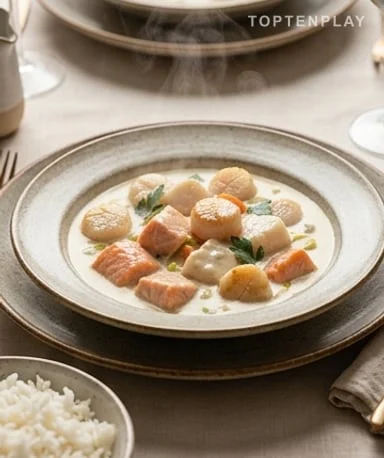
On the plate, the sauce is an off-white with a slight sheen, almost ivory, coating the fish pieces as if enveloping them. You first notice the lemon—subtle, just there to wake up the rest. Then the sea flavor gently rises, that clean, mild taste you only get with truly fresh fish. The scallops are opaque and firm, the vegetables tender but still intact. It’s a dish that looks polished without requiring hours of work.
Why you’ll love this recipe
Ingredient Notes
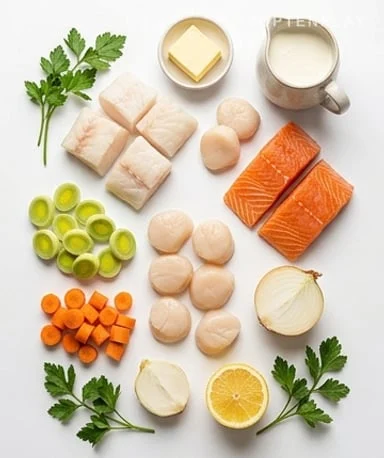
Hake, salmon, scallops, and vegetables: simple ingredients for a truly elegant result.
- Hake : This is the base fish, and it’s a great choice. Firm, it doesn’t fall apart during cooking and absorbs the broth’s flavors well. You can substitute pollock or cod, but avoid delicate fish like sea bass—they fall apart before they’re even fully cooked.
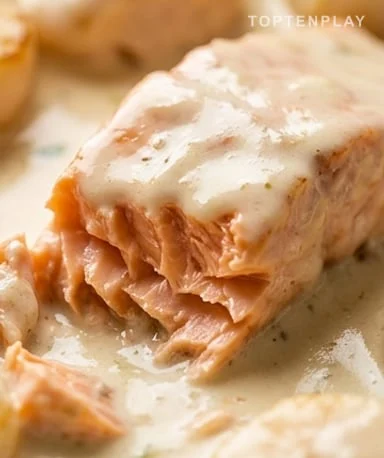
- Salmon : It brings richness and a different texture than hake—more tender, more decadent. When you cut a piece in the blanquette, the inside is still slightly rosy, almost silky. Standard Atlantic salmon is more than enough; no need to spend extra here.
- Scallops : They change everything. A more pronounced briny dimension than the fish, and a firm, pearly texture when properly cooked. The only pitfall: they cook in two minutes. After that, they turn rubbery. Add them truly last.
- Heavy cream : Use full-fat cream, not light. Light cream curdles when heated—the sauce separates into a grainy, unappealing texture. Full-fat cream holds together, incorporates well into the roux, and gives the velvety consistency you’re after.
- Lemon : The most underestimated ingredient. A white sauce without acidity is flat, almost cloying. The lemon isn’t distinctly noticeable in the finished dish—it just balances everything else. Taste before seasoning, add gradually.
The aromatic base: the step everyone rushes
It all starts with the onion in melted butter. Low heat—really low. The goal is not to brown anything but to soften the onion until it becomes translucent, almost invisible in the pot. This takes five to seven minutes and smells gently sweet. Then add the carrot cut into small dice and the sliced leek. The leek softens quickly and tints the broth a very pale green, almost pastel. Pour in the hot broth and let it simmer at a very gentle boil for fifteen minutes—the vegetables should be tender but still offer slight resistance to the fork.
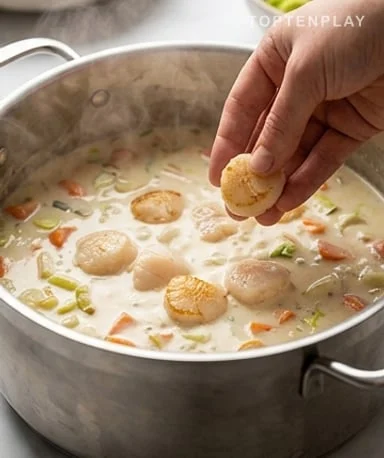
Why the fish doesn’t fall apart if you’re careful
The secret is temperature. Add the hake and salmon pieces when the broth is hot but not at a full boil. Vigorously boiling broth shreds the fish fibers in minutes—you end up with mush. Over low heat, the fish cooks gently and stays whole. Five to seven minutes is enough. The hake becomes opaque on the surface and remains firm under the fork. The salmon keeps a slightly pearly center. That’s the precise moment to add the scallops. Two minutes. When they go from translucent to uniformly opaque white, cooking is done—not a second more.
The part everyone messes up: the roux
The roux is the butter-flour mixture that forms the base of the sauce. This is where many panic over lumps. In reality, one rule suffices: whisk constantly as soon as you add the liquid. Melt the butter over medium heat, add the flour all at once, and stir for one minute—the mixture gives off a slight toasted hazelnut aroma, which is a good sign. Then gradually pour in the cooking broth, one ladle at a time, whisking each addition until fully absorbed before adding more. Finish with the heavy cream. The sauce should coat the back of a spoon without immediately running off. Season, add the lemon.
Assembling with ten seconds of care
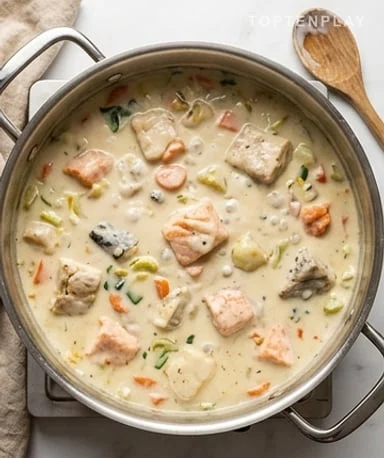
Pour the sauce over the fish and vegetables, then stir gently with a large spoon, slowly, just once. The goal is simply to distribute the sauce—not to amalgamate. The fish pieces are fragile at this stage and break easily if you insist. Let it sit over very low heat for another two to three minutes. The sauce will slightly thicken and take on a glossy, almost lacquered appearance. Sprinkle with fresh chopped parsley at the moment of serving. The bright green of the parsley against the ivory white sauce is also where the dish finds its final elegance.
Tips & Tricks
- Taste the broth before cooking the fish—it’s what gives flavor to the entire dish. If it lacks depth, correct it now, not after the sauce is assembled.
- If the sauce is too thick at the end of cooking, loosen it with a spoonful of hot broth. Never use cold water—cold water breaks the creamy texture and the sauce loses its sheen.
- For an even more flavorful result, let the fish infuse in the hot broth off the heat for five minutes before preparing the sauce. The marine flavors concentrate in the broth, and the sauce benefits directly.
Can I prepare the creamy seafood blanquette in advance?
Yes, and it’s even recommended. You can cook the vegetables in the broth and prepare the sauce the day before—store them separately in the refrigerator. Add the fish and scallops only when reheating to prevent overcooking.
How do I reheat the blanquette without drying out the fish?
Reheat over very low heat in the pot, stirring gently. Never boil: once the sauce comes to a boil, the fish firms up in seconds. If the sauce has thickened upon cooling, add a tablespoon of hot broth to loosen it.
Can I replace the scallops with something else?
Absolutely. Peeled pink shrimp work very well—same cooking time, same firm texture. Steamed mussels added at the end of cooking also yield excellent results and give the dish a more rustic feel.
How do I avoid lumps in the sauce?
The key is to add the broth gradually—one ladle at a time—while whisking constantly between each addition until fully absorbed. If lumps still appear, an immersion blender fixes it in ten seconds.
What should I serve with the creamy seafood blanquette?
Basmati rice is the classic accompaniment—it absorbs the sauce well. Steamed potatoes or fresh tagliatelle also work nicely. Avoid roasted or grilled vegetables, which don’t pair well with the creamy sauce.
Can I freeze the creamy seafood blanquette?
It’s not recommended. Heavy cream tends to separate upon thawing, and the fish loses its texture—you end up with something grainy and stringy. This recipe is best fresh or stored for a maximum of two days in the refrigerator.
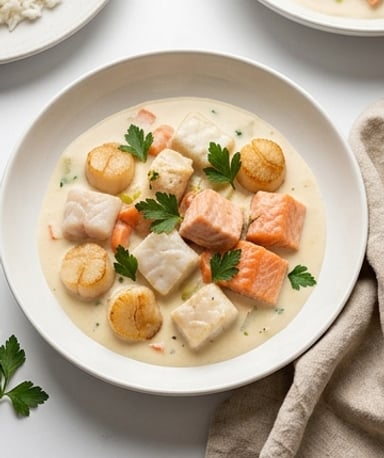
Creamy Seafood Blanquette
French
Main course
Hake, salmon, and scallops simmered in a velvety white sauce, lightly lemony. An elegant and comforting dish ready in under 45 minutes.
Ingredients
- 400g hake fillet, cut into 3 cm cubes
- 200g salmon fillet, cut into 3 cm cubes
- 120g scallops
- 1 medium onion, finely chopped
- 1 carrot, cut into small dice
- 1 leek (white and light green part), thinly sliced into rounds
- 30g butter (15g for vegetables + 15g for roux)
- 1 tablespoon flour (about 10g)
- 200ml heavy cream
- 500ml hot vegetable or fish broth (1 cube dissolved in 500ml water)
- 1 lemon juice (about 2 tablespoons)
- 1 bay leaf
- 1 bunch fresh parsley, chopped
- salt and black pepper
Instructions
- 1Finely chop the onion, dice the carrot, and slice the leek into thin rounds. Prepare 500ml of hot broth with the cube.
- 2Melt 15g of butter over low heat in a large pot. Add the onion and cook for 5 to 7 minutes until translucent.
- 3Add the carrot and leek, sauté for 2 minutes, then pour in the hot broth. Add the bay leaf.
- 4Simmer over low heat for 15 minutes until the vegetables are tender.
- 5Add the hake and salmon pieces to the simmering broth. Cook for 5 to 7 minutes over low heat without boiling.
- 6Add the scallops and cook for exactly 2 minutes. Remove the pot from the heat.
- 7In a small saucepan, melt the remaining 15g of butter over medium heat. Add the flour and whisk for 1 minute to form a light roux.
- 8Gradually pour in the cooking broth (scooped with a ladle) while whisking constantly. Incorporate the heavy cream and mix until smooth and coating.
- 9Season with salt, pepper, and lemon juice. Pour the sauce over the fish and vegetables, stir gently once.
- 10Let simmer over very low heat for 2 to 3 minutes. Serve immediately, sprinkled with fresh chopped parsley.
Notes
• Storage: keeps for 2 days in the refrigerator in an airtight container. Reheat gently over low heat, adding a little broth if the sauce has thickened too much.
• Variation: replace the scallops with peeled pink shrimp or add a handful of steamed mussels for a more generous result.
• Serving: serve with basmati rice, steamed potatoes, or fresh tagliatelle. Have bread on hand to finish the sauce.
Nutrition Facts (per serving, estimated)
| 460 kcalCalories | 34gProtein | 10gCarbs | 32gFat |