On Saturday lunchtimes, when you don’t feel like battling at the stove but still want to eat something good, Russian salad is exactly what you need. It’s prepared in advance, waits patiently in the fridge, and is effortlessly delicious. A great classic that is wrong to snub.
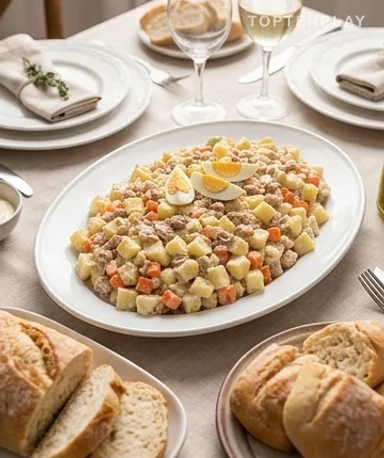
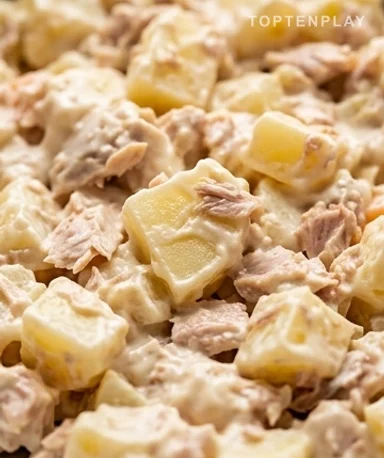
In the bowl, it’s a patchwork of cream and pale yellow. The potato pieces have soaked up the mayonnaise, the carrot brings touches of orange, and the eggs blend into the mix. It smells gently of tuna, olive oil, and a bit of homemade mayo. It’s fresh, dense, and generous. The kind of dish you eat straight from the bowl before it even hits the table.
Why you’ll love this recipe
Ingredient Notes
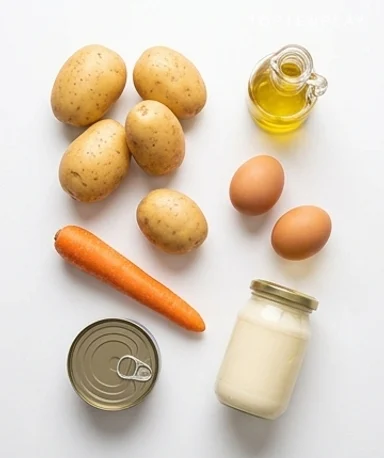
Simple and economical ingredients: potatoes, carrot, eggs, tuna, and good mayonnaise.
- The potatoes : Go for Charlotte or Amandine. They stay firm during cooking and won’t turn into mashed potatoes in the salad bowl. Bintje is for other things. Here, we want pieces that hold their shape.
- Canned tuna : In brine (natural), not oil. Drain it really well—press down with the lid, let it drip. Tuna that is too wet will make the salad soggy after a few hours.
- The mayonnaise : Homemade if you have three minutes and an immersion blender, otherwise Hellmann’s. Avoid low-fat versions: they make the salad watery after an hour in the fridge. This is the binder for the whole recipe; it’s not the time to skimp.
- The eggs : Hard-boiled, but not rubbery. Ten minutes in boiling water, then cold water immediately. The yolk should be well-cooked but still a bit dense in the center, not greenish around the edges.
- Olive oil : A small drizzle at the end of assembly. It lightens the mayo and brings a smoother taste. No need for an exceptional oil—a mild supermarket olive oil works perfectly.
Cooking the vegetables correctly—not by chance
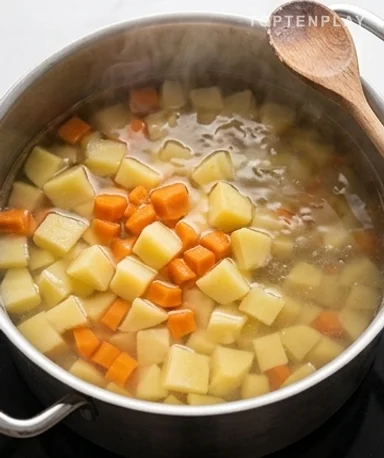
Peel the potatoes and carrot, cut them into regular pieces—not tiny, not huge, about the size of a large cherry. Uniformity matters because everything must cook at the same time. Submerge them in a pot of salted water and bring to a boil. When a knife goes in without resistance but the piece doesn’t fall apart, it’s ready. The carrot will remain slightly firmer; that’s normal. Drain, spread on a tea towel or a tray, and let cool completely. Completely. Not lukewarm, not slightly warm—cold. If you mix with mayo while it’s still warm, you’ll get something greasy and flat.
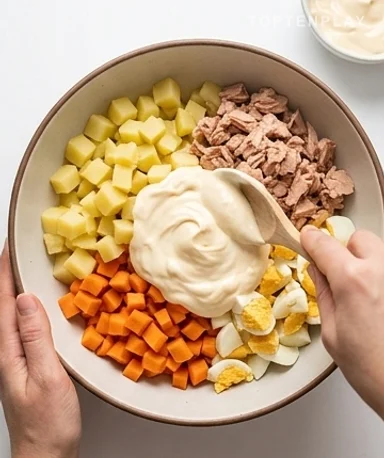
The part everyone fails: the assembly
Everyone tends to pour all the mayonnaise in at once and mix vigorously. Result: a beige puree. The idea is to add the mayo gradually, spoon by spoon, and mix gently—almost lifting the ingredients rather than crushing them. The spatula should go under the pieces, not crush them. Add the olive oil in a drizzle while mixing. Taste it. The salad should be bound and creamy, but you should still see distinct pieces. If it sticks too much to the spatula, add an extra spoon of mayo. If it’s too dense, a drizzle of olive oil.
Resting in the cold—the step nobody really respects
One hour minimum. Two is better. A whole night is perfect. The cold does something interesting to the salad: the potatoes slowly absorb the mayo, the carrot releases its sugar into the mix, the tuna blends into the whole. When you open the fridge and lift the film, the smell is both neutral and appetizing—that ‘it smells like a meal’ feeling. Take it out ten minutes before serving if you prefer it not too cold. A quick stir to loosen it up, and it’s ready.
Tips & Tricks
- Salt the cooking water generously—it’s the only chance to season the potatoes from the inside. Well-salted water really changes the final result.
- Never mix ingredients while still hot with mayo. The fat in the mayonnaise separates upon contact with heat, and the salad becomes oily and uneven.
- If the salad comes out of the fridge too compact, add a spoonful of fresh mayo and mix gently. Potatoes absorb a lot overnight—it’s normal to adjust at the last minute.
How long can Russian salad be kept in the refrigerator?
Three days maximum in an airtight container. After that, the mayonnaise starts to release water and the potatoes become too soft. Cover the bowl well with plastic wrap to prevent the surface from drying out and absorbing fridge odors.
Can Russian salad be prepared the day before?
It’s actually recommended. A night in the cold allows the flavors to blend and the mayonnaise to properly penetrate the potatoes. Take it out ten minutes before serving and add a spoonful of fresh mayo if it seems too compact—potatoes absorb a lot overnight.
Why did my Russian salad become liquid after a few hours?
Two possible reasons: either the vegetables were not completely cooled before assembly (heat melts and destabilizes the mayo), or you used tuna that was too wet or a low-fat mayonnaise. Next time, drain the tuna by pressing firmly with the lid, and use a classic full-fat mayo.
Can I make a version without tuna?
Yes, no problem. Replace the tuna with peas (200g, drained), corn, or shredded cooked chicken. The potato-egg-mayo base remains the same. The version with peas is lighter and very popular with children.
Which potato variety should I choose to prevent them from mashing?
Choose a firm-fleshed variety: Charlotte, Amandine, or Baby potatoes. Floury potatoes like Bintje fall apart during cooking and turn the salad into mash. If you are unsure of the variety, check the label—packaging often indicates ‘holds during cooking’ or ‘salads and steaming’.
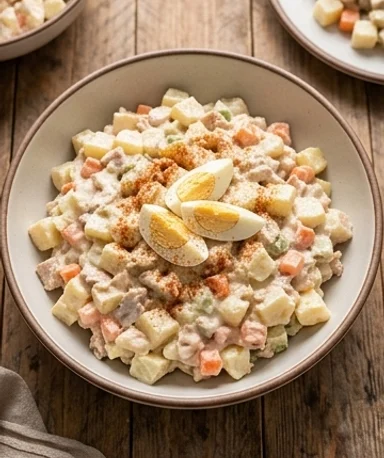
Creamy Russian Salad with Tuna
International
Appetizer / Side Dish
The classic Russian salad revisited with natural canned tuna: creamy, generous, and much better the next day. A dish that is prepared in advance and delights everyone.
Ingredients
- 500g firm-fleshed potatoes (Charlotte or Amandine)
- 1 large (100g) carrot
- 2 eggs
- 160g drained canned tuna in brine
- 200g mayonnaise (+ 1 tbsp if needed)
- 2 tbsp mild olive oil
- 1 tsp salt (+ for the cooking water)
Instructions
- 1Peel the potatoes and the carrot. Cut them into regular cubes of about 1.5 cm.
- 2Submerge them in a large pot of well-salted water, bring to a boil and cook for 18 to 20 minutes, until a knife goes in without resistance. Drain and let cool completely at room temperature.
- 3Meanwhile, cook the eggs in boiling water for exactly 10 minutes. Run them under cold water, peel them, and cut them into coarse pieces.
- 4Carefully drain the tuna by pressing with the lid. Flake it with a fork.
- 5Combine the cold potatoes, carrot, eggs, and tuna in a large bowl.
- 6Add the mayonnaise in three parts, mixing gently with a spatula—lift the ingredients rather than crushing them.
- 7Drizzle in the olive oil, mix, taste, and adjust the salt.
- 8Cover with plastic wrap and refrigerate for at least 1 hour before serving. A whole night is even better.
Notes
• Make ahead: Russian salad is better the next day. If it seems too compact when taking it out of the fridge, add a spoonful of fresh mayo and mix gently.
• Storage: 3 days maximum in the refrigerator in a well-sealed container.
• Vegetarian variation: replace the tuna with 200g of drained peas or corn.
Nutrition Facts (per serving, estimated)
| 420 kcalCalories | 14gProtein | 22gCarbs | 32gFat |