📌 Creamy Garlic Sauce
Posted 23 April 2026 by: Admin
The garlic starting to melt in the butter makes a whispering sound in the pan. Soft, almost nothing. And yet the smell that rises is immediately recognizable — round, warm, making you hungry even before the plates are out.
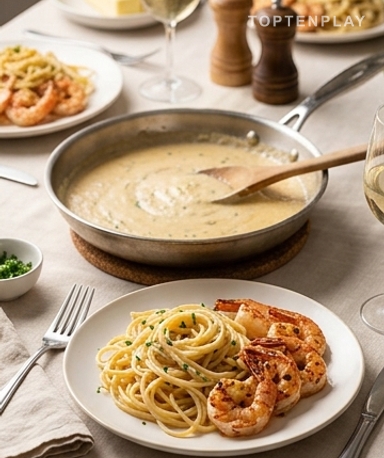
It is a creamy, slightly golden white, shiny and silky in the pan. It coats the back of the spoon without dripping too fast — just the right consistency, the kind that clings well to pasta and coats shrimp without drowning them. Small green specks of fresh parsley float on the surface. And the smell, already: melted butter, tender garlic, something comforting and simple that doesn’t try to be anything else.
Why you’ll love this recipe
Ingredient Notes
Butter, garlic, flour, cream, and fresh parsley: five ingredients are enough for this game-changing sauce.
- Butter : It’s the base. Choose unsalted butter rather than semi-salted to better control the final seasoning — the sauce will already get salt at the end of the recipe. No need to take it out in advance here: on low heat, it melts in two minutes without any problem.
- Garlic : Four cloves for four servings. Fresh, chopped with a knife — not powder, not from a tube. In a sauce as simple as this, the difference between fresh garlic and garlic powder is really felt, because there’s nothing behind it to compensate.
- Flour : One tablespoon. This is the express roux that thickens the sauce in one minute without having to reduce for ten. Classic and efficient.
- Light cream : The original recipe uses American half-and-half — basically, it’s half milk, half cream. In practice: light cream with 15 to 18% fat content. If you only have heavy cream, it works too — the sauce will just be a bit richer and thicker.
- Fresh parsley : Added off the heat only, to keep its bright green color and fresh taste. Flat-leaf parsley is a bit more fragrant than curly. Both work, but avoid dried parsley here — it brings nothing to a cream sauce.
Start cold, the garlic infuses much better
Put the butter in the pan with the chopped garlic and turn on the heat — medium-low. The idea is for the butter to melt slowly and for the garlic to infuse into it without ever browning. You’ll hear a slight sizzle when the butter really starts to heat up. The garlic will go from raw white to a very pale ivory, and the smell will intensify as the seconds pass, becoming rounder and more generous. As soon as it really smells of garlic — a minute, a minute and a half maximum — you move on. If the garlic browns, it will make the whole sauce bitter. It happens. Toss it and start over, it’s no big deal.
The one-minute roux — no more, no less
Pour the spoonful of flour directly onto the hot garlic and butter. Whisk immediately. The flour will absorb the butter and form a thick paste, the color of wet sand, that sticks slightly to the bottom of the pan. Cook this mixture for exactly one minute while stirring constantly. This step cooks the raw flour and avoids a floury taste in the final sauce. The mixture will be lumpy and a bit weird at this stage — that’s completely normal.
Pour the cream in three parts, never all at once
Pour one-third of the cream and whisk vigorously. The roux will resist at first, then soften and incorporate the liquid. Add the second third, whisk again. Then the last. This step-by-step process avoids lumps and gives a smooth sauce from the start, without a blender or sieve. You’ll see the texture change before your eyes: first thick and sticky, then increasingly fluid and pearly. Simmer for two to three minutes over low heat until it coats the whisk well when you lift it.
Off the heat, taste before seasoning
Remove the pan from the heat. Add the chopped parsley, mix. Then taste before adding anything. The sauce already has salt from the butter. If you add freshly grated parmesan — which is a very good idea — wait until it’s well melted before seasoning, because the cheese is naturally salty and can tip the balance. A turn of ground black pepper, a pinch of salt if necessary. Serve within two minutes.
Tips & Tricks
- If the sauce thickens too much while resting, add a splash of cream or pasta cooking water and whisk — it returns to the right consistency in seconds. Cooking water is particularly effective because it contains starch.
- For pasta, pour the sauce directly over the still-hot pasta and mix immediately off the heat. The sauce clings better to slightly damp pasta, and the residual heat finishes the job.
- Freshly grated parmesan is the best addition to this sauce — a nice handful off the heat, whisking quickly. Not the pre-grated bag: it contains anti-caking agents that prevent smooth melting.
Can I replace light cream with heavy cream?
Yes, no problem. The sauce will just be a bit richer and thicker. If you use 30% heavy cream, reduce the simmering time by one minute — it thickens faster. Whole milk also works in a pinch, but the texture will be lighter and less coating.
Why is my sauce lumpy?
Almost always because the cream was added too quickly to the roux. Next time, incorporate it in three parts, whisking well between each addition. If lumps are already there, an energetic whisking off the heat or a quick blitz with an immersion blender solves the problem.
How long does this sauce keep and how to reheat it?
Five days in the refrigerator in an airtight container. To reheat, very low heat with a splash of cream or milk while whisking gently — it will loosen up and regain its consistency. The microwave also works, in 30-second intervals, stirring in between.
Can I freeze this garlic sauce?
Technically yes, up to six months. But cream-based sauces tend to separate upon thawing. To fix this, thaw it in the refrigerator then reheat it over very low heat while whisking. If it ‘splits,’ a little hot cream and some whisking usually recover it.
How to add cheese without it curdling?
Remove the pan from the heat before incorporating the grated parmesan. Off the heat, the cheese melts slowly without the risk of becoming grainy. Use freshly grated parmesan — pre-grated cheese in a bag contains anti-caking agents that disrupt melting.
What else can I serve this sauce with besides pasta?
It works very well poured over grilled chicken, pan-seared shrimp, salmon, steamed potatoes, or roasted vegetables. It’s also an excellent dipping sauce for cooked vegetables or breadsticks. It’s a great quick substitute for Béchamel in a gratin.
Creamy Garlic Sauce
American
Sauce
A quick and silky homemade garlic cream sauce, ready in 20 minutes with five basic ingredients. Perfect on pasta, chicken, or vegetables.
Ingredients
- 75g (1/3 cup) unsalted butter
- 4 cloves garlic, finely minced
- 1 tbsp (8g) all-purpose flour
- 160ml (2/3 cup) light cream (15-18% fat)
- 1 tbsp chopped fresh parsley
- to taste salt and black pepper
Instructions
- 1In a small pan, melt the butter with the garlic over medium-low heat. Cook for 1 to 2 minutes until the garlic is fragrant — without letting it brown.
- 2Add the flour and whisk immediately. Cook for 1 minute, stirring constantly until a smooth sand-colored paste forms.
- 3Incorporate the cream in three additions, whisking well between each to avoid lumps.
- 4Simmer over low heat for 2 to 3 minutes until the sauce coats the back of a spoon.
- 5Remove from heat, add parsley, and season generously with salt and pepper. Serve immediately.
Notes
• Storage: up to 5 days in the refrigerator in an airtight container. Reheat over very low heat with a splash of cream while whisking.
• Cheesy variation: stir in 30g of freshly grated parmesan off the heat after adding the parsley. Season afterward, as the cheese already adds salt.
• If the sauce thickens too much, thin it with a little cream, milk, or pasta cooking water.
Nutrition Facts (per serving, estimated)
| 206 kcalCalories | 1gProtein | 3gCarbs | 22gFat |