Everyone imagines that a pasta bake requires precooking the pasta, preparing a béchamel, and carefully assembling layers. This gratin? You pour everything raw into a dish. The oven does the work. It’s almost like cheating.
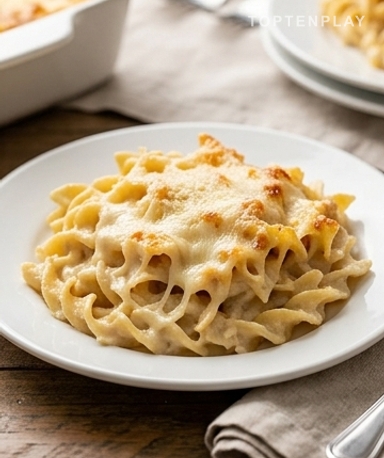
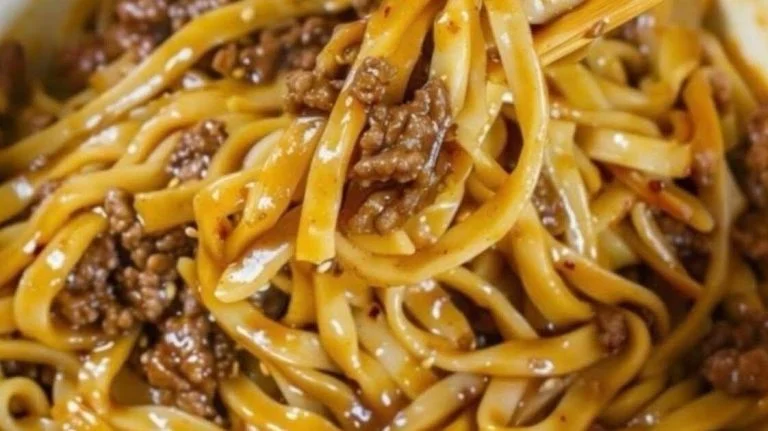
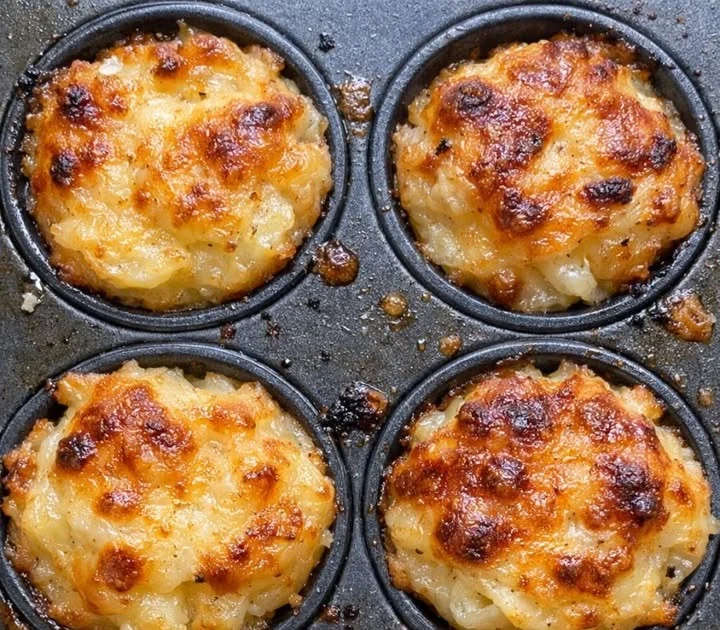
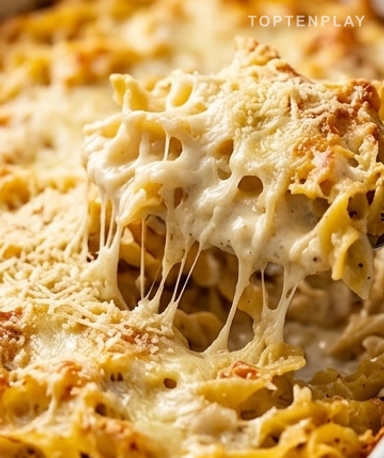
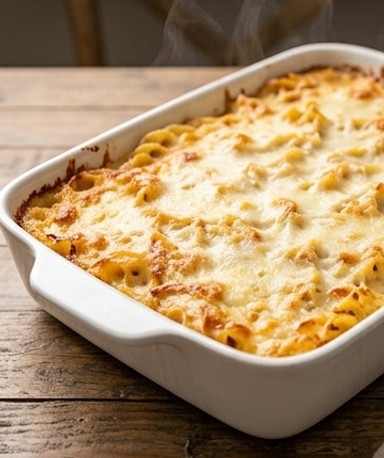
The surface is golden like light caramel, dotted with small bubbles frozen in crispy parmesan. Underneath, the noodles have absorbed the cream and broth during cooking — they are plump, tender just right, coated in a sauce that clings without being heavy. The smell of roasted garlic and melted butter fills the room long before the timer goes off. You dive in with a spoon and the mozzarella strings stretch, resist for a second, then let go.
Why you’ll love this recipe
Ingredient Notes
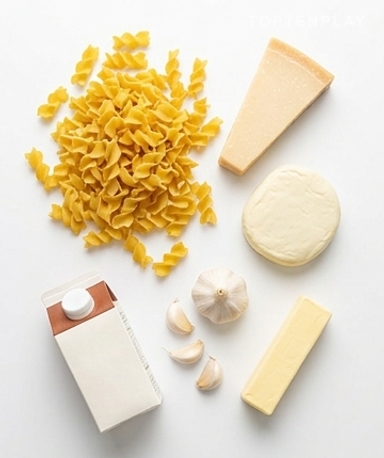
Six ingredients are enough: wide noodles, cream, parmesan, mozzarella, butter, and garlic.
- Wide noodles : Get wide egg pasta, the kind used for stroganoffs. They are thicker and more robust — they hold up during cooking without turning into mush. No need to cook them beforehand; it’s actually discouraged here.
- Heavy cream : Full-fat heavy cream, not light. The light version can break under heat, leaving you with a grainy sauce. If you want to lighten it up, go half cream and half broth — but no low-calorie substitutes.
- Parmesan : Grate it yourself. Pre-grated bagged parmesan contains anti-caking agents that prevent melting — you’ll get a powdery surface instead of a cohesive crust. A block, a fine grater, and you’re done.
- Garlic : Garlic powder if you want something mild and consistent throughout the sauce. Fresh pressed garlic if you want that zing that caramelizes slightly in the oven. Both work, both give different results — fresh garlic is bolder and more characteristic.
- Butter : It melts in the dish during cooking, no need to melt it beforehand. Cut it into small cubes and scatter them over the pasta for even distribution across the surface.
Take the butter out of the fridge 30 minutes before
Not to make it soft — just so it melts more evenly in the dish. Meanwhile, preheat the oven to 190°C and grease your 9×13 dish. We often forget this step, and we end up with butter chunks melting later than the rest. Greasing the dish also gives those slightly crispy, golden edges — the best surprise when serving.
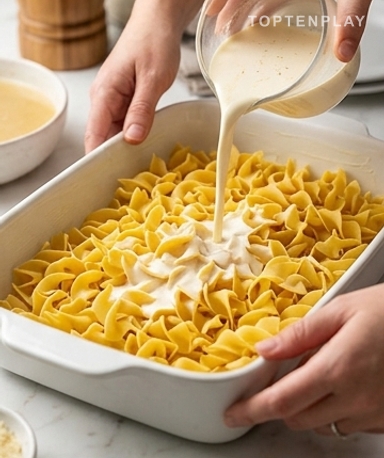
Pour everything into the dish without overthinking
Raw noodles straight into the dish. Broth and cream over them. Scattered butter cubes. Garlic. Salt, pepper. Half the parmesan. Mix a little to distribute, but don’t aim for perfection. What matters is that the noodles are well submerged in the liquid — they will absorb it all while cooking. The cream and broth together create something rich but not overwhelming, a sauce that clings to the pasta without drowning it.
Don’t touch anything for the first 20 minutes
The dish goes into the oven tightly covered with aluminum foil. Tightly means no steam should escape — it’s the steam that cooks the noodles from the inside. If you open it or lift the foil to check, you lose that steam and the pasta ends up dry. 20 minutes of hands-off. The garlic smell starting to fill the kitchen around the 15-minute mark is a good sign. Let it happen.
Save half the cheese for the last 10 minutes
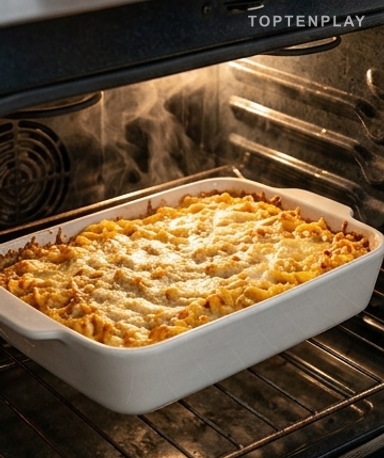
The first layer of parmesan goes in with the raw pasta — it melts into the sauce and binds it. The second layer, the remaining parmesan plus all the mozzarella, is added only after removing the foil. Then, the oven melts and browns it in 5 to 8 minutes. The mozzarella gets that uneven light brown color, with some almost orange spots and others barely colored. This irregularity makes it look homemade rather than like an industrial pizza.
Tips & Tricks
- Seal tight with the foil — fold the edges well over the dish. The trapped steam cooks the noodles, not the dry heat of the oven. If steam escapes, the top pasta stays hard.
- Let it rest for 5 minutes after taking it out of the oven before serving. The sauce continues to thicken slightly as it cools and sets better on the plate.
- To reheat leftovers the next day, add two tablespoons of broth or cream before putting it back in the oven, covered. Pasta reheated dry becomes rubbery — the liquid brings it back to life.
Can I prepare this gratin in advance?
Yes, you can assemble the dish up to 24 hours in advance and keep it covered in the refrigerator without cooking. Take it out 30 minutes before baking to bring it to room temperature; otherwise, the center will stay cold. Add 5 minutes to the covered cooking time if baking it while still cold.
My noodles are still hard after 20 minutes — what should I do?
Put the foil back on and cook for another 5 to 10 minutes. Egg noodles vary by brand — some absorb liquid slower. Also, check that your dish was tightly covered, otherwise the steam escaped too early.
Can I replace the heavy cream with something else?
Half cream and half broth works well if you want to lighten it up. Avoid light cream with less than 30% fat — it may split in the heat and make the sauce grainy. Coconut cream gives a surprising but decent result if you really have nothing else.
Can I use other types of pasta?
Wide egg noodles are ideal because they are robust and absorb liquid well without falling apart. Penne or rigatoni also work, but increase the liquid by about 10% — denser dry pasta absorbs more. Avoid thin pasta like spaghetti; they turn into mush.
How to store and reheat leftovers?
Leftovers keep for 3 days in the refrigerator in an airtight container. To reheat, add 2 to 3 tablespoons of broth or cream before putting it back in a 175°C oven for 15 minutes, covered. Dry reheating in the microwave makes pasta rubbery — liquid is essential.
Can I add protein to make it a full meal?
Diced cooked chicken or roasted turkey strips fit perfectly — add them with the raw pasta into the dish. Drained tuna also works great and requires no extra cooking. Avoid raw meat other than finely sliced poultry, as the cooking time is too short to guarantee it’s cooked through.
Creamy Garlic-Parmesan Noodle Bake
American
Main course
Egg noodles cooked directly in a garlic cream-broth mixture, topped with a double layer of parmesan and mozzarella. Ready in 30 minutes, only one dish to wash.
Ingredients
- 340g wide egg noodles, raw
- 600ml chicken or vegetable broth
- 240ml heavy cream (30% fat minimum)
- 115g unsalted butter, cubed
- 1 tbsp garlic powder (or 4 cloves fresh garlic, pressed)
- 120g freshly grated parmesan (divided into two equal portions)
- 150g shredded mozzarella
- 1 tsp fine salt
- ½ tsp ground black pepper
Instructions
- 1Preheat the oven to 190°C (375°F). Grease a 33×23 cm (9×13 inch) baking dish.
- 2Pour raw noodles into the dish. Add broth, cream, butter cubes, garlic, half of the parmesan, salt, and pepper.
- 3Stir to distribute ingredients and ensure noodles are well submerged in the liquid.
- 4Cover tightly with aluminum foil, sealing the edges well. Bake for 20 minutes.
- 5Remove the foil. Sprinkle the mozzarella and remaining parmesan over the surface.
- 6Return to the oven uncovered for 5 to 8 minutes, until the cheese is melted and lightly browned in spots.
- 7Let rest for 5 minutes before serving. Garnish with fresh parsley and red pepper flakes if desired.
Notes
• Make-ahead: assemble the dish up to 24h in advance, cover and refrigerate without cooking. Take out 30 minutes before baking.
• Storage: 3 days in the refrigerator in an airtight container. To reheat, add 2-3 tbsp of broth or cream, cover and heat at 175°C for 15 minutes.
• Full meal variation: add 300g of diced cooked chicken or roasted turkey strips directly with the raw pasta before baking.
Nutrition Facts (per serving, estimated)
| 520 kcalCalories | 18gProtein | 48gCarbs | 29gFat |