This creamy crab and shrimp bisque has its perfect place on a cool evening, when you want a warm bowl that satisfies without being heavy. It’s a simplified classic version: no intimidating techniques, just a well-executed base, seafood added at the right time, and a velvety texture that makes the dish charming.

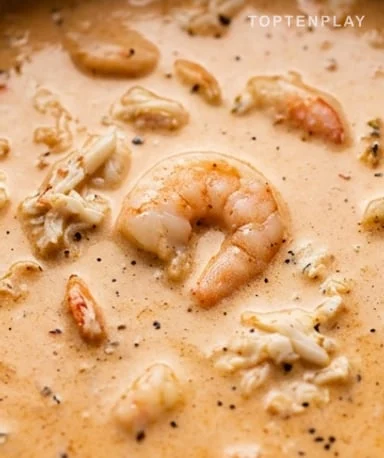
The color leans gently towards orange thanks to the tomato and spices, with pale crab pieces and pink shrimp standing out in the cream. When spooned, the bisque should coat without sticking, like a smooth and glossy sauce. The aroma is round: warm butter, mild celery, a hint of the sea from the seafood, then that subtle warmth of seasoning that lingers at the back of the palate.
Why you’ll love this recipe
Ingredient Notes
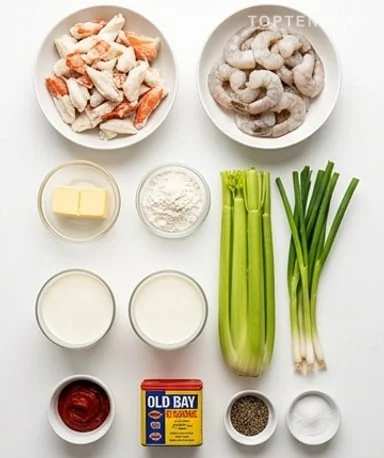
Nothing complicated: seafood, a butter-flour base, milk, cream, and a touch of Old Bay seasoning.
- Crab : It gives the bisque its sweet and delicate note, making the bowl more refined than a simple shrimp soup. Choose well-drained meat, fresh or good-quality canned, and avoid overly watery bits that dilute the flavor.
- Shrimp : They add texture, firmness, and a more direct briny aroma. Use peeled and deveined to save time, but add them only at the end of cooking so they remain tender and juicy.
- Butter and flour : Together they form the base that thickens the bisque and gives it that coating quality. Cook the flour in butter for a minute to remove its raw taste, until you smell a sweet, biscuity aroma.
- Celery and green onion : They build the aromatic base without overwhelming the seafood. Chop finely so they melt into the soup; if you don’t have green onion, a small shallot will do.
- Cream and whole milk : Milk lightens the base while cream provides roundness and gloss. For a less rich bisque, replace some cream with milk, but keep some cream for true silky texture.
- Tomato paste and Old Bay : Tomato paste adds depth and warm color without turning the recipe into tomato soup. Old Bay brings the classic seafood spice; substitute with a mix of sweet paprika, pepper, celery powder, and a pinch of mild chili.
Melt the aromatics without rushing them
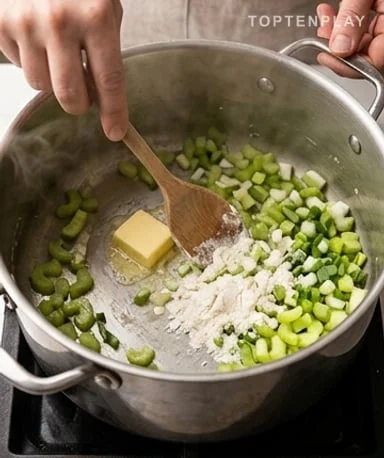
Start by melting the butter over medium heat, then add finely chopped celery and green onion. The goal is not to brown them, but to soften them until they become shiny and a sweet, almost vegetal aroma rises from the pot. If the heat is too high, the butter will brown too quickly and overpower the crab, which would be a shame. Stir often, especially at the bottom, because this initial base sets the tone for the entire bisque.
Cook the flour for a clean velvety texture
Add the flour over the vegetables and stir immediately to coat in the butter. The mixture becomes thick, a bit pasty, and that’s normal: this is what will give body to the bisque. Cook briefly, just enough for the raw flour smell to disappear and give way to a rounder, almost biscuity note. Do not seek a dark color, as here we want a clear, mild, and elegant bisque.
Add liquids gradually to avoid lumps
Incorporate the milk in several additions, whisking or stirring well after each. At first, the base clings a bit and seems too compact, then it relaxes and becomes smooth with a satiny surface. Then add the cream, tomato paste, Old Bay seasoning, pepper, and salt cautiously. Taste before insisting on salt, as seafood and some spice blends may already add quite a bit.
Let it simmer gently to maintain a silky texture
When the base is uniform, lower the heat and let it simmer without boiling vigorously. An overly agitated bisque becomes heavy, sometimes grainy, and the cream loses its smoothness. You should see small gentle bubbles on the edges, not a noisy boil in the center. At this point, adjust thickness: a little milk to thin it, a few more minutes to concentrate.
Add the seafood at the end to keep it tender
The shrimp and crab should go in when the bisque is already hot and almost ready. Shrimp cook quickly: as soon as they turn pink, opaque, and slightly firm, stop extending. Crab mainly needs to be reheated without being roughly handled, otherwise its pieces fall apart completely. Stir gently to maintain nice chunks of flesh in the bowl, then serve immediately with a creamy and fragrant surface.

Tips & Tricks
- Add milk gradually because a roux absorbs liquid better in small amounts, resulting in a smoother bisque.
- Do not let the cream boil vigorously, as too much heat can break the texture and make the taste heavier.
- Add shrimp at the very end of cooking because they go from tender to rubbery in just a few minutes.
- Taste after adding crab and shrimp, as their saltiness can change the final balance of the bisque.
Can this bisque be prepared in advance?
Yes, but it’s best to prepare the creamy base in advance and add the crab and shrimp at the last moment. That way, the shrimp stay tender and the crab retains its texture better.
How do I avoid a bisque that’s too thick?
Add milk gradually and keep a little liquid on hand to adjust at the end of cooking. If the bisque becomes too dense, a splash of warm milk or fish broth will loosen it without breaking the flavor.
Can I use frozen shrimp?
Yes, as long as you thaw them completely and dry them well before cooking. If they release too much water, the bisque loses concentration and becomes more bland.
What can I substitute for Old Bay?
Mix sweet paprika, black pepper, a pinch of celery powder, and a little mild chili. It won’t be exactly the same, but you’ll keep the spicy and seafood spirit of the recipe.
Can I lighten the recipe?
Yes, replace some of the cream with whole milk or semi-skimmed milk. Still keep a little cream, because it gives that round and silky texture.

Creamy Crab and Shrimp Bisque
American
Soup
A simplified classic bisque, rich and velvety, with tender crab, just-cooked shrimp, a buttery base, and a hint of seafood-style spices.
Ingredients
- 225g butter
- 25g green onions, finely chopped
- 125g flour
- 40g celery, finely chopped
- 360ml heavy cream
- 15g tomato paste
- 480ml whole milk
- 1 tsp Old Bay seasoning
- 150g crab meat
- 180g shrimp, peeled and deveined
- 1/4 tsp black pepper
- 1/2 tsp salt, to adjust
Instructions
- 1Melt the butter in a large pot over medium heat, then add the celery and green onions. Sauté for 3 to 4 minutes, until they become tender and fragrant without browning strongly.
- 2Add the flour and stir for 1 to 2 minutes to form a thick base. The flour should lose its raw smell but not brown.
- 3Add the milk little by little, stirring constantly to avoid lumps. The mixture will first thicken, then become smoother and creamier.
- 4Add the cream, tomato paste, Old Bay seasoning, black pepper, and part of the salt. Mix well, then let simmer gently for 8 to 10 minutes.
- 5Add the shrimp and cook for 3 to 5 minutes, just until they turn pink and opaque.
- 6Gently fold in the crab meat and warm through for 2 minutes without boiling. Taste, adjust salt, and serve hot.
Notes
• If the bisque is too thick, add a little warm milk or fish broth until desired consistency is reached.
• Do not overcook the shrimp: they should remain firm and juicy.
• For a less rich version, replace 120ml of cream with 120ml of whole milk.
• If using canned crab, drain it well before adding.
Nutrition Facts (per serving, estimated)
| 965 kcalCalories | 27gProtein | 35gCarbs | 83gFat |