There’s a specific smell that announces this dish before you even lift the lid: butter foaming over leeks, slightly sweet, a little vegetal. It’s the smell of a meal that will please everyone without needing to brag. Creamy chicken with leeks is the kind of recipe that works just as well on a weekday as on a Sunday afternoon.
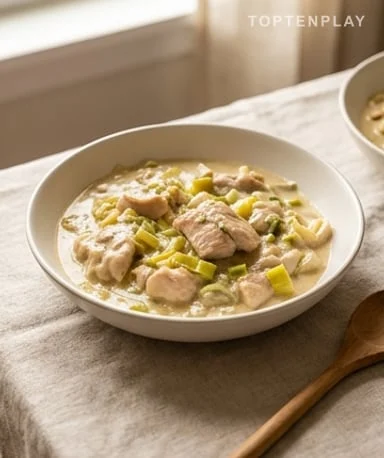
On the plate, the sauce coats each piece of chicken with a pearly veil, lightly golden at the edges. The leeks have melted—they’re no longer crunchy, they’re silky, almost confit. The cream has thickened just right: it coats the spoon without being heavy. A touch of fresh parsley places a few green reflections on the creamy white, and the dish is ready to be set on the table.
Why you’ll love this recipe
Ingredient Notes

Ingredients for creamy chicken with leeks: simple, everyday, and enough for an impressive dish.
- Leeks : The heart of the dish. With gentle cooking, the leek releases a natural sweetness that balances the richness of the cream. Choose leeks that are not too thick, with a firm white part—that’s where the flavor is most concentrated. The pale green part can also be used; the large outer leaves, too fibrous, should be set aside.
- Chicken breasts : Convenient and quick to cook, but with a flaw: they dry out quickly if pushed too long. The right method is to sear them quickly to brown, then let them finish cooking in the sauce over very low heat. They stay tender and absorb all the leek and cream flavors.
- Heavy cream : This gives body to the sauce. Heavy cream holds up better to heat than light cream—it doesn’t curdle or become watery when reduced. For a lighter version, light cream works, but the sauce will be less silky. Plain Greek yogurt is also an option for a fresher, tangier texture.
- Chicken broth : It deglazes the pan after cooking the chicken and adds depth to the sauce. Without it, you’d just have hot cream with leeks. It also lifts the caramelized bits from the bottom, which concentrate all the flavor. Store-bought broth works perfectly here—no need for homemade stock.
- Mild mustard : Optional on paper, crucial in practice. It doesn’t taste like a strong mustard—it stays in the background and just cuts through the richness of the cream to balance everything. One tablespoon is enough. Prefer a mild whole-grain mustard for texture, or Dijon for a bit more character.
- Butter + olive oil : The combination is useful: butter alone would burn when searing chicken; olive oil raises the smoke point. Together, they provide a rich, flavorful cooking base for all the sauce that follows.
Sear the chicken first
Start by heating the olive oil and butter together in a large skillet. When the mixture foams and begins to smell nutty, place the seasoned chicken pieces in. The contact with the hot pan immediately produces a distinct sizzle—that’s a sign of a good sear. At this stage, the goal is not to cook the chicken through: it’s to create a golden crust that builds flavor and locks in juices. Two to three minutes per side is enough. Once the pieces are well colored, remove them and set on a plate. They will finish cooking later in the sauce over low heat, which is precisely what keeps them tender.

Leeks, without rushing
In the same pan—with the chicken cooking juices still in the bottom—add the minced onion and chopped garlic. Thirty seconds over medium heat, just until they start to become translucent and perfume the oil. Then add the sliced leeks. This is where patience comes in: over low heat, for a good ten minutes, the leeks will soften, take on a slight golden hue at the edges, and begin to release that vegetal, slightly sweet aroma that is their signature. Avoid covering at this stage—moisture must evaporate so the leeks concentrate their flavor instead of steaming in their own water. The result should be tender, almost confit, not crunchy.
Build the sauce
Once the leeks are soft, pour the chicken broth directly into the pan. It immediately loosens the caramelized bits stuck to the bottom—those little brown residues that concentrate all the flavor accumulated since searing the chicken. Let it reduce for a minute, just long enough for the mixture to start harmonizing, then add the heavy cream and mild mustard. Give it a good stir with a wooden spoon to combine. The sauce should simmer gently, uncovered, for a few minutes until it lightly coats the back of a spoon. Too thin? Another minute of cooking is sufficient. Too thick? A splash of broth thins it without altering the taste.
Combine and finish
The chicken pieces return to the pan. Coat them well with sauce, reduce the heat to minimum, cover, and let simmer for five to seven minutes. This last phase makes all the difference: the chicken finishes cooking while absorbing the leek and cream flavors. At the end, taste—you often need a bit more salt, sometimes an extra grind of pepper. Snip fresh parsley or chives at the last moment directly over the dish. The herb adds a fresh note that pleasantly cuts the richness of the sauce, and a bit of bright color that wakes up the visual.

Tips & Tricks
- Sear the chicken over high heat before removing it from the pan. This step creates a crust that locks in juices. If you skip this and put the chicken directly into the cold sauce, it cooks by boiling and becomes cottony in texture.
- Do not cover the leeks during their low-heat cooking. The moisture they contain must evaporate gradually to concentrate their flavor—a lid traps it and steams them, resulting in a bland, soft texture.
- Add the mustard at the end of cooking rather than at the beginning. Prolonged heat can dull its finesse and give it a slight bitterness. Incorporate it with the cream, not before, to preserve all its aroma.
- Prepare the dish the day before if possible: reheated the next day over very low heat with a splash of broth to loosen the sauce, it’s even better. The flavors have had time to meld, and the chicken is even more tender.

Can I use chicken thighs instead of breasts?
Yes, and it’s even a very good option. Thighs have more intramuscular fat than breasts, making them naturally juicier and less prone to drying out. Allow 5 to 8 more minutes of cooking in the sauce, depending on the thickness, and check the internal temperature before serving.
How do I keep the chicken from drying out?
Two rules suffice: sear the pieces over high heat just long enough to brown them, then let them finish over very low heat in the covered sauce. It’s prolonged high heat that dries out chicken breast. If in doubt, remove the lid and check with the tip of a knife—the juices should be clear, not pink.
The sauce is too thin, how do I fix it?
Just let it simmer, uncovered, for two to three additional minutes over medium heat. Natural evaporation is enough to thicken the cream without needing starch. If the sauce is still too runny, remove the chicken while reducing to avoid overcooking.
Can I prepare this dish in advance?
Absolutely, and the dish is even better reheated the next day. Store it in the refrigerator in a sealed container and reheat over low heat with a splash of broth to loosen the sauce, which will have thickened when cold. Allow 10 minutes over low heat, stirring gently.
Can I replace heavy cream with something lighter?
Light cream (15% fat) works but gives a less silky sauce that may slightly curdle at high temperatures. Plain Greek yogurt is a more original alternative—it adds a slight acidity that balances well with the sweetness of the leeks. In both cases, avoid boiling after adding.
What should I serve with this dish for a complete meal?
Basmati rice or fresh tagliatelle are the most classic sides—they absorb the creamy sauce well. Steamed potatoes or homemade mashed potatoes also work very well. For a lighter version, quinoa or green beans will balance the meal without making it heavier.
Creamy Chicken with Leeks
French
Main course
Golden chicken breasts simmered in a creamy sauce with tender leeks, lightly flavored with mild mustard. A simple family dish, ready in 40 minutes, that delivers on all promises.
Ingredients
- 600g chicken breasts (about 2 large breasts), cut into pieces or strips
- 2 medium leeks, white and pale green parts, sliced into rounds
- 1/2 onion, finely sliced
- 1 garlic clove, chopped
- 20 cl heavy cream (30% fat)
- 10 cl chicken broth
- 1 tbsp mild mustard (optional, mild or whole grain)
- 1 tbsp olive oil
- 20g butter
- salt and freshly ground black pepper
- 1 bunch fresh parsley or chives, snipped, for serving
Instructions
- 1Cut the chicken breasts into pieces or strips. Season generously with salt and pepper on all sides.
- 2In a large skillet or sauté pan, heat the olive oil and butter over medium-high heat until the mixture foams. Add the chicken pieces in a single layer and sear for 2 to 3 minutes per side, until golden brown. Do not try to cook them through at this stage. Remove and set aside on a plate.
- 3Reduce heat to medium. In the same pan, sauté the sliced onion and chopped garlic for 2 minutes, stirring, until they begin to turn translucent.
- 4Add the sliced leeks. Cook over low heat, uncovered, stirring occasionally for 10 minutes. The leeks should become tender and lightly golden at the edges—not crunchy, not browned.
- 5Pour in the chicken broth and scrape the bottom of the pan with a wooden spoon to deglaze the browned bits. Add the heavy cream and mild mustard. Mix well and let simmer over low heat for 3 to 4 minutes, until the sauce lightly coats a spoon.
- 6Return the chicken pieces to the pan. Coat them with sauce, cover, and cook over very low heat for 5 to 7 minutes. The chicken is done when its juices run clear when pierced with a knife tip.
- 7Taste and adjust salt and pepper. Snip fresh parsley or chives over the dish and serve immediately, with rice, pasta, or steamed potatoes.
Notes
• Do not cover the leeks during cooking: moisture must evaporate so their sweetness concentrates properly.
• Mustard is added with the cream, not before—prolonged heat can dull its aroma.
• The dish keeps for 2 days in the refrigerator. Reheat over low heat with a splash of broth to loosen the sauce.
• For more richness, add a handful of grated Parmesan or Comté cheese to the sauce just before returning the chicken.
Nutrition Facts (per serving, estimated)
| 380 kcalCalories | 33gProtein | 8gCarbs | 22gFat |