📌 Creamy Broccoli and Roasted Garlic Soup: How a Lactose-Free Dish Naturally Soothes Your Digestive System
Posted 12 March 2026 by: Admin
The Digestive Benefits of the Garlic-Broccoli Pairing
This ancestral culinary association is based on scientifically documented properties. Garlic contains allicin, a sulfur compound with recognized antimicrobial and antioxidant qualities, capable of supporting the natural balance of the intestinal flora. When roasted, its pungent flavor transforms into sweet and buttery notes, releasing its active compounds in a more digestible form.
Broccoli perfectly complements this action thanks to its richness in dietary fiber and sulforaphane, a plant molecule associated with natural cellular detoxification mechanisms. These fibers feed the beneficial bacteria of the gut microbiota, promoting a balanced digestive environment. The abundant vitamin C reinforces this synergy by protecting cells from oxidative stress.
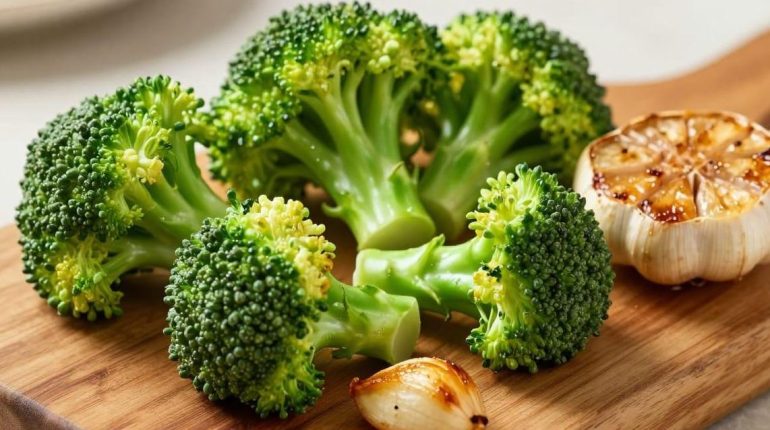
This recipe does not claim to replace medical treatment but is part of a thoughtful dietary approach. By combining three heads of roasted garlic with a bunch of fresh broccoli, you get a concentrate of active plant compounds, wrapped in a comforting texture that facilitates digestion. Gentle cooking preserves the nutritional integrity of the ingredients, transforming simple vegetables into a soothing bowl that respects gastric sensitivity while delivering a deep and authentic flavor.
The Roasting Technique: Key to Deep Flavor
The secret of this soup lies in the thermal metamorphosis of the garlic. At 200°C for 25 minutes, the cloves undergo a fascinating chemical transformation: their volatile sulfur compounds partially evaporate, while the natural sugars caramelize, creating a melting texture and a radically different aromatic profile. What was pungent becomes sweet; what was irritating becomes comforting.
Using three whole heads is not incidental. This generous amount builds the aromatic structure of the dish, infusing each spoonful with a buttery richness impossible to obtain with raw garlic. Once roasted, the cloves can be squeezed like a smooth paste directly into the broth, integrating perfectly into the vegetable base.
This base starts with a classic sauté of onions, celery, and green onions in hot olive oil. This aromatic trinity constitutes the taste foundation on which the entire preparation rests. Onions bring their sweet mildness, celery its slightly bitter herbaceous note, and green onions their final freshness. Together, they create a balanced foundation that welcomes the roasted garlic without being dominated by it.
The result: a fragrant liquid where each ingredient retains its identity while participating in a complex harmony, far from bland soups that rely solely on cream to mask the lack of depth.
The Architecture of Creamy Texture Without Dairy
After this aromatic preparation, the magic happens thanks to the potatoes. These three tubers, peeled and diced, do not serve only as a garnish: they become the natural thickening agent of the velouté. By cooking for twenty minutes in the vegetable broth, their starch is gradually released, creating a totally plant-based creaminess that eliminates the need for excess cream.
This approach has a double advantage. First, it considerably lightens the caloric profile while preserving the rich mouthfeel. Second, it allows for better digestion: unlike soups saturated with classic cream, this one respects the sensitive stomach thanks to its gentle starchy base.
Broccoli enters the scene at the crucial moment: only two minutes of boiling. This flash cooking preserves its bright green color, its subtle crunch, and above all its fragile bioactive compounds like vitamin C and sulforaphane, which degrade quickly at prolonged high temperatures. This is the difference between a living vegetable and a nutritionally dead one.
The final blending transforms this heterogeneous preparation into a uniform velouté. The final addition of 200 ml of plant-based cream brings the final touch of roundness without masking the previously built flavors. Result: a silky texture where each sip slides naturally, carrying with it the aromatic complexity developed since the beginning of the cooking.
The Finishing Touches That Transform the Dish
This velvety base requires a crunchy counterpoint to avoid textural monotony. Garlic croutons take on this decisive role. Bread cubes browned in a pan with olive oil, they receive dried garlic and red pepper as strategic seasoning. This combination recalls the aromatic base of the velouté while introducing a spicy dimension absent until now.
The contrast works on several sensory levels. The frank crunch of the croutons breaks the homogeneous smoothness of the soup, creating an alternation that maintains taste attention. Their lukewarm temperature opposes the hot velouté, generating a subtle thermal variation. Their marked salinity awakens the taste buds between two creamy sips.
The fresh broccoli florets served on top accomplish a different mission: they visually signal the identity of the dish before the first spoon. Their bright green contrasts with the creamy beige, transforming an anonymous bowl into an identifiable plate. Tastewise, their slight firmness recalls the presence of the main vegetable, otherwise dissolved in the blending.
The final drizzle of olive oil is not decorative. It enriches the surface of the velouté with a fruity note that is perceived as soon as the spoon approaches, preparing the palate for the complexity that follows. These successive gestures — croutons, broccoli, oil — do not decorate a finished dish: they build the complete sensory experience that distinguishes a homemade soup from an industrial velouté.